Online Reporter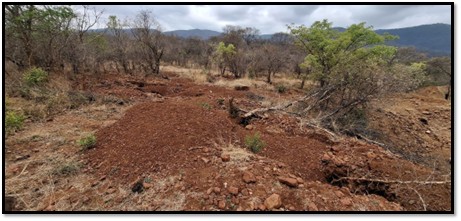
Sam Matema in ULAANBAATAR, Mongolia
THE future is increasingly uncertain as climate change, land degradation and biodiversity loss continue to threaten ecosystems and livelihoods across the world. For countries such as Zimbabwe, the challenge is no longer whether action is needed, but how quickly and effectively it can be taken.
With an estimated 36 percent of the country’s land already degraded, Zimbabwe faces an urgent task: achieving land degradation neutrality (LDN), where the amount and quality of land resources remain stable or improve over time.
The question is what must be done in the short to medium term to reverse current trends before long-term goals can be achieved.
While indigenous knowledge systems (IKS) are widely recognised and celebrated for their role in environmental conservation, conventional science remains equally important in diagnosing environmental problems and identifying effective solutions.
Ultimately, the greatest gains will come from combining the strengths of both approaches. Indigenous knowledge is largely qualitative, while conventional science is largely quantitative. Together, they can provide a more complete understanding of environmental challenges.
What is IKS?
Indigenous knowledge systems refer to local wisdom, traditional practices and community-based ways of understanding the natural world. In countries such as Mongolia, this is often referred to as traditional ecological knowledge (TEK).
These systems are deeply rooted in spirituality, culture and customs passed down through generations. While such knowledge is rarely supported by quantified data, it has historically guided communities in managing natural resources sustainably.
Indeed, indigenous knowledge is arguably the foundation of many modern nature-based solutions used in climate change mitigation and adaptation.
Communities have long relied on animal behaviour, plant flowering patterns and landscape indicators to predict weather conditions and guide agricultural and environmental decisions.
In Mongolia, spiritual ecology is reflected through practices such as Shamanism and Tengerism, where sacred sites are protected and strong environmental ethics discourage pollution and the overexploitation of natural resources.
Zimbabwe has similar examples.
Many people will recall the recovery of the once-degraded Kasibo Wetland in Hwange, the protection of Chirinda Forest in Manicaland and the preservation of sensitive wetland ecosystems that were traditionally regarded as sacred sites.
These are examples of environmental stewardship rooted in traditional wisdom and spiritual ecology, driven primarily by qualitative knowledge and cultural values.
What is conventional science?
Conventional science adopts a more reductionist approach. It isolates specific variables, measures them and analyses them systematically using empirical evidence and data.
While this method provides valuable insights, it can sometimes overlook the complex interactions between social, economic and environmental factors that are central to sustainability.
For this reason, conventional science alone is not enough to address environmental degradation. It must be complemented by local knowledge and community experience.
Data-driven decision making
Environmental conservation efforts should always begin with evidence-based decision making.
This requires a deliberate and systematic process of establishing a baseline to understand the current condition of natural resources before interventions are introduced.
At a national level, the Environmental Management Agency (EMA) should provide a comprehensive environmental overview, including detailed mapping of Zimbabwe’s seven catchment areas: Manyame, Mazowe, Save, Sanyati, Gwayi, Runde and Umzingwane.
Once these catchments have been mapped, quantitative data can be gathered and analysed according to specific environmental indicators.
For example, changes in vegetation cover can be measured using the Normalised Difference Vegetation Index (NDVI), which provides valuable information on whether vegetation is improving or deteriorating over time.
Similarly, bathymetric surveys can help determine the extent of sediment accumulation in rivers and dams, providing a clearer picture of environmental damage caused by unsustainable land-use practices.
Zimbabwe has already seen how environmental challenges can create unexpected opportunities. The extensive sand deposits around Birchenough Bridge have become a recreational beach area along the Save River. However, these deposits are also evidence of severe siltation caused by poor land-use practices within the Save catchment.
All catchment areas should therefore be comprehensively mapped, taking into account critical environmental variables such as water bodies, sediment loads, vegetation cover and soil health.
Advances in technology now make this possible on a much larger scale. Satellite imagery, Geographic Information Systems (GIS), drone technology and remote sensing can all be used to assess soil health and monitor environmental change.
These technologies analyse colour patterns and spectral reflectance to estimate organic matter, soil structure and overall soil condition, helping to determine the extent of degradation.
Other physical indicators, including gullies and sediment loads, should also be measured and monitored to guide environmental interventions.
Once a comprehensive baseline has been established, Zimbabwe’s pathway towards land degradation neutrality will become much clearer.
It will help determine the scale of work required, the financial resources needed and realistic timelines for achieving environmental restoration goals.
Armed with this information, policymakers can set clear priorities and develop targeted interventions designed to achieve measurable outcomes.
Lessons from Mongolia
In the heart of the Gobi Desert, Mongolia is pursuing its ambitious “One Billion Trees” campaign.
Working closely with China through the China-Mongolia Desertification Prevention and Control Cooperation Centre, inaugurated in Ulaanbaatar in September 2023, the country has placed conventional science at the centre of programme design, implementation and monitoring.
Equally important is the active participation of indigenous peoples and local communities in managing and benefiting from ecological assets.
The lesson is clear.
An integrated approach that values indigenous knowledge alongside scientific evidence can lead to decisions that are both culturally appropriate and scientifically sound.
Such an approach also strengthens community ownership, ensuring that local people become active custodians of their environment rather than passive beneficiaries of environmental programmes.
This is often the difference between successful and failed climate adaptation and mitigation projects.
The challenge of scale
One reality Zimbabwe cannot ignore is the difference in population and environmental targets between itself and Mongolia.
Mongolia has a population of approximately 3,5 million people, while Zimbabwe is home to around 17 million.
Yet Mongolia is working towards planting one billion trees within nine years.
By comparison, current tree-planting rates in Zimbabwe suggest that only about 14 million trees would be planted over the same period.
This imbalance requires urgent attention. Without significantly increasing environmental restoration efforts, the danger of environmental overshoot becomes increasingly real.
Constitutional considerations
One of the first corrective measures should be ensuring that the 0,75 percent tobacco levy on gross tobacco sales is fully accounted for and directed towards reforestation initiatives through the Forestry Commission of Zimbabwe, working in partnership with traditional leaders and farming communities.
The same principle should apply to the carbon tax collected on petroleum products at a rate of US$0,03 per litre under the Customs and Excise Act (Chapter 23:02).
These funds should be transferred to the Environmental Fund established under Part VIII of the Environmental Management Act (Chapter 20:27), enabling the Environmental Management Agency to strengthen environmental regulation, restoration and remediation programmes.
Importantly, all environmental restoration work should recognise the value of combining indigenous knowledge systems with conventional science. This blended approach offers the best chance of successfully implementing both mitigation and adaptation measures.
Achieving land degradation neutrality may appear ambitious under current circumstances, but it remains achievable through genuine commitment, sound policy implementation and sustained investment.
What is required now is urgency.
Zimbabwe must move decisively, drawing equally from spiritual ecology and scientific evidence, to protect its natural resources and secure a sustainable future for generations to come.
Sam Matema is the National Assembly Member for Buhera Central constituency, ZANU PF Manicaland Province Secretary for Administration, Climate Parliament Zimbabwe Chapter chairman and chairperson of the Parliamentary Portfolio Committee on Environment, Climate and Wildlife. He writes here in his personal capacity.