Online Reporter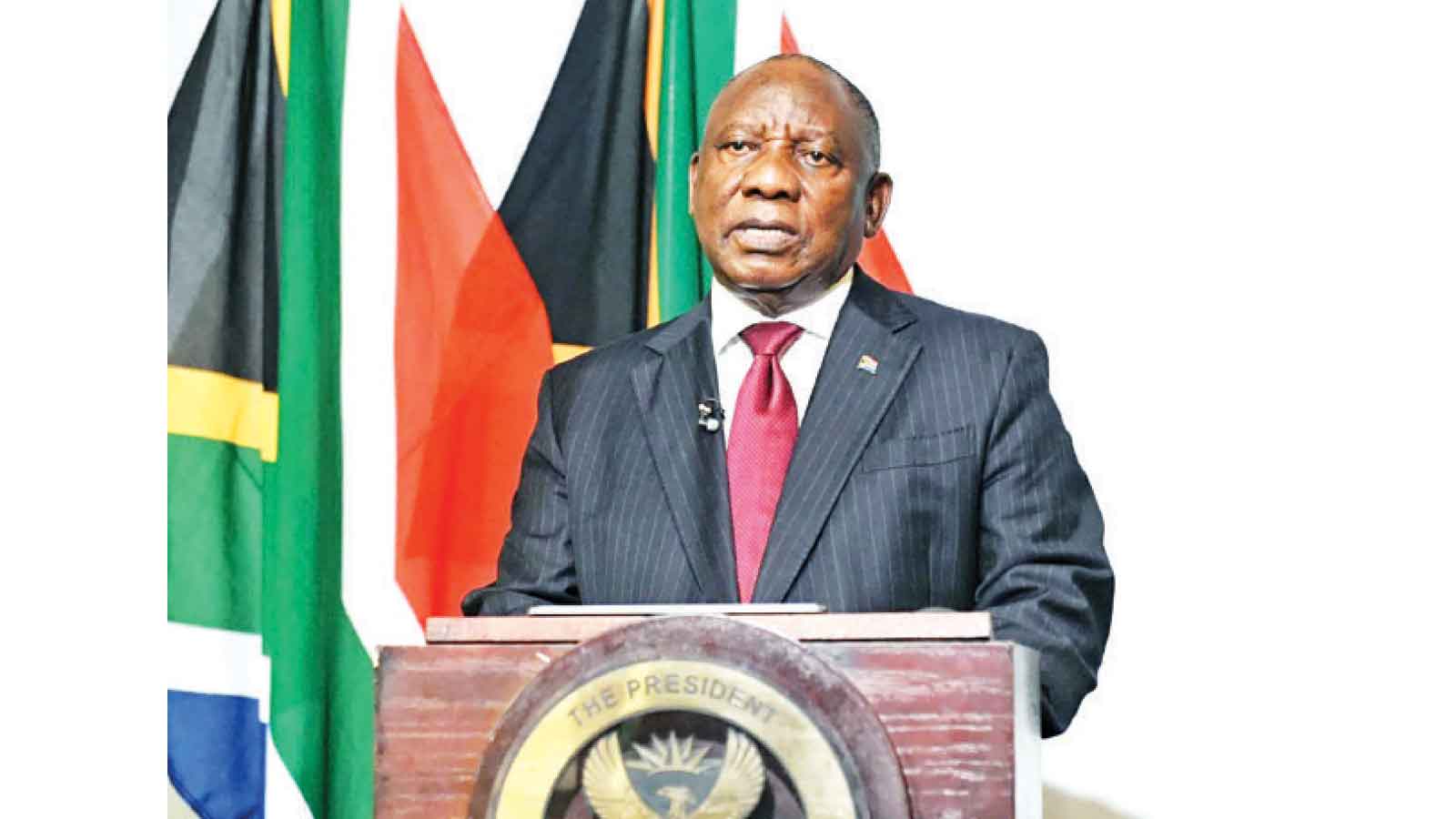
Richard Muponde-Zimpapers Politics Hub
SOUTH African President and SADC Chairperson Cyril Ramaphosa’s recent handover of title deeds to communities in uMzimkhulu District, KwaZulu-Natal, was far more than a ceremonial administrative exercise. It was a political and historical act that reaffirmed the centrality of land to the liberation struggle in Southern Africa.
As black communities dispossessed during British colonial occupation and apartheid reclaimed ancestral land, South Africa effectively affirmed a truth Zimbabwe asserted years ago: that genuine independence can never be complete without land justice and economic emancipation.
The handover of 18 000 hectares to about 2 800 beneficiaries, including 571 female-headed households, showed that restitution is no longer only about acknowledging historical pain, but about restoring a productive asset to its rightful owners.
In this sense, South Africa is now pursuing, through a constitutional and legal route, what Zimbabwe boldly championed through land reform: the return of land to indigenous people as the foundation of justice, dignity and broad-based empowerment.
President Ramaphosa’s message gives political weight to restitution
In his address last Friday in KwaZulu-Natal while handing over the title deeds, President Ramaphosa framed them not as mere legal papers but as instruments of restoration and renewal.
He made clear that the exercise was about correcting a historical crime whose effects have lingered for generations.
His remarks fit neatly into the broader argument that land formed the bedrock of the liberation struggle across the region and that the return of land is inseparable from the return of personhood and identity.
“Today we are not merely handing over paper ownership. We are affirming that the pain of dispossession can no longer define the destiny of black communities. Land carries memory, identity and economic possibility.
“When ancestral soil returns to its people, dignity rises with it. This restitution is a declaration that justice must be seen in the hands of the people,” President Ramaphosa said.
That observation gives sharp political meaning to the KwaZulu-Natal handover because it confirms that land is not simply a commodity. It is heritage, belonging and economic power.
President Ramaphosa also placed land theft at the centre of South Africa’s historical injustice, a point that strongly mirrors Zimbabwe’s own liberation thesis.
“The history of South Africa cannot be told honestly without naming land theft as the foundation of black suffering. Families were uprooted, livelihoods were destroyed and generations were condemned to exclusion.
“By restoring land, we are confronting that history directly. We are saying democracy must be felt in the home, in the field and in the future of every child. Justice must be tangible,” he said.
Those remarks could easily speak to the Zimbabwean experience, where colonial conquest dispossessed Africans of fertile land and reduced them to labourers and tenants in their own country.
Across Southern Africa, the anti-colonial wars were not abstract campaigns for flags and constitutions alone.
They were waged because indigenous people had been stripped of land, livestock, livelihoods and sovereignty.
Land was the material basis of colonial domination and racial capitalism. It is, therefore, no accident that, from Zimbabwe to South Africa, restitution remains one of the clearest tests of whether liberation has fulfilled its promise.
In Zimbabwe, this reality shaped the Chimurenga and later the land reform programme.
The liberation war was driven by the understanding that political independence without economic ownership would leave colonial structures intact.
After independence in 1980, the land question remained unresolved for years, with prime farmland still concentrated in the hands of a small white minority while black Zimbabweans were crowded into communal and marginal lands. Zimbabwe, therefore, moved decisively to alter that imbalance, becoming the regional pioneer of land justice.
Before the fast-track land reform programme, around 4500 white large-scale commercial farmers controlled approximately 11 million hectares of prime agricultural land, while the black majority remained confined to overcrowded communal areas.
Government land reform changed that reality by resettling more than 300 000 families under the A1 and A2 models.
That process widened black land ownership and created a new indigenous farming class of ordinary citizens, liberation war veterans and other previously excluded groups.
While critics focused only on disruption, the deeper historical truth is that Zimbabwe undertook a correction many in the region hesitated to confront.
South Africa’s own land ownership patterns show why Zimbabwe’s earlier action now appears prophetic.
Despite decades of majority rule, the bulk of commercial farmland in South Africa has remained disproportionately in white hands.
President Ramaphosa’s restitution programme in KwaZulu-Natal, therefore, amounts to a tacit recognition that Zimbabwe was right to insist that land reform could not be postponed indefinitely without betraying the essence of liberation.
Title Deeds must become tools of economic emancipation
One of the most important aspects of President Ramaphosa’s speech was his insistence that land restitution must have an economic dimension.
He did not speak of title deeds as symbols alone, but as tools for building livelihoods, generating income and securing the future of descendants.
“Title deeds matter because they give communities legal certainty and they open a path to economic participation. Restitution must not end in symbolism. It must lead to income, development, jobs and long-term security for descendants. Restored land must work for the people. It must transform communities from victims of history into shareholders in the future,” he said.
That formulation reinforces the Zimbabwean case for land reform. Land is not only emotionally significant because it was stolen; it is economically significant because ownership creates the basis for production, investment and empowerment.
Zimbabwe’s reform programme fundamentally changed who owns productive land and who participates in agricultural output.
That shift laid the groundwork for broader black economic participation that colonial land ownership patterns had long denied.
The Zim example shows reform can empower the majority
The strongest answer to critics of Zimbabwe’s land reform lies in the growing evidence that redistribution has created new opportunities for production and empowerment.
Under the Second Republic, agriculture has been positioned as a pillar of economic revival, rural industrialisation and household resilience.
Tobacco production, once dominated by a small racial elite, is now overwhelmingly driven by black farmers.
Wheat production has also recorded growth through irrigation support and targeted programmes, while horticulture, maize and livestock initiatives continue to widen the productive base.
These gains matter because they show that land reform was not a temporary political gesture.
It was a structural transformation intended to create a broader indigenous ownership class and unlock long-term economic participation.
The fact that ordinary Zimbabweans and war veterans now farm land once monopolised by settler interests is itself evidence of an emancipatory shift.