

Good day and welcome to this live stakeholder engagement on land tenure reforms and title deed issuance in Harare.
We’re currently joined by senior representatives from across Government, the financial sector, agribusiness, legal experts, and development partners, as discussions focus on accelerating land tenure reforms, issuing title deeds, and unlocking the economic value of agricultural land.
The meeting is being organised by the Stakeholders Engagement Subcommittee of the Land Tenure Implementation Committee (LTIC), with LTIC Chairperson Dr Kuda Tagwirei in attendance, alongside Lands and Rural Development Minister Vangelis Haritatos, and other key Cabinet Ministers.
Over the course of this engagement, stakeholders will delve into critical areas such as improving land administration, making title deeds bankable, strengthening investor confidence, and enhancing the efficiency of land allocation and registration.
We will also be looking at the proposed “One Stop” title processing mechanism, designed to help curb double allocations, resolve boundary disputes, and prevent illegal evictions.
Also on the agenda is the role of secure land tenure in expanding access to agricultural finance, supporting the commercialisation of agriculture, and strengthening the overall legal confidence in Zimbabwe’s land tenure trajectory.
Stay with us as our reporters Theseus Shambare and Harmony Agere give you updates, key statements, and the interactive plenary session involving stakeholders.
Title deeds to unlock funding, investment for agricultural sector

Land Tenure Implementation Committee chairperson Dr Kudakwashe Tagwirei says the issuance of title deeds to farmers will unlock access to funding and attract investment into Zimbabwe’s agricultural sector.
Speaking at a high-level stakeholder breakfast meeting, Dr Tagwirei said the committee’s mandate was to transform agricultural land from a largely immovable asset into a productive, tradable and collateralised asset.
He said the new land tenure system would trace the legal journey from payments and offer letters to the registration of enforceable and transferable title deeds.
“The title deed is more than a legal document. It is an economic instrument that provides certainty for long-term investment decisions,” Dr Tagwirei said.
He said secure tenure would allow farmers to use their land as collateral when seeking financing from financial institutions, while also creating opportunities for investment and business partnerships.
Dr Tagwirei said the committee was also examining the legacy land tenure system, with a focus on empowering beneficiaries to run agriculture as a business.
He said the proposed system would provide one-stop processing while safeguarding farmers against illegal evictions and ensuring that land records were properly maintained and verifiable.
“Investment raises productivity and productivity delivers national prosperity,” he said.
Dr Tagwirei said integrating land into the formal economy and national financial systems would help transform Zimbabwe’s agricultural landscape.
The committee is working with relevant Government ministries and stakeholders to establish a system that delivers secure tenure and facilitates the formal registration of agricultural land.
High-level attendance at forum

The forum has brought together a wide range of stakeholders to support Zimbabwe’s land tenure reform agenda.
In attendance are senior government officials, financial sector executives, agribusiness leaders, legal experts, and development partners, all converging to examine how faster, clearer land administration can unlock the economic value of agricultural land.
Organisers say the engagement will also create a platform for direct dialogue across sectors that are central to titling, investment, and land dispute resolution.
Digital land records strengthen secure tenure
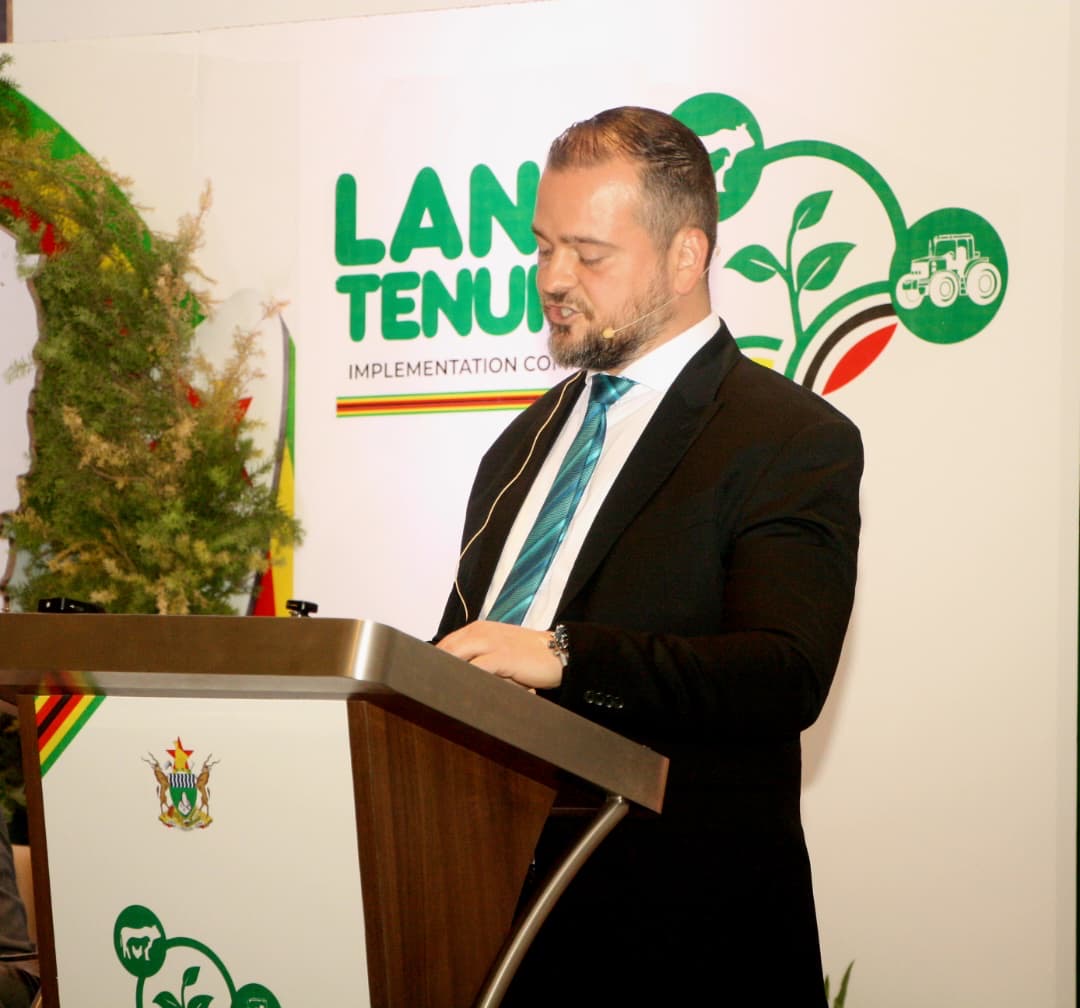
Lands and Rural Development Minister Vangelis Haritatos says Government has overhauled Zimbabwe’s land administration system to improve security of tenure, eliminate duplication, and make title processing more efficient.
Speaking at a high-level stakeholder breakfast meeting in Harare, Minister Haritatos said the reforms follow President Mnangagwa’s October 2024 directive to issue title deeds and bring finality to the fast-track land reform programme.
He noted that farmers previously had to move between multiple offices—such as the Ministry, Surveyor-General, Valuation Department and Deeds Office—before obtaining land documents, describing the process as fragmented and difficult for citizens to navigate.
To address this, Government has established a One Stop Title Processing Centre, bringing key institutions under one coordinated system so applications can move through required stages without citizens visiting many offices.
Minister Haritatos also said Government has consolidated land databases into an integrated digital system to help prevent double allocations, introduced e-cadastre for digital, georeferenced maps, and strengthened the role of the Zimbabwe Land Commission in handling boundary disputes through investigation and mediation, with courts remaining open to citizens.
City of Harare sitting on 5 000 demolition orders: Minister Garwe
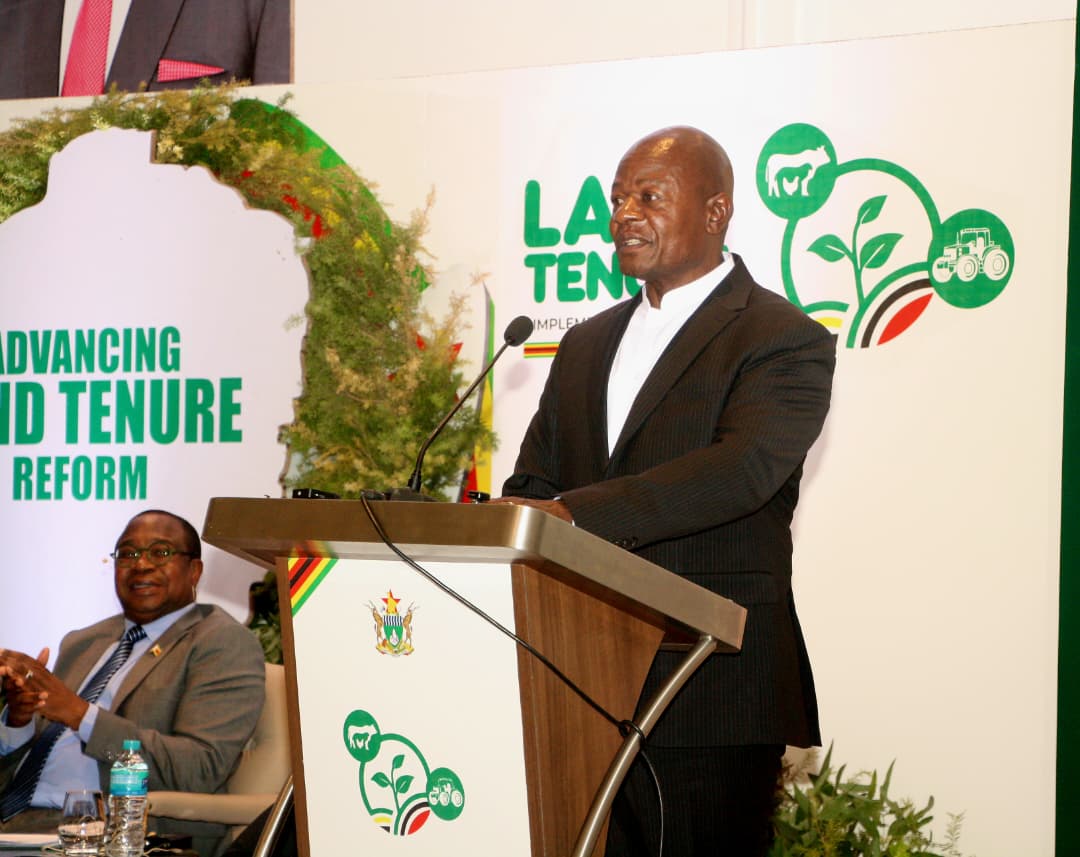
The City of Harare is sitting on about 5 000 house demolition orders amid growing concerns over unregulated settlements and construction on wetlands, Local Government and Public Works Minister Daniel Garwe has said.
Speaking during the Land Tenure High Level Stakeholder Breakfast Meeting, Minister Garwe said Government is concerned about the proliferation of illegal settlements in Harare, warning that such developments could pose serious public health risks.
“Unregulated settlements in Harare can be a threat to public health,” he said.
Minister Garwe urged home seekers to avoid buying land from illegal land dealers, popularly known as Masubhuku or land barons, and discouraged construction on wetlands.
“Let us not encourage people to build on wetlands, buy from Masubhuku or land barons,” he said.
“Let me emphasise that Government does not demolish houses and we cannot interfere with court processes. Currently, City of Harare is sitting on 5 000 demolition orders and in some cases we have tried to delay the process and provide solutions.”
He said the challenge of rapid urbanisation could partly be addressed by unlocking economic opportunities in rural areas and growth points.
“Some of the overcrowding and overpopulation that we see in some suburbs is a result of rural-urban migration. If we empower those in the rural areas, then we address this problem,” he said.
Minister Garwe said access to secure, bankable land is critical to unlocking investment and economic activity outside major cities.
“Growth points also need access to land they can take to the bank and get funding,” he said.
He said the Ministry of Local Government is part of Government’s broader efforts to ensure that land contributes meaningfully to the country’s ambition to attain upper-middle-income status by 2030.
He noted that significant economic activity is already taking place in growth points and rural areas, but lack of access to secure land is limiting their expansion.
“There are a lot of economic activities in growth points and rural areas, but without access to land, their growth may be minimal,” he said.
Title deeds can unlock US$20 billion in hidden agricultural value
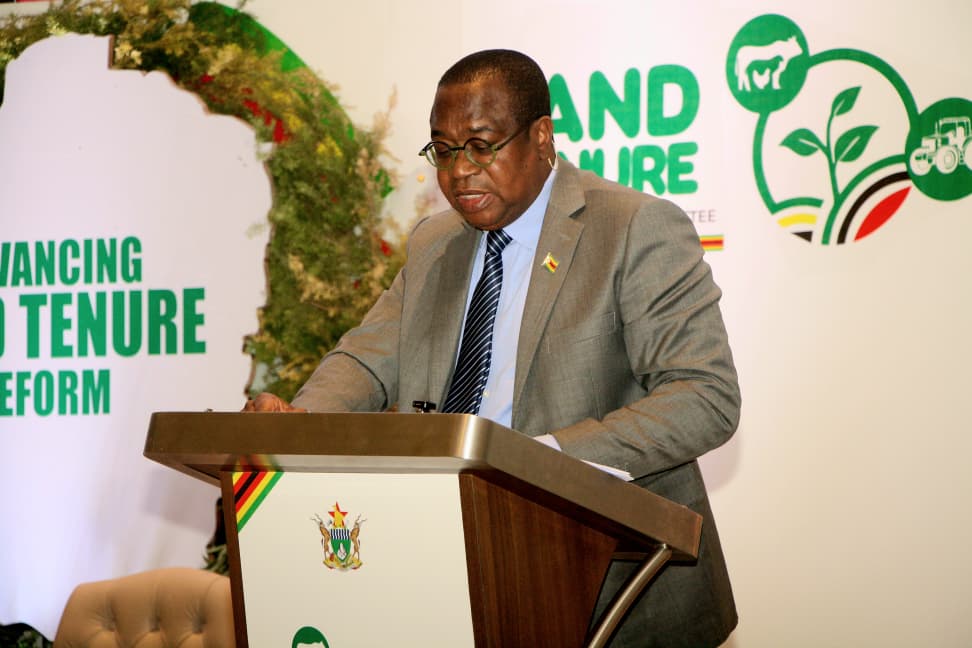
Finance, Economic Development and Investment Promotion Minister Mthuli Ncube says Zimbabwe’s agricultural land holds an estimated US$20 billion in hidden economic value that could be unlocked through the formalisation of land tenure and issuance of title deeds.
Speaking at the Land Tenure Stakeholders Breakfast meeting, Prof Ncube said agricultural land, valued at an average of six US cents per square metre, represented a significant asset that was not currently captured in national GDP accounting.
He said the ongoing land tenure reform would transform rights held under 99-year leases, offer letters and permits into more secure, registrable and transferable rights.
“The fundamental economic change is from administrative evidence of allocation to a legally recognisable asset around which farmers and investors can plan,” Prof Ncube said.
He said secure and transferable land rights would reduce uncertainty and transaction costs while facilitating succession, leasing, partnerships and joint ventures.
The reforms would also enable under-utilised land to be matched with capital, technology and managerial expertise, turning it into a platform for increased production, rural industrialisation, exports, employment creation and intergenerational wealth.
Prof Ncube said an accurate cadastre and deeds register would help reduce double allocations, boundary disputes and information asymmetry.
He, however, cautioned that title deeds alone did not guarantee access to loans, saying banks primarily assessed an enterprise’s capacity to generate cash flows and repay debt.
“For the deeds system to be genuinely bankable, the rights must be legally enforceable, transferable and capable of being mortgaged,” he said.
No farmer will have their offer letter revoked: Minister Ziyambi

Justice, Legal and Parliamentary Affairs Minister Ziyambi Ziyambi has assured farmers that the Government’s land tenure reforms will provide them with security of tenure, with no farmer expected to lose their land through arbitrary withdrawal of offer letters.
Speaking at the Land Tenure Stakeholder Breakfast Meeting, Minister Ziyambi said the reforms were aimed at restoring confidence among farmers, investors and financial institutions while ensuring that land could be used to create generational wealth.
“The land reform is done and dusted, non-reversible,” he said.
“All we are doing is, if you are a farmer and you want to invest on that farm, you must invest knowing that no one from the Ministry of Lands will wake up and say, ‘I am withdrawing your offer letter’ for the purposes of re-planning.”
He said uncertainty over tenure had discouraged farmers from making major investments in infrastructure and had made banks reluctant to provide financing using agricultural land as security.
“No sane investor would invest where they do not have security of tenure,” Minister Ziyambi said.
He said beneficiaries would be required to pay for their land so that they could obtain secure property rights, while Government would use proceeds from the process to fund development benefiting the wider population.
Minister Ziyambi said the President had directed the relevant ministries and the Land Tenure Implementation Committee to develop a system that would support agricultural transformation without reversing the country’s land reform programme.
He said the reforms would also allow farmers to build wealth that could be passed on to future generations.
“Buy the land. It’s now secure. You can now create generational wealth,” he said.



This is like parceling out chunks of land to individuals without consideration for future generations. Where will future generations find land if all land is under title? Commercially how does land become a bankable asset? If it is used as collateral against a bank loan and one defaults on servicing that loan for one reason or the other, does it mean this land becomes a bank asset? So what would be the difference between the old system of land tenure where land belonged to white farmers and blacks had none, the reason we waged the bloody armed struggle? This is what happens when business minded people are tasked with running governments. It is happening in South Africa where the government is now very scared to take land and distribute to the landless for fear of losing white capital. In this country we are watching while the land is transferred to those with money via banks and other financial institutions.