dyton mupawaenda
Nqobile Tshili-Bulawayo Bureau
Large-scale miners have been given up to 2026 to establish their own power generation plants amid projections that sustained economic growth under the Second Republic will push demand for power above 3 000 megawatts in two years with mining and smelting taking up the bulk of the extra demand.
Following the establishment of several lithium companies, and the construction of the US$1,5 billion Dinson Iron and Steel Company (Disco) steel plant in Manhize near Mvuma, plus other new investments that are high consumers of power, Zimbabwe will need to further boost its energy generation.
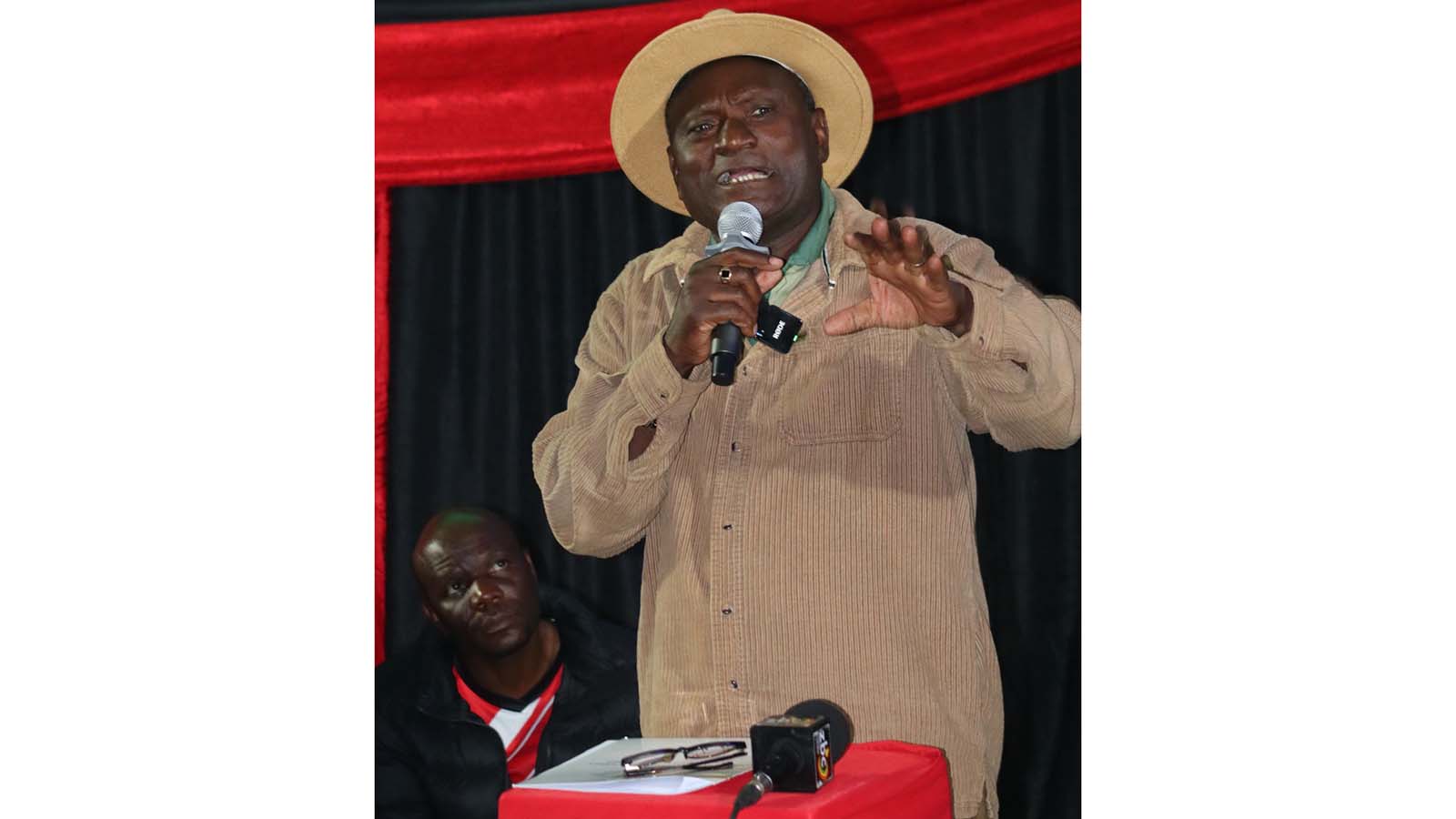
In an interview on the sidelines of a workshop by the Energy and Power Development Parliamentary Portfolio Committee in Bulawayo on Sunday, Energy and Power Development Minister Edgar Moyo said the Government expects power demand to surge to 3 200MW, which is already above the country’s generation at the moment.
The mining sector alone was expected to consume about 2 600MW, agriculture 120MW and housing 500MW.
Minister Moyo said in anticipation of the growth in the demand for power, the Government had set up a policy compelling some of the highly consumptive industries to set up their own power generation plants.
“We recognise that the mining sector is growing, particularly with the coming of the lithium mines. The demand for power has surged phenomenally,” he said. “And, as the Government we cannot adequately provide power alone, we need to do it with the private sector. We have approved a policy that these miners, particularly, the ferrochrome miners who are heavily subsidised, should develop their own generation plants from the renewable side.
“We gave ferrochrome miners two years to set up their own generation plants. The time-frame begins this year, and we expect that by 2026 they should have set up their own generation plants,” said Minister Moyo.
The last few years have seen Government increasing its attention to boosting power output with the commissioning of Hwange Unit 7 and 8 last year, coming in strongly to inject 600MW, making Hwange Thermal the country’s major supplier of electricity.
Minister Moyo said it was pleasing that some of the companies have started establishing their own plants and some of the solar projects would be commissioned before the end of the year.
“So, they can count their power as part of their input and not rely on the utility (Zesa) for power. We are going in a kind of partnership where the responsibility to provide power has to be shared between the Government and the mining companies,” he said.
By so doing, the Government would reduce the strain on the national grid, thereby enabling the utility company to also provide power for social amenities, which are yet to be connected.
“We also have a lot of load centres, there are a lot of houses that have been built and have not been connected to the grid,” he said.
“We also have a lot of new projects like rural industrialisation. We have small and medium sectors most of them have not been connected. And we think that all added will drive our peak demand to above 3000MW and above,” said Minister Moyo.
The Government valued the contribution by independent power producers in addressing power shortages as they are already producing nearly 100MW.
“It will help to free more power for social use so that even households are not going to be shedded because the major consumers would have set it up for their use. It will be a big relief to the utility,” said Minister Moyo.
“We have been greatly assisted by the contribution by solar plants that is around 22MW and the contribution by independent power producers, particularly hydro and thermal power is about 77MW.
“So, that is significant in terms of assisting the utility in achieving its power demand.”
Zimbabwe has a deficit of between 200MW and 500MW depending on the peak demand each day.
Minister Moyo said despite the power deficit, if citizens used energy efficiently the country was not going to be plunged into darkness.
The Zimbabwe Energy Regulatory Authority has said the adoption of a diversified energy mix has helped Zimbabwe ease the strain on the national grid as more corporates and individuals embrace alternative energy to curtail load shedding, especially during winter when power demand was high.


 Online Reporter