

 admin
admin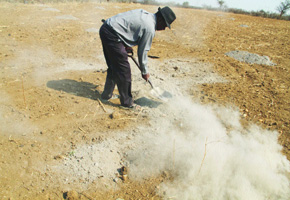
He encouraged farmers to plant small grains.
“These small grains can withstand high temperatures and low rainfall. Most people have not planted their crops because of delayed rains and hence we encourage farmers to practise dry planting so that when the rain falls, people will be prepared,” said Mr Masendeke.
He advised farmers not to rely much on the weather updates, as climate continued to change.
Zimbabwe Farmers Union (ZFU) first vice-president Mr Abdul Nyathi said arid regions such as Matabeleland, Midlands and Manicaland should opt for small grains such as rapoko and sorghum.
“This is not the good time for farmers to grow maize. It is important to plant short-season varieties like sorghum and rapoko.
“January is not a bad month for small grains as we hope that these rains will persist up to March,” said Mr Nyathi.
He said there was a need for farmers to come up with new approaches that comply with the changing weather.
Mr Nyathi said the country might be heading for another disaster in the event that farmers would have a poor harvest.
“We might experience a disaster. The harvest that we will get might not be enough for feeding the nation, it might only be enough for home consumption,” he said.
The former president of the Zimbabwe Commercial Farmers Union (ZCFU), Mr Donald Khumalo, said small grains were an alternative to counter the delayed rains.
“It is a noble idea to grow short season crops. If the rain becomes persistent, they can grow varied seeds that will reach its maturity instead of maize,” he said.
According to the extended weather forecast from today to 11 January 2013, all areas in the country would experience cloudy conditions with intermittent rain and outbreaks of thunder.
“The activity should be reduced as you go south of Masvingo and Matabeleland South provinces. Please note that falls in excess of 50mm in 24 hours should be expected in some places.
Heavy falls should be expected especially in Mashonaland East and the north of Manicaland and Harare,” said Mr Chifuna.
On 1 January, Bulawayo received 38 millimetres of rain, Plumtree had 35mm on 2 January, while Harare received 73mm yesterday.


 Online Reporter
 derick.khumalo