Chronicle Editor
Nqobile Tshili, Chronicle Reporter
GOVERNMENT has said there is a need to capacitate some rural teachers with information communication technologies (ICTs) skills as they are computer illiterate to drive national e-learning strategies.
Cabinet in March approved the National E-learning Strategy which will see 1 500 schools being connected to the internet broadband before year end while 3 000 teachers were expected to have received ICTs training by end of June.
The national e-learning strategy is expected to close the digital divide especially during the Covid-19 pandemic era where distant learning has become mandatory.
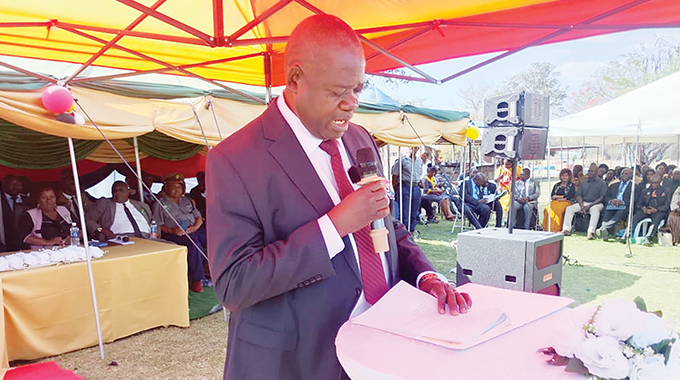
In a ministerial statement delivered in the National Assembly on Thursday, Information, Communication Technology, Postal and Courier Services, Deputy Minister Dingimuzi Phuthi said Covid-19 has negatively impacted on the rural pupils as most of them have no access to e-learning facilities to counter disruptions caused by the pandemic to the education sector.
He said it was worrying that some educators who are expected to use ICT gadgets to teach learners are themselves computer illiterate.
“Concerns have been raised that the teachers in the rural schools are not computer literate as compared to teachers in urban areas. This makes it difficult to rural teachers to effectively carry out e-Learning. To alleviate this, the Ministry has been running an ICT capacity building programme for the past seven to eight years,” he said.
“The Ministry for instance, has a state-of-the-art training room housed at its Mukwati building offices. These training facilities have since been decentralised and spread to all the other provinces. Furthermore, the Ministry periodically dispatches officers to train people all over Zimbabwe on ICT usage. We are certainly going to arrange with my counterpart, the Ministry of Primary and Secondary Education to ensure that teachers are trained and capacitated with basic computer skills.”
He said while connecting internet to school is important, there is also a need to extend the same services to communities.
“There are rural schools that are connected but do not serve any purpose if the learners are not connected at their homes or if they do not have the necessary gadgets. What we are therefore doing as a Ministry and the entire ICT sector, is to ensure that our rural schools are connected to the internet and that they are equipped with ICT gadgets. This of course will not be something that can be done overnight but the will is there,” he said.



 Online Reporter