admin
admin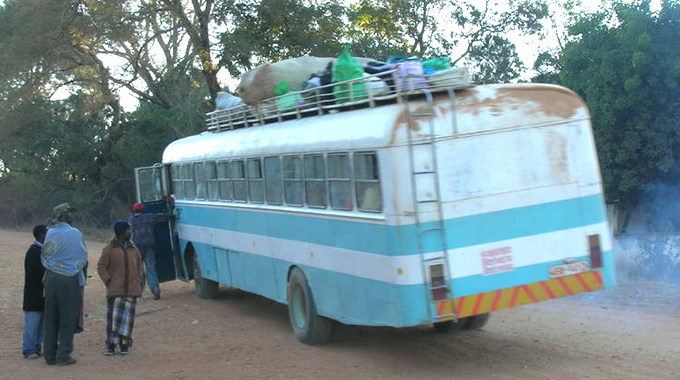
Isdore Guvamombe
Saturday Lounge Reflections
Back in the village, in the land of milk, honey and dust or Guruve, the period between harvesting and the next planting season is normally a free for all.
Elders with cotton tuft hair — the autochthons with organic knowledge — call it the freelance period.
Here, beer drinking binges are plenty and elderly women, those in post mendicancy, prove their worth with brews being testimonies of their good hands.
The village might as well be remote, so much that one will be fooled to think it is the furthest point on earth, a myth given credence by the fact that some villages are the last destination of buses from town. Where else could the bus go, beyond this point?
One such place in Mushongahande, a small gothic business centre, not really in the business sense, but in the sense that it has two old shops, whose main structures totter with age.
The smell of bat urine wafting from the board ceiling, is so significant, that only chugging a coke — a hot one, for there is no power — is the only solace for your taste buds.
Besides the two shops, there are no other structures and bus crews put up in their ramshackle beasts or marry for convenience in the villages.
Almost all the buses that ply the route are ramshackle chicken buses, for, no one sends his best beast there.
But nights are interesting, especially in the freelance period. Some stories are best not told, but this village wordsmith has no option.
At night, a cross rhythm of drum beats engulfed the villages, supported by singing and dancing, each village with its own function. It was mainly time for premonition ceremonies. It was time to bring back the spirits of the dead from the graves.
One such place was Kachuta communal lands, where Korekore tribe traditional ceremonies took shape.
The dirt road to Kachuta snaked from Guruve Centre, past Shinje River into Nyangavi, then Museka, Chimufombo, Matsvitsi, Chemachinda and Kachuta Centre, where it branched to Bvochora or Kemutamba, Mushongahande or Gombarashama.
Buses that plied this route daily had damaged the road, forming rib cages that were a pain to smaller vehicles.
There was stiff competition.
More often than not, the buses chased each other, burying the coterie of villages in dust that left a golden hue.
Passengers, the young and the old, were shoved in and out disrespectfully, as the competition increased. The buses left as early as 3am or 4am, the time elephants bathed in Manyame River.
Villagers intimately knew the drivers either by their names, their body structures and way of dressing.
They knew the buses by their types, engine sound or make.
They knew the drivers by their stature, totems or nicknames.
There was a driver known by his nickname Manzeve (big ears) at times they called him by his totem (Gurundoro), there was another called Beven, then there was Jevas, there was also Kabhareta (the beret man).
Kabhareta is this villager’s main actor in this indolent instalment. He, like this villager and his hat, prided himself in wearing his assortment of berets.
No one had ever seen the crown of his head.
It was always under a beret.
His bus ended its daily trips in Mushongahande, where the Zambezi Escarpment opens up as a valley below the escarpment.
There Kabhareta went drinking in the villages, womanising and dancing to the music before retiring for a short sleep in the bus and starting his engine around 4am.
This night, it was very dark.
The low clouds, which bloated out the stars, lent their own eeriness to the gloom.
The old buses did not have lights in the cabin where Kabhareta kept his clothes. He had wanted to leave at 3am to beat his rivals, at least up to Guruve Centre, where all feeder roads converge into the highway to Harare.
When he woke up, it was already a few minutes before 4am.
In a huff he woke up and dressed up.
He started the engine and the passengers who milled around started getting into the bus.
He revved the engine, typical of his daily morning stunt.
Off he took, for Guruve Centre picking up passengers from each bus stop as the engine rumbled on.
At sunrise he arrived at Guruve Centre.
There several buses parked, having done trips from various places but all destined for Harare.
There were mini-buses too.
Then there were shouts from the touts; Harare, Harare, Harare, Harare-e-e! The drivers normally remained behind the wheel, mercilessly revving engines and moving them a bit, in mock take-offs to lure passengers.
The touts beat the sides of their vehicles, clinging precariously onto the doors. Their palms were strong. They shouted praises about their engines too.
Turbo-charged, VC 10, AVM, DAHMER, etc as if villagers knew what it meant.
There was shoving of passengers.
The few tuck shops dotted around the terminus saved tea.
Hot morning tea.
Half a loaf of bread was handy, too. And, drivers loved it.
Tea quickly shook off the lethargy of slumber, so they said.
It gave the body the much needed warmth.
Kabhareta made the last rev, left his engine running then headed for the tea shop.
There he sat, ordering his tea and half loaf of bread.
There were many people in the shop.
A driver was a celebrity.
Each person wanted to see him properly.
Many people in the shop broke into laughter and the service girls followed suit.
In seconds people gathered by the door and all over laughing to rib-breaking point.
The touts left their shouting and joined the fun.
They pointed at his head and he saw nothing funny. “Bhareta, bhareta, bhareta!’’ They shouted.
Out of curiosity he took off the beret, and, and, and lo and behold, it was his mini brief.
Yes mini brief. He had mistaken the mini brief for his beret in the darkness.
He took it into the pocket, stood up and left for his bus.
The crowd still followed him.
He drove off, leaving a puff of smoke. The crowd still laughed. Kabharetaaaaa!


 Online Reporter