admin
admin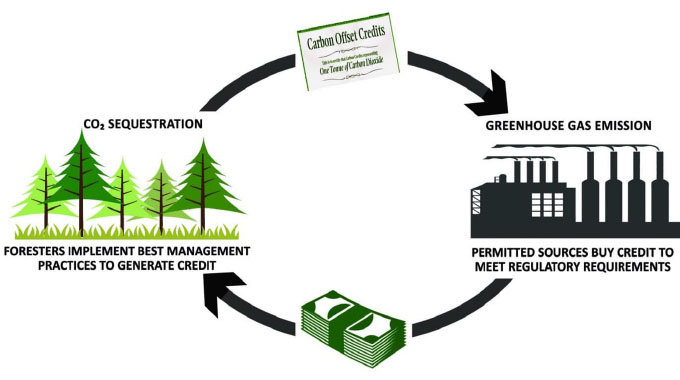
Business Reporter
Zimbabwe has gazetted a law governing the trading of carbon credits, with project proponents now entitled to 70 percent of the revenue from 30 percent announced by the Government earlier for foreign investors and 20 percent for the locals.
The remainder will constitute an Environmental Levy to be deposited in the Environment Fund.
This shall apply during the first 10 years of the project and thereafter, the contract can be “re-negotiated taking into account the prevailing circumstances,” reads part of Statutory Instrument 150 of 2023: Carbon Credits Trading Regulations.
An earlier announcement by the Ministry of Environment, Tourism, and Hospitality said Treasury would get 50 percent of the income while foreign and local investors were limited to 30 percent and 20 percent of the revenue respectively.
“The project proponent shall deposit the share of proceeds…not later than 30 days after receipt of proceeds,” according to SI 150 of 2023, but a waiver can be sought for an extension.
Projects owners who fail to deposit the deposits to the Treasury within 30 days may have their licenses canceled by the licensing authority to be created in the Ministry of Environment.
“The authority shall notify the project proponent in writing of its default and afford it the opportunity to make good its default no later than 30 days,” says the S.I.
At least 25 percent of the 70 percent retained by the project proponent will be invested in the community in consultation with the local authorities while the owners shall retain not more than 75 percent. The Environmental Levy deposited in the fund shall be shared as follows; investment in climate change adaptation and low carbon, 55 percent; loss and damage relief fund, 5 percent; local authority levies, 10 percent; administrative costs, 15 percent and 15 percent to the Treasury.
The purchase of carbon credits is driven by a desire to reduce the carbon footprint of the emitters and mitigate the negative impact of greenhouse gases on the environment.
They are generated by projects or activities that reduce or capture carbon dioxide or other greenhouse gases from the atmosphere, such as renewable energy, afforestation, or reforestation. The credits are often traded on carbon markets or through brokers and can be used to support projects deemed climate-friendly.
Corporates and individuals can also use voluntary carbon credits to meet their own environmental commitments on sustainability to customers, stakeholders, or investors.
Zimbabwe is believed to be the world’s 12th largest producer of offsets, with 4,2 million credits generated from 30 registered projects last year. The country’s largest project, encompassing a 785-000-hectare stretch of forest in northern Kariba, is run in part by the South Pole, the world’s foremost seller of offset, according to reports.
However, the project promoters are being probed for allegedly making super profits by inflating the number of carbon credits and sidelining local communities. The project spans four Zimbabwean provinces: Matabeleland North, Midlands, Mashonaland West and Central. It is community-based and consists of the implementation of activities in conjunction with locals and is administered by four Rural District Councils: Binga, Nyaminyami, Hurungwe and Mbire.
There is also suspicion that some players have been clandestinely profiteering in the brisk carbon entrepreneurship by claiming they are conserving forests even in areas under Forestry Commission and the Zimbabwe Parks and Wildlife Management Authority.



 Online Reporter