

 admin
admin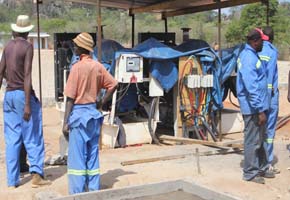
The pipeline linking Mtshabezi to Umzingwane Dam was completed in October and pumping of water to Bulawayo was supposed to begin a few days later.
Up to today, technicians from South Africa and Zimbabwe are being “inexplicably” vexed by synchronisation of generators at the project.
A severe water shortage has forced Bulawayo to adopt a weekly, four-day water shedding timetable for all suburbs.
Last week, at a full council meeting, Bulawayo councillors suggested that traditional leaders should be consulted over the problem at Mtshabezi.
Speaking on behalf of the Minister of Water Resources Management and Development, Dr Samuel Sipepa Nkomo, in an interview yesterday, his personal assistant, Mr Butholezwe Nyathi, said holding a traditional ceremony might be the only option left.
“We will not dismiss the councillors’ suggestion. If you remember, we had a similar problem at Gokwe Dam in the Midlands where the problem seemed technical but could not be solved. We had to brew beer to appease the spirits and it worked,” said Mr Nyathi.
He said experts from a South African company, FG Wilson, local technicians from AC Controls and an independent Zimbabwean expert were on site grappling with the problem of connecting the generators.
“The problem is in running the three generators concurrently in a synchronised manner. We thought water would be connected in October but now we are adopting a wait and see attitude. We are not promising anything at any date, but we will issue a statement when it is appropriate,” he said.
Initially, technicians tried to connect two generators to power pumps, but one of the generators would switch off when the pumps were started.
A bigger generator was brought to the site on 13 November and it also failed to do the job.
The generator was sent to South Africa for remodelling two weeks ago and it is still failing to power the pumps.
Technicians are now working at connecting all three generators.
Contacted for comment the president of the International Traditional Healers Association, who is also the vice-president of the Traditional Medical Practitioners Council (TMPC), Mr David Mhabinyana Ngwenya, said Mtshabezi water would never reach Bulawayo if the rites were not performed.
“There are people who died while the pipeline was being constructed. An appeasement ceremony should be organised by chiefs in the area before progress can be made,” said Mr Ngwenya.
He said elders should go to Dula, Maswabi, Jabu and Zhilo, traditional sites around the dam, to perform the rites, before going to Njelele Shrine in Matobo District to complete the ceremony.
He said a water guardian, in the form of a mermaid could also be the cause for the confusion among the experts.
“They should get old women in the area to perform some rites and give the guardian due respect for things to start moving,” he said.
Renowned historian Mr Pathisa Nyathi, said traditional rites were likely to assist in piping water to Bulawayo.
“It is not the first known case of traditional African spiritualism, towering above Western technology. These places belong to ancestral spirits who need recognition for projects to be undertaken. All we need in Bulawayo is water and if it comes about through African spiritualism, then let it be,” said Mr Nyathi.
The late Cabinet Minister, Dr Herbert Ushewokunze, once suggested that the dam should be named Mwanakuridza, because he believed there was a mermaid in the water.
He said traditional rites should be performed at the site, but the idea was met with stiff resistance by people from the region, who believed the Mtshabezi project was a waste of time.
The people believed that the national Matabeleland Zambezi Water Project, viewed as the permanent solution to Bulawayo’s water problems, should be pursued instead.
It would not be the first time the Ministry has performed traditional appeasement rites to complete a dam project, as it has been done in Gokwe, and at Osborne Dam in Mutare.
It was believed mermaids were preventing the connection of pumps and Dr Sipepa Nkomo told a Senate committee that traditional chiefs would perform rituals to appease mermaids believed to inhabit reservoirs.
Bulawayo’s water crisis continues to deepen as two of the five supply dams, Umzingwane and Upper Ncema have been decommissioned.
The decommissioning of two more, Inyankuni and Lower Ncema is imminent, which would leave the city relying on Insiza Dam and boreholes at Nyamandlovu Aquifer.
Mtshabezi Dam is expected to supply about 17 000 cubic metres of water to Bulawayo everyday and is expected to reduce water shedding by a day.
A water crisis committee meeting has been scheduled to discuss the water situation in the city today in the council chambers.


 Online Reporter
 derick.khumalo