Chronicle Editor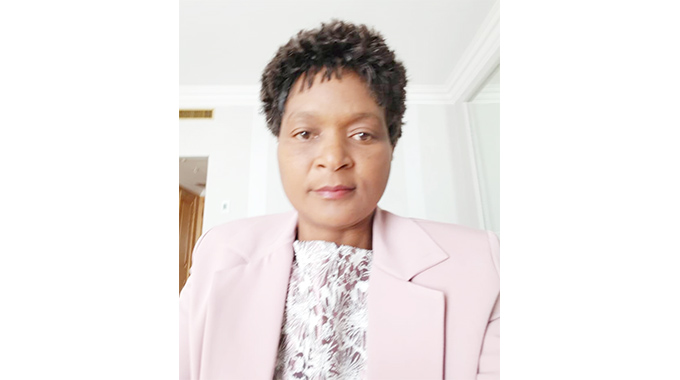
Robin Muchetu, Senior Reporter
AS Women’s Month comes to an end in a few days, it is important to continue celebrating the country’s female achievers and also take stock of gains attained so far.
There is also a need to ensure more women rise up to the challenge of being leaders of note across all sectors. This is the view of Ms Karen Dube, a member of the Zimbabwe Newspapers (Zimpapers) Board and also an accomplished academic teaching Development Studies at Lupane State University (LSU).
She feels women should take up leadership positions and also challenge stereotypes that assume leadership is gendered.
Ms Dube said in the case of Zimbabwe there is a need to be guided by the recognition of human rights, gender equality and gender equity where the principle of gender equity speaks about fairness in opportunities between males and females as a starting point.
Are women taking the challenge?
“We have seen strides in the academic spaces in higher education, it starts at the bottom, things do not only start in positions of leadership at the top. In terms of enrolment in all disciplines like the arts, humanities right up to natural sciences there has to be a balance. Traditionally there has been a tendency to see females gravitating to the arts and humanities disciplines when they enrol at university, while shying away from the hard sciences but now there has been a serious campaign to encourage girls to take up sciences because these disciplines are not gendered. Women can also take up science, mathematics and engineering courses just like males. We have seen a lot of our girls now enrolling for these disciplines,” said Ms Dube in an interview.
According to Ms Dube, balancing the act has to start from the bottom at institutions of higher learning so that as one moves up the ladder to leadership positions, if there is equity and fairness at the bottom, that culture, conduct and manner of doing things will naturally cascade upwards.
Women have started leaving an indelible impression on academia in Zimbabwe.
“We have taken strides in academia where we have seen a lot of women now being appointed to senior positions in universities. Just yesterday we read of the substantive appointment of Professor Doreen Zandile Moyo, a female as the Vice-Chancellor of Gwanda State University. So indeed, women are taking up these leadership positions. In our case at LSU we had a female Pro-Vice Chancellor Dr Nomathemba Ndiweni-Masuku, so yes, women are indeed taking up leadership positions because they can and are able,” she said.
Ms Dube also acknowledged that the spaces were also opening up, allowing women to excel in various fields aided by the Government that is allowing the opening up of spaces through support systems.
“Our Government is very sensitive to principles of gender equity and equality and where possible they try to appoint females and what is encouraging is that they are not just appointing females for the sake of being females but they are appointing females with high qualifications just like their male counterparts so they are not merely getting those appointments out of favour or special considerations.
It is purely out of merit of being qualified for the roles. We applaud the Government for trying, by all means, to bring on board these experienced and qualified women on board. In the majority of cases, our women have risen up to the challenge, they have not failed to deliver,” she said.
What are some of the impediments to gender equality?
“The challenges are many, some are cultural. Culture informs patriarchy placing the primacy on the males and women because of socialisation, we are brought up in such a set up and way of life where leadership is gendered and are made to believe that leadership is for males. One might be discouraged and feel not good enough. Women have to fight those beliefs that they have in them because of the manner in which they are socialised.
There is that psychological barrier that is not easy to penetrate because there is always that backlash from society because they also do not look favourably at women who are in positions of power, but once it is broken it all works well. One has to prove people wrong by working hard to show that you deserve the powerful positions and can deliver,” said Ms Dube.
She added that society was warming up to women as powerful leaders.
“When we went to school ourselves, schools were headed by males, and then gradually society has begun to accept that schools can be headed by women as headmistresses and they do not frown on it anymore. Women are now breaking into those domains and it is refreshing. As we get more female role models in leadership positions women get more confident, it’s a process and we will get there,” she said.
Other challenges that women face are having to play their traditional motherly roles if they are mothers and wives so it’s a delicate balancing act as some of these roles may require them to travel a lot. Ms Dube said pressures also arise in the home due to the travelling as spouses and partners may feel they are not receiving due attention.
However, many women in leadership positions are now getting a lot of support from their children and the rest of their families on their new roles which is a plus, at the same time women have to balance raising families and the new powerful roles that they now play in society.
Ms Dube encouraged women to make themselves more visible in the world where there are concerted efforts to ensure they are seen and taken as equals to their male counterparts.
“Women’s Month must be celebrated and it is important to encourage our women and we must acknowledge them and also encourage them to advance themselves, step out of the private sphere and step into the public space and participate more in society as full and equal citizens,” she said.
She also applauded the unique constitution of the current Zimpapers Board.
“Ours is one of the few Boards that has so many women on it. There is gender equity on our Board. We must applaud the Minister of Information, Publicity and Broadcasting Services Senator Monica Mutsvangwa for this. It is a pleasure to serve on this Board. I must say that as female members of the Board we are given the same respect both by staff and colleagues on the Board,” she said.


 Online Reporter