Online Reporter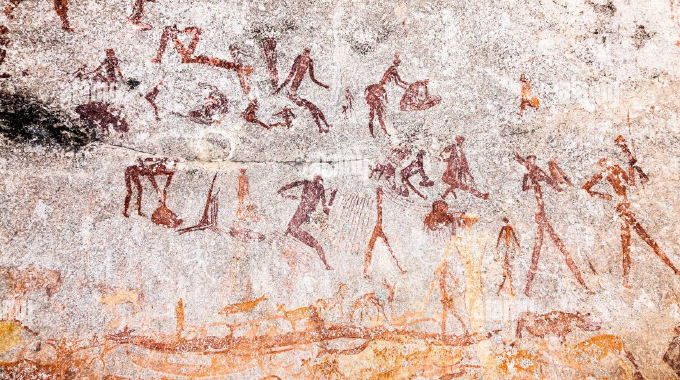
Mzala Tom
Historians argue that the San people were the earliest inhabitants of what now constitutes modern-day Zimbabwe. Archaeologists date San occupation as far back as the Stone Age, 20 000 years ago.
It is believed that about three or four of these hunter-gatherer San families would live together in a cave, feeding on animals like kudus, fruits, roots and birds. They used animal skins to make clothing. Their tools were mainly made of sharpened stones and rocks.
Eventually, the San were dispersed by the Bantu, agriculturalists from the north, and later their descendants were almost driven to extinction by colonialists. Most Zimbabwean San communities are believed to have been driven to the Kalahari in Botswana and some parts of Namibia.
However, the surviving descendants of the San (the Tjwao/Tshwao) are found in Tsholotsho in the Matabeleland North province of modern-day Zimbabwe. The heritage left by the early inhabitants is found in the rock art dotted in caves and rocks across Zimbabwe with the highest concentration being in the Matobo district, in Matabeleland South, where there are over 3 000 rock art sites.
Archaeologists argue that the San made paints by mixing plant extracts, egg shells, and even blood. Fingers, porcupine quills and bird feathers were used as brushes to paint different scenes on the rock faces.
The rock art images are likely to signify various aspects of human emotions, relationships and interactions with each other and the world around them. San rock paintings are found in all provinces of Zimbabwe.
Some of the rock art is found at Tsholotsho North in Tshabanda and Tshefunye. Some of the rock art is found in Mashonaland Central.
Some of the rock art is at Glen Norah East and West in Harare. Some of the rock art is at Nswatugi Cave, Matobo Matabeleland South, Dengeni Cave in Masvingo and some in Manicaland.
San rock art should be embraced and incorporated into our national symbols and artefacts. Efforts must be made to embrace the San people, their wealth of indigenous knowledge and rich cultural traditions. The first citizens must not be forgotten! (Source:
@RealMzalaTom)