Online Reporter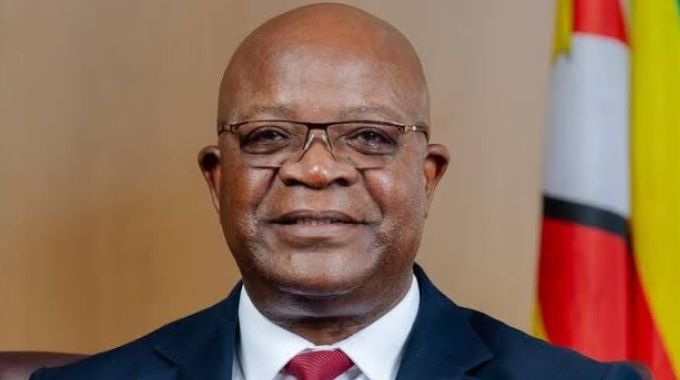
Michael Tome, Zimpapers Business Hub
ZIMBABWE is stepping up efforts to attract investment into mining beneficiation and value addition across key minerals as the country seeks to surpass its 2026 mineral revenue target and build on the US$8,6 billion recorded in 2025.
The push aims to ensure that Zimbabwe captures a better share of the value generated from its mineral resources, rather than relying mainly on exports of raw and semi-processed commodities.
Speaking at a recently held Zimbabwe Mining Investment Seminar Africa Down Under 2026 in Perth, Australia, Deputy Minister of Mines and Mining Development (overseeing Oil and Gas
Research, as well as Strategic Minerals and Exploration), Dr Caleb Makwiranzou, said the Government was actively seeking investors to establish processing and refining capacity across the mining value chain.
To facilitate investment, the Ministry indicated that it is offering investors access to specific mining titles, joint-venture structures and greenfield exploration blocks.
The Government’s strategy comes as global demand for lithium and other battery minerals continues to drive investment interest in resource-rich African economies.
According to Dr Makwiranzou, lithium presents significant opportunities beyond existing operations at Bikita, Arcadia, Kamativi, Sandawana and Zulu, with investors being encouraged to establish midstream processing facilities.
In the platinum group metals (PGMs) sector, he indicated that Zimbabwe is seeking fresh investment in exploration and refining.
Dr Makwiranzou noted that established producers, including Zimplats, Mimosa, Unki and Karo, were continuing to expand, while significant opportunities remained along the under-explored margins of the Great Dyke.
“In the lithium segment, we are actively inviting investment into midstream capacity, spodumene concentration, sulphate, hydroxide and carbonate conversion, and in time precursor and cathode material production,” he said.
“In platinum group metals, there is clear scope for new entrants in exploration along the under-explored margins of the Great Dyke, and there is a genuine gap in local refining capacity that is waiting for the right partner.”
The renewed investment drive comes as Zimbabwe seeks to increase mineral production and deepen beneficiation as part of its broader economic transformation agenda.
Zimbabwe is also targeting investment in chrome beneficiation, with the Government seeking partners to establish ferrochrome and chromium alloy smelting capacity.
The country has substantial chrome resources along the Great Dyke, but Dr Makwiranzou said these remained significantly under-beneficiated, presenting an opportunity for investors to capture additional value currently lost through the export of raw ore.
In gold, the Government is looking to formalise and modernise the artisanal and small-scale mining sector, which has become an increasingly important contributor to national gold production.
Opportunities are available in mining equipment, processing plants, financing, custom milling and off-take arrangements, he said.
The diamond sector is another area targeted for greater domestic value addition, with Zimbabwe seeking investment in modern extraction methods as well as cutting, polishing and jewellery manufacturing.
The Government wants to retain more of the value generated from Zimbabwean diamonds within the country by developing downstream industries around the resource.
Dr Makwiranzou said opportunities were emerging from developments in the iron and steel sector, particularly around the Manhize project, which he said was opening downstream and supply-chain opportunities across the region.

Coal and coking coal were similarly identified as areas with potential, particularly in supporting regional energy and steel production.
This comes as Zimbabwe is positioning less-developed mineral resources such as tungsten, kyanite, antimony, graphite, rare earths and battery-grade nickel as future investment opportunities.
“We are at the beginning of a chapter that the next decade of global demand will write, and the partners who secure a position now will be the ones who write it with us,” Dr Makwiranzou said.
He said the Government was prepared to take a minority free-carried interest in selected projects alongside committed operating partners, while other opportunities would be structured as private investments with full ownership rights.
Young Miners Foundation (YMF) chief executive officer, Mr Payne Kupfuwa, said the move gives artisanal and small-scale miners a chance to modernise their operations and make them more productive and commercially viable businesses.
He noted that increased investment in equipment and processing technology could improve gold recovery rates, reduce production losses and enhance the productivity of small-scale miners.
“Opportunities are emerging across the gold value chain, particularly in the supply of modern mining equipment, establishment of efficient processing plants and custom milling facilities, as well as financing and structured off-take arrangements,” said Mr Kupfuwa.
He said financing was another critical area, as many artisanal and small-scale miners lacked the capital required to acquire appropriate equipment and expand their operations.
“More access to affordable finance, coupled with reliable off-take arrangements, could provide miners with the confidence to invest in their operations while bringing more gold production into the formal economy,” he said.
Economic analyst, Mr Tinevimbo Shava, said Zimbabwe’s renewed push for mineral beneficiation could mark a significant shift from an extractive model towards a higher-value mining industry, but success will depend on attracting the capital, technology and infrastructure required to process minerals locally.
“Opportunities in lithium, PGMs, chrome, gold and diamonds were particularly significant, as local processing could increase export earnings, create industrial linkages and retain more mineral value within the economy.
“The opportunity is clear, but beneficiation is capital-intensive and requires reliable power, infrastructure, appropriate technology and a predictable investment environment. If these conditions are addressed, Zimbabwe could capture a much larger share of the value generated from its mineral wealth,” said Mr Shava.
The Government has identified mining as a key pillar of economic growth, but the sector continues to face pressure to move beyond mineral extraction towards greater local processing, manufacturing and export of higher-value products.