Online Reporter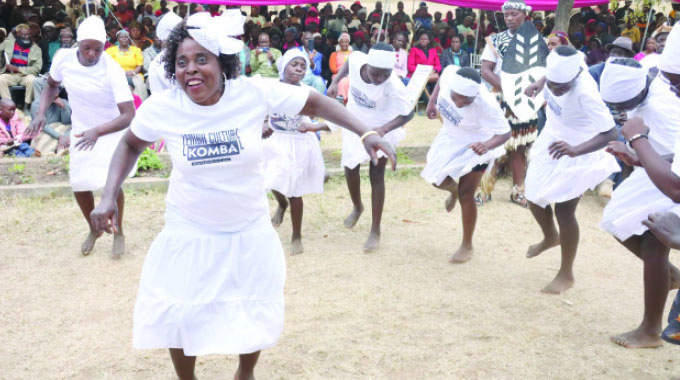
Raymond Jaravaza in Mberengwa
MPOSI Secondary School in Danga, Mberengwa District, Midlands Province, was the rendezvous and was steaming with activity as hundreds of villagers, traditional leaders, political dignitaries and guests from South Africa gathered yesterday to celebrate the rich culture and heritage of the Lemba people.
Predominantly found in Mberengwa and other parts of Midlands, Masvingo Province and across South Africa, the Lemba community’s cultural ties remain strong with a delegation travelling from South Africa to join members from 12 clans — namely Hamisi, Seremani, Madi, Sadiki, Mani, Haji, Sarifu, Nemanga, Bakari, Tovakare, Dumha and Hasani — in festivities that marked the revival of their ancestral traditions.
The Lemba Cultural Annual Festival, held yesterday, signifies a significant milestone following efforts to resurrect the event last year. The festival was last organised in 1972, according to event spokesperson, Dr Takavafira Zhou.
“The last Lemba Cultural Festival was held many years ago and last year we began efforts to revive it. Much work has been invested and we are proud to say that today’s event was a resounding success, judging by the large number of people who travelled from all corners of the country and from South Africa,” said Dr Zhou.
The day was filled with lively activities such as traditional dancing, singing and poetry in the Lemba language — celebrating the community’s roots, traditions and heritage.
Chief Mposi emphasised the importance of this revival in safeguarding the community’s cultural legacy.
“We have long awaited this day that honours our identity as the Lemba people. We are honoured to have delegates from South Africa here to join us in this historic occasion. Together, we are committed to preserving our culture and heritage for future generations,” said Chief Mposi.
He also recounted the journey towards reviving the festival: “In 2021, I was invited to South Africa to meet with other Lemba community members there. The meeting sparked discussions to revive our cultural festivities. Leaders from both sides expressed strong interest in re-establishing this tradition and with a shared vision, we have made significant progress.”
Mr Ishe Pandelani Mutenda Hadzhi, president of the Lemba Business Council in South Africa, highlighted the organisation’s apolitical stance.
“Borders may separate us physically, but our culture and heritage unite us eternally. It is vital for us as the Lemba people to come together and keep our traditions alive for the benefit of our children and future generations. We are a non-political organisation driven solely by the desire to revive and preserve our heritage,” he said.
Guest of honour, Dr Joram Gumbo, who is the Special Advisor to the President, responsible for monitoring Government programmes and projects, urged the Lemba community to take pride in their history and cultural identity.
“Today, we gather in unity and pride to celebrate Lemba Day — a day that honours the remarkable history, rich traditions and resilient spirit of the Lemba people. This year’s celebration is especially significant as it coincides with the launch and commemoration of Culture in Mberengwa.
“These events serve as powerful reminders of the importance of preserving our cultural heritage, particularly in a world that is rapidly changing,” said Dr Gumbo.
He highlighted the resilience of the Lemba people. “Their oral histories speak of ancestors, who journeyed from distant lands, bringing customs that distinguish them — such as the sacred rite of circumcision, dietary laws echoing ancient traditions and a commitment to lineage preservation. These are not mere relics of the past but living expressions of their identity.”
Dr Gumbo emphasised the urgency of safeguarding these traditions amid modern challenges:
“Globalisation, while offering many benefits, also threatens to erode our cultural practices. The allure of modernity can sometimes distance the youth from their roots, causing the rhythms of ancient customs to fade.
“However, our culture is not just a relic, it is a guiding compass into the future. We must take deliberate steps — document elders’ stories, teach our children traditional songs and rituals and find innovative ways to keep our traditions alive. Our culture is not an obstacle to progress but the foundation upon which a brighter tomorrow is built,” he said.