Chronicle Editor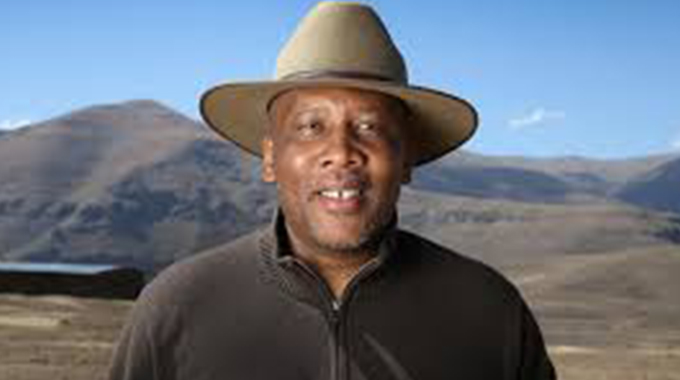
THE Kingdom of Lesotho is a founding member of the Southern African Development Coordination Conference (Sadcc) which was formed in Lusaka, Zambia, in April 1980. Sadcc transformed into the Southern African Development Community (Sadc) in 1992.
Situated in the south-eastern region of Southern Africa, Lesotho is entirely surrounded by South Africa. Lesotho’s geographical formation is characterised by high mountains and deep valleys, and it is the only country in the world to have all its entire territory located at more than 1,000 metres above sea level. More than 75 percent of Lesotho is mountainous, with only 25 percent considered lowland.
A scenic land of tall mountains and narrow valleys, Lesotho owes a long history of political autonomy to the mountains that surround it and protect it from encroachment. Since the Neolithic Period, the mountain kingdom was the domain of Khoisan-speaking hunter-gatherers. In the 19th century, the Sotho, led by Moshoeshoe I, took control of the region.
It remained independent until it became a British protectorate, one of three British High Commission Territories (the others being Bechuanaland (now Botswana) and Swaziland (now Eswatini).
Head of State: King Letsie III
Head Of Government: Prime Minister Sam Matekane
Capital: Maseru
Currency: Lesotho Loti
Official languages: Southern Sotho, English
Population: 2,3 million
Independence Day: 4 Oct 1966
Natural Resources: Diamonds, Wildlife, Mohair, Wool and Water
Size of country: 30 355 square kilometres
Completely encircled by the Republic of South Africa but separated from it by forbidding mountain ranges. Although culturally conservative in the main, the people of the country welcomed the modernisation programmes begun in the 1990s, which have brought new wealth to the country but at the cost of much environmental damage.
Tourism and revenues from the country’s diamond industry have also helped to improve material conditions, and the capital, Maseru, has grown to become one of Southern Africa’s most attractive cities. The country forms an enclave within South Africa, bordering on three of the latter’s provinces—KwaZulu-Natal, Free State, and Eastern Cape. Like only two other independent states in the world (Vatican City and the Republic of San Marino), Lesotho is completely encircled by another country, on which it must depend for access to the outside world.
Climate
Precipitation, brought by the prevailing winds, occurs mostly between October and April and is variable; the annual average is about 710 mm, with amounts decreasing from east to west. Hail is a frequent summer hazard. Temperatures in the lowlands reach as high as 32 degrees Celsius in the summer and plunge to ?7 degrees Celsius in the winter.
In the highlands, the temperature range is much wider, and readings below ?18 °C degrees Celsius are not unusual. Frost occurs widely in the winter, when the Maloti Mountains are usually snowcapped. Lesotho is the last stronghold in Southern Africa of the magnificent bearded vulture, or lammergeier. Some rivers contain yellow fish and the rare Maloti minnow; trout and the North African catfish have also been introduced.
People
The Sotho (also known as Basotho) form the majority of the country’s population. They were originally united by a common loyalty to the royal house of Moshoeshoe I, who founded the Sotho nation in the 19th century. Internally, divisions between different chiefdoms—and within the royal lineage itself—have had political significance, but externally, a sense of Sotho nationhood and cultural unity remains strong.
Lesotho is also home to a Zulu minority, a small population of Asian or mixed ancestry, and a European community that is dominated by expatriate teachers, missionaries, aid workers, technicians, and development advisers. Except for English, all the main languages spoken in Lesotho are members of the Niger-Congo language family. Sotho (Sesotho), a Bantu language, is spoken by the majority of the population, although both Sotho and English are official languages in the country.
Zulu is spoken by a small but significant minority. Phuthi, a dialect of Swati, and Xhosa are also spoken in parts of Lesotho.
Some four-fifths of the population profess Christianity, of which the largest denomination is Roman Catholic; other denominations include Lesotho Evangelical, Presbyterian, and Anglican. Independent churches are also present, together with Zionist sects (small African sects that blend Pentecostal Christianity and indigenous ritual belief).
Other religions—including Islam, Hinduism, and Buddhism—are practiced by small percentages of the population, as are traditional religions. Some adherents of Christianity also embrace traditional religious beliefs.
Economy
Lesotho’s economy benefits from South Africa, with which it forms part of a customs union and shares an integrated communications system and with which it shares the Lesotho Highlands Water Project, a large-scale water transfer scheme that exports water to South Africa and produces hydroelectric power for Lesotho. It has also depended heavily on South Africa for employment for much of the working population.
Although only one-tenth of the country is arable, the majority of the rural population is involved with subsistence agriculture. Agriculture was frequently a major contributor to the gross domestic product (GDP), but drought, especially in the 1990s and in the early 21st century, has drastically reduced its contribution to the GDP. The most important crops are corn (maize), sorghum, wheat, beans, and peas.
Cattle products have been exported, and wool and mohair are produced and exported. Foodstuffs must be imported, as droughts have largely destroyed summer harvests and livestock. Agricultural development projects are funded by a wide range of agencies, including the World Bank.
Timber cutting is largely for fuel. Fishing (from inland waters) of the common carp, rainbow trout, and catfish also is practiced on a small scale. Geologic surveys have revealed little promise of mineral wealth, although kimberlite pipes in the highlands do produce diamonds. A mine at Letseng-la-Terae in Mokhotlong operated briefly, in 1977–82, and in June 1999 an agreement was signed between private interests and the Lesotho government to reopen it; production resumed in 2003.
There are known uranium deposits near Teyateyaneng, about 50 km northeast of Maseru, but the deposits have not yet been commercially exploited. Of primary importance to the country is the Lesotho Highlands Water Project (LHWP), a large-scale water-transfer plan involving Lesotho and South Africa. Although similar plans had been discussed since the 1930s, the LHWP first took shape in the late 1980s and grew in scope in the mid-1990s.
The LHWP augments the transfer of the headwaters of the Orange River deep in the valleys of the Lesotho highlands to the river’s principal tributary, the Vaal River in South Africa, thus supplying that country with much-needed water while generating hydroelectric power for use in Lesotho.
The LHWP consists of dams, reservoirs, transfer tunnels, and a hydroelectric power station. The first phase of the project included the construction of the Katse Dam, completed in 1997, and the Muela Hydroelectric Power Station, inaugurated in 1999. The Mohale Dam was completed in 2003, also as part of the first phase, which was celebrated with an official inauguration ceremony in March 2004. The second phase was launched in 2014.
It included the construction of the Polihali Dam and a tunnel to connect the Polihali and Katse sites. The LHWP has already generated income for Lesotho from the water exported to South Africa, and Lesotho has been able to meet much of its electricity needs with hydroelectric power produced by the project.
Manufacturing is a relatively new sector of Lesotho’s economy. The emphasis has been on small-scale enterprises; several industrial estates operate small projects, producing candles, ceramics, furniture, and jewelry. Other activities include weaving, canning, and diamond cutting and polishing. Clothing from wool and mohair, food products, fertilisers, and television sets are also produced. Urban development has stimulated construction and catering and other service industries.
In the early 21st century, the textile industry grew, aided by favourable trade agreements such as the U.S.-led African Growth and Opportunity Act and the World Trade Organisation’s Agreement on Textiles and Clothing; the sector diminished, however, when certain trade protections expired in 2005, and competition from countries such as China rendered the Lesotho textile sector largely uncompetitive.
Lesotho’s currency, the loti (plural: maloti), is issued by the Central Bank of Lesotho. The currency was introduced in 1980 as a way to establish monetary independence from South Africa. Lesotho is a member of the Common Monetary Area, comprising Lesotho, Swaziland, South Africa, and (since 1990) Namibia. This organisation allows Lesotho the freedom to set the exchange rate of its own currency, although at the beginning of the 21st century the Loti was fixed to the South
African Rand. Lesotho has a few commercial and development banks. Lesotho, South Africa, Botswana, Namibia, and Swaziland are members of the Southern African Customs Union (Sacu), which allows for the free exchange of goods between member countries.
Lesotho’s principal exports are clothing, furniture, and footwear, while its main imports are manufactured goods, foodstuffs, machinery, and transport equipment. The country maintained a trade deficit into the 21st century. Most trade is with countries in Africa and North America. The large deficit is offset somewhat by the remittances of Lesotho’s migrant workers, external aid, and receipts from SACU.
Politics
Lesotho is a constitutional monarchy, with the king as the head of state. The prime minister serves as the head of government and head of the armed forces. The bicameral parliament consists of an elected National Assembly and an appointed Senate. The 120 members of the National Assembly are elected to five-year terms—80 directly, 40 proportionally—while the Senate consists of 22 traditional chiefs and 11 members chosen by the king.
The king himself does not hold executive authority and is instead a national symbol; executive power rests with the cabinet, which is led by the prime minister. Political parties were dissolved in 1986 but reauthorised in 1991. Lesotho is divided into 10 administrative districts, each of which is under the direction of a district council, headed by an administrator. The sub-district tier of local government is administered through community and municipal councils.
District council members are indirectly elected by the community and municipal councils within the district, while community and municipal council members are directly elected by their constituents. Traditional chiefs are also included in district, community, and municipal councils. – Britannica.com/ https://www.sadc.int



 derick.khumalo