admin
admin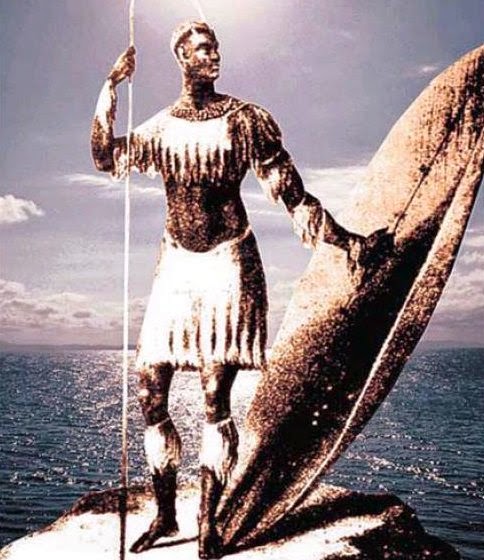

Opinion Saul Gwakuba Ndlovu
The South African government was recently reported to have deported about 4,000 Lesotho nationals. Television footage showed hundreds of people with an assortment of luggage strewn on the ground at the two countries’ border post, a stone’s throw from Maseru, Lesotho’s capital town.
Some of the affected people said they were born and bred in South Africa, and so were their parents and grandparents.
They said they did not know anyone in Lesotho, or any place which they could call a home in the small mountainous kingdom that is completely surrounded by South Africa.
Lesotho’s population is about four million or double that if all ethnic Basotho resident in South Africa were to be repatriated. We are not including those working in South Africa and Namibian mines on contract, but are considering only those who can rightly claim South African citizenship by right of birth.
Lesotho was created by the violent conditions caused by King Tshaka of the Zulus whose military campaigns caused a socio-economic upheaval (imfecane, difaqane) that sent whole communities fleeing across the Drakensberg Mountains to seek safety and succour in the caves and other natural fortresses in those rocky hills.
Their leader, nicknamed Moshoeshoe, grouped the helpless refugees at various places one of which was called Butha Buthe, literally meaning “indiscriminate gathering”.
No sooner was Tshaka assassinated by his brothers in 1828, resulting in a reduction of the military campaigns, than the Boers from the British Cape colony drifted northwards, across the Senqu (Orange) River into the area occupied by Moshoeshoe and his motley of destitute refugees.
That Boer development, the Great Trek, which started in 1834, pushed Moshoeshoe further from the savannah grasslands towards the Drakensberg and its western spur, the Maluti Mountains.
The Boers were much fewer than Tshaka’s spear or assegai-wielding forces, but they were a more serious threat because of their much more dangerous weapons, the gun.
At just about that period, some French protestant missionaries arrived in the territory held by Moshoeshoe. One of them, Rev Eugene Casalis, became a highly trusted advisor of King Moshoeshoe.
He advised him to seek the protection of the British government. After protracted negotiations, Moshoeshoe’s territory was declared the British Protectorate of Basutoland in March 1884. However, some of their land with very good grazing red grass known as “themeda triandra” was given to the Boer Republic of the Orange Free State.
The area had been seized by the Boers during some of the several military clashes between Moshoeshoe’s people who by then had moved from the western to the eastern side of the Caledon River and settled on and around Thaba Bosiu (Mountain at night.)
History tells us that it was from on top of that hill that Moshoeshoe rolled down rocks and boulders against some of his foes, including Mzilikazi’s raiding Ndebele army. A guide told the writer of this article in 1990 on top of that historic hill that Moshoeshoe used the services of traditional Sotho medicine men to make the hill look like a huge mountain at night or whenever an enemy approached it.
Maseru, the capital of Lesotho, is a few kilometres from Thaba Bosiu, a very popular tourist attraction.
From the time Lesotho became independent on October 4, 1966, its government quietly tried to negotiate with the South African regime for the return of what Maseru refers to as “the conquered land”.
That means the area where the South African towns of Winburg, Ticksburgy, Bethlehem, Edenburg, Springfontein and Barkly East stand. Maseru said that that was Lesotho territory seized and occupied by Great Trek Boers, and later wrongly given to South Africa by Britain when Basotholand became a British protectorate in 1884.
The negotiations petered out after the South African apartheid administration told Chief Leabua Jonathan, the Lesotho Prime Minister at that time, that the South African administration might consider repatriating Basotho working in South Africa.
That must have reminded the Lesotho administration of an outstanding labour exchange agreement between the two countries dating back to 1910 whereby South African mines offered to recruit cheap labour in Basutoland.
The recruitment was done by an organisation called the Witwatersrand Native Labour Association (Wenela). Large numbers of male Basotho were recruited and worked on 18-month-long contracts on South African mines.
Their remittances home were a very important part of Lesotho’s gross national product (GNP). Lesotho has no natural resources except water, some of which is snow that falls on the Drakensburg and the Maluti mountains.
A little although very good, agricultural land is found in a narrow region that lies lengthwise between the high mountains in the country’s east and the western lowlands.
Known as the Cave Sandstone Terrace, the region is very productive as it is very fertile. However, it is too small for a nation that does not have modern industries except a few hotels.
Some Lesotho nationals are calling for what they term the “integration” of Lesotho and South African. One can reasonably assume that by “integration” they mean amalgamation.
It would appear that in fact Lesotho’s sound socio-economic future lies in its federalisation with South Africa, so does that of Swaziland.
As nations grow and develop, hamlets grow into villages, villages into towns, and towns into cities, populations becoming larger with the passage of time. The expansion of populations results in the “contraction” of residential and production land, hence the deportation of the Basotho from South Africa.
The solution lies in micro-states such as Lesotho, Swaziland, the Gambia, Djibouti, Tonga, Luxembourg and others becoming integral parts of economically stronger states because they will collapse sooner or later because they are non-viable on their own.
- Saul Gwakuba Ndlovu is a retired Bulawayo based journalist. He can be contacted on cell 0734328136 or through [email protected]


 Online Reporter