Online Reporter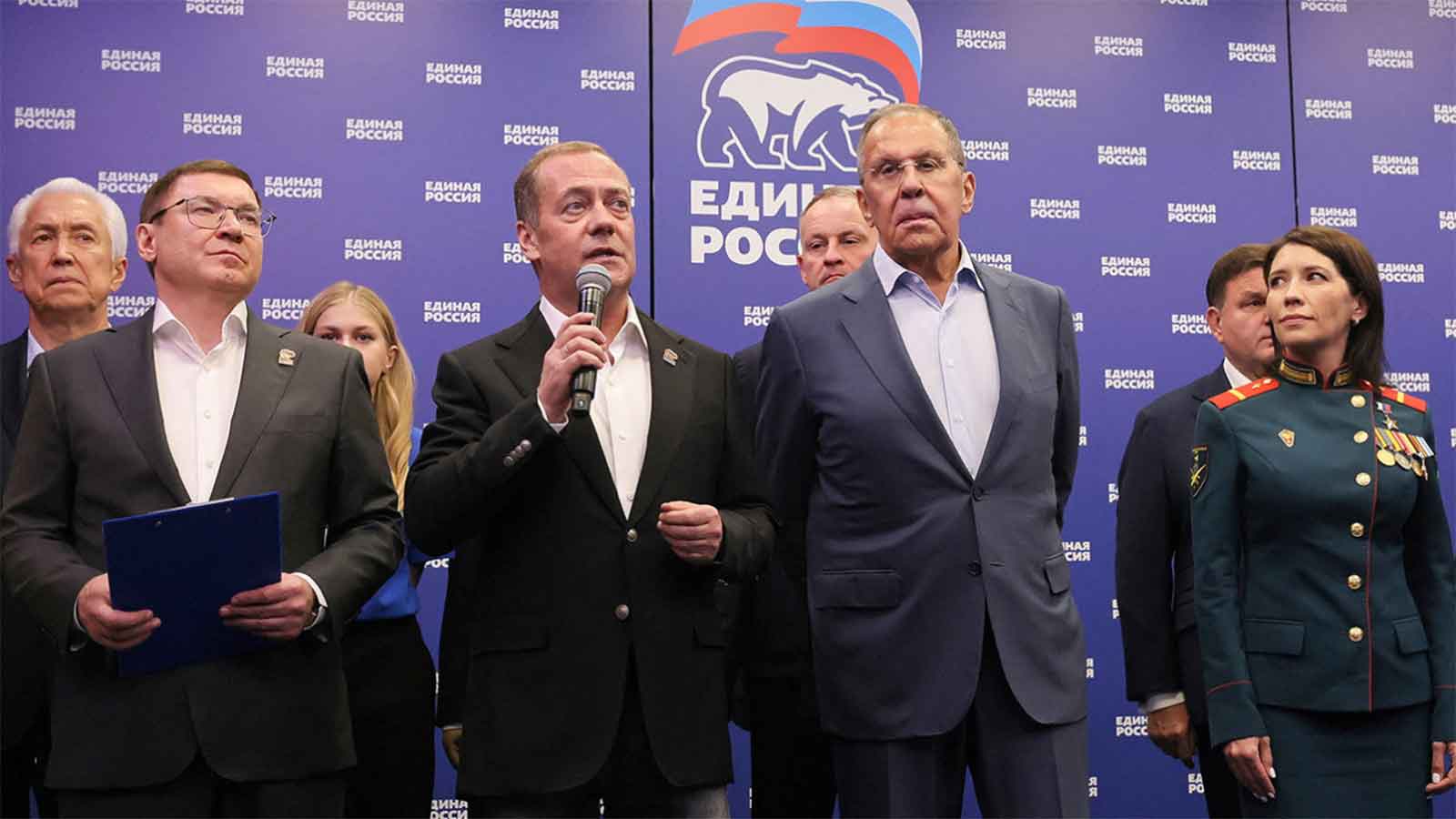
Isdore Guvamombe
I have this knack to follow international politics that drives me, first, as a villager and second as a Zimbabwean and lastly as a journalist.
Hailing from Zimbabwe where the West has previously made it their job to determine how elections should be held in accordance to their standard operating procedure, I have followed every election with keen comparative interest.
Last week Russia, for all its body politic, the West’s nemesis in international politics and in everything else like sports, held its State Duma elections, an equivalent of our legislative election, of course outside presidential aspect.
It was very interesting to see Russia go to elections while at war, while its enemy Ukraine has shelved elections on the pretext that it was at war.
This is a critical point that this villager, the son of a Zimbabwean peasant, will revisit later in this instalment.
First things first! Western diplomats and media as a precursor to the elections, said they were going to be Waterloo for President Putin and the United Russia Party, based on misinformation that the people of Russia were tired of the conflict with Ukraine and did not want the ruling party and Putin himself.
But as results would have it, President Vladimir Putin’s ruling United Russia party secured a record super-majority in Russia’s parliamentary elections held from September 18 to 20, 2026.
In what is Russia’s first parliamentary election since the launch of the full-scale special military operation in Ukraine began in 2022, the election was framed as a referendum on the conflict. It was a test case.
A barometer of the conflict’s popularity and obvious the popularity of Putin himself.
The ruling United Russia party won 349 seats, retaining its “constitutional majority” status, Russian Central Election Commission (CEC) Chairperson Ella Pamfilova announced on Friday.
Pamfilova said that representatives of six parties and four self-nominated candidates were elected to the new State Duma, the lower house of parliament.
According to CEC statistics, United Russia won 349 seats in the lower house of parliament, followed by the Communist Party of the Russian Federation with 37 seats, the Liberal Democratic Party of Russia with 23 seats, New People with 19 seats, A Just Russia with 17 seats, and Rodina with one seat. The four remaining seats were allocated to self-nominated candidates.
The final turnout in the election was 59,8 percent, higher than the 51,72 percent recorded in 2021, Pamfilova reported.
The State Duma is Russia’s permanent legislative body, with 450 deputies.
According to the Russian system, the seat allocation for this election followed the traditional model: of the 450 State Duma seats, 225 are distributed proportionally according to party lists, with participating parties required to reach a 5 percent threshold to obtain seats; the remaining 225 seats are elected through single-mandate constituencies nationwide under a relative majority voting system.
But what is important is that Russia is not America. Russia is not Western Europe and soon after the announcement of the result the West went ballistic, claiming the elections were rigged and were not transparent.
But my friends from Zimbabwe who observed the elections say they were done according to Russian law and that the results were authentic.
One striking point of the election which crashed the Western ego was that in the election were veterans of the Ukraine war, 58 of which won the elections.
Then there is a fact of the so-called occupied regions, the place that Russia took from Ukraine, again the vote in favour of United Russia and Putin where highly favourable.
Of course, the West will cry havoc and cry foul but the truth is an election was held under Russian standards and the results are authentic.
That the 58 veterans, who according to Western mantra should be hated by the ordinary Russian people, won elections, delete the Western narrative that those who fight on the side of Russia are not liked by people.
Again, Western standards should not apply to every election because the politics is different.
The people are different and democracy is not a one-size-fits-all or straight jacket customised by the West.
The West cannot abrogate itself the right to tell Russia how to run its elections.
If democracy is a yardstick, why is the West silent when Ukraine has not gone for elections. Western democracy is about elections, but in Ukraine, democracy is about keeping Western interests afloat, using the Zelensky regime.
Elections, are, therefore, not important for as long as Zelenskyy who is the vanguard of their interests remain in power.
Russia, under Putin has stuck to its election schedule, religious, albeit the stakes of war weighing heavily on its everything.
Today Ukraine is ruled by Zelensky’s ochlocracy and not by elected leaders.
Their time is up. Elections have been suspended indefinitely.
So the recent State Duma elections in Russia are a credible way forward that has elected a leadership to drive the country forward.
It is a yardstick of the endorsement of the current state of affairs and the elections give new credence to the country’s existence.
This villager, the son of a Zimbabwean peasant is impressed by Russia’s ability to go for elections, even during war which put Ukraine and proxy of the US and its allies in the West.
For many Zimbabweans, the criticism of the Russian State Duma elections are not anything new, we have had our own share of criticism from the West and its ally, the US.
Isdore Guvamombe is a veteran multiple-award winning Zimbabwean journalist and wordsmith known by the sobriquet, The Villager.