dyton mupawaenda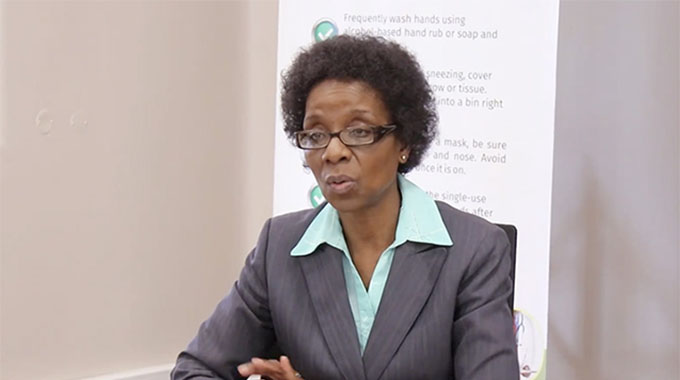
Herald Correspondent, Catherine Murombedzi, had a question and answer interview with the Public Health Advisor to the President and Cabinet Dr Agnes Mahomva (AM) on lessons learnt from Covid-19 and how the nation can move forward. Prior to her recent post, Dr Mahomva was the Covid-19 chief co-ordinator in the President’s Office.
*****
CM: Covid-19 caught the nation unprepared. However, Zimbabwe did not fare badly as was expected by other sectors. What do you attribute this to?
AM: Four major issues contributed to our success.
a) First, there was the highest level of leadership and commitment very early on into the pandemic. This was demonstrated by His Excellency, President Mnangagwa, when he officially launched the national Covid-19 Preparedness and Response Strategic Plan in March 2020 before ANY cases were recorded in Zimbabwe. He further demonstrated the highest level of commitment by supporting mobilisation of the needed resources (financial and material) to implement the strategic plan and by immediately setting up a Cabinet Inter-Ministerial Covid-19 Task Force to oversee the national response that co-ordinated from his office.
b) Second, the country prioritised domestic funding. A review of Zimbabwe’s 2021 Covid-19 response expenditure analysis demonstrated that 84 percent of the total US$$362 spent on the pandemic was domestic funding. Zimbabwe was, therefore, able to immediately operationalise the national Covid-19 preparedness and response strategic plan in a timely fashion. Zimbabwe did not have to wait for donations to support the most vulnerable populations or to procure vaccines and other pandemic consumables, for example.
c) Third, the country used a whole of Government and whole of society preparedness and response approach. This approach ensured that all stakeholders and all sectors came together. Collaboration with all stakeholders, including communities and the private sector was helpful in ensuring that the national response was efficient and that everyone was on board. We specifically learned very early on that Government needed to lead and co-ordinate. Government could not do it alone. Input from all stakeholders in addition to input from all Government ministries (and not just the Ministry of Health and Child Care), departments and agencies (MDAs) were essential.
d) Finally, the country’s response was guided by evidence/science based response policies, strategies, and approaches at all times. Specifically, our national response was guided by both local and global science, ranging from science generated from analysis of our daily Covid-19 statistics to local, regional, and global scientific research findings that include guidelines from the World Health Organisation (WHO). This evidence based approach made our national response very credible to the communities served and hence enabled us to, for example, deal with Covid-19 fake news appropriately and in a timely fashion.
CM: How prepared is Zimbabwe in case of another pandemic outbreak?
AM: The country is prepared, thanks to the many best practices and lessons we learned during the Covid-19 pandemic. Most of the best practices are being institutionalised in preparation for future outbreaks and pandemics.
CM: Is there a funding plan now?
AM: The country has a detailed “Zimbabwe Multi-Sectoral Cholera Elimination plan” that is being used to mobilise both domestic and global resources.
CM: You are now in the first ever public health seat, and public health entails management of pandemics. Currently, the country has cholera. What is the strategic plan to manage this?
AM: Indeed, the newly created Office of the Public Health Advisor to the President and Cabinet in the Office of the President and Cabinet was necessitated by the need to further strengthen public health promotion efforts and capacities to enhance the country’s response to public health in general and to public health hazards and emergencies in particular, such as the current cholera outbreak. The country has a very clear and detailed “Zimbabwe Multi-Sectoral Cholera Elimination Plan 2018-2028” that was informed by past cholera outbreaks and the recent Covid-19 pandemic. The plan has seven key preparedness and response strategies/pillars as outlined below. Implementation of these strategies is science driven and based on a whole of Government and society preparedness and response approach.
a) Leadership and Coordination
b) Disease Surveillance
c) Case Management (Diagnosis and Treatment)
d) Advocacy and Community Engagement
e) Water Sanitation and Hygiene (WASH)
f) Urban and Rural WASH infrastructure
g) Cholera Vaccination
CM: Dr Mahomva, what is your parting shot?
AM: Zimbabwe has a lot of competing priorities and limited resources to manage all of them at the same time. This is a common challenge for many nations, if not all nations.
Zimbabwe, however, has lots of experience in managing public health emergencies and priorities, especially outbreaks. There is, therefore, no need to panic about the current cholera outbreak. There is, however, a BIG need to remain very vigilant by adhering to all the recommended cholera preparedness and response.
Public health and social measures:
1) Boil all water before drinking it or using it to prepare food.
2) Properly wash hands with soap and running water after using the toilet and before handling food.
3) Good hygiene is the best way to prevent, prepare for, and respond to cholera at all levels.
CM: Thank you Dr Mahomva.


 Online Reporter