

 Chronicle Editor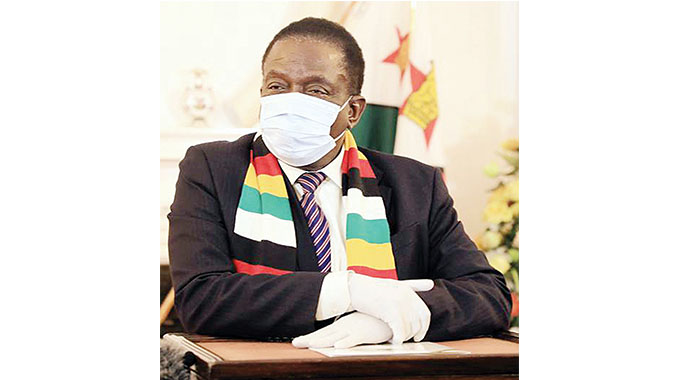
Dennis Mudzamiri
The world is battling the Covid-19 pandemic with most countries instituting a range of measures under which people are supposed to stay at home and observe hygienic protocols against the spread of the disease.
The disease which was first reported in China in the city of Wuhan, Hubei Province in December last year, has spread world wide with a confirmation of 29 million cases and 925 000 deaths globally by late afternoon yesterday. Zimbabwe had 7 526 cases, 5 678 recoveries and 224 deaths.
The world, including superpowers, is under siege from this disease that is threatening to wipe out the human race if no cure is discovered soon. Superpowers are also battling to find a cure to contain the disease.
Covid-19 is a flu-like disease with the commonest symptoms being fever, dry cough and tiredness and the serious ones being difficulty in breathing, chest pains and loss of speech sometimes leading to death.
The disease caused by the coronavirus is spread by respiratory droplets usually from coughing or sneezing, direct contact with infected person or by contact with contaminated objects or surfaces and the symptoms appear after a week or even two after exposure.
To protect oneself against contracting the disease people must put on face masks, maintain a social distance of a metre or more and wash hands regularly as well as the use of hand sanitisers.
A virus is a submicroscopic (that is it is far smaller to be seen by the naked eye) parasite that cannot reproduce by itself but once it infects a living cell it uses the cell machinery to produce more viruses and in turn destroy the host cells. In humans the cells are the microscopic building bricks that make the human body. The coronavirus infects the nose attacking the nasal tissues. From there it goes down the windpipe to the lungs where serious damage can take place and eventually to most of the body organs causing sickness, sometimes death.
Governments are bound to protect their people from this deadly disease. Tackling and eradicating any disease demands a lot of resources, including money. Therefore, we look upon each and every government to have created a prudent system that makes available adequate resources to be able to deal with such adversaries should they show up.
To the Zimbabwean government and Africa at large this is a very special lesson. For Africa due to underdevelopment and limited resources, our strongest weapon against the pandemic is to stick to anti-Covid-19 hygienic rules while waiting for the cure to be found, most likely from outside. Never underestimate a pandemic, take it seriously and heed all warnings, prepare in advance for the worst scenario with the nation being educated about the pandemic through widespread media coverage.
There must be strict lockdowns, testing, tracing and quarantining of patients to curtail the spread of the disease and transparency is very important with respect to statistics of infections and deaths.
As mentioned earlier, one of the lessons to be learned from the pandemic is preventive measures which hover around personal hygiene.
Hats off to President Mnangagwa who came up with the national clean-up campaign, teaching people to clean their environments regulary. A brain with a hygienic reflex develops a clean and healthy body and many diseases are prevented by simple hygiene.
It is common knowledge that science rules the world. The car that you drive, the money that you use, the house that you live in, the water that you drink, the talking that you do are all science.
The human body is an ultra-scientific machine. In view of the centrality of science to all life, the Government needs to invest more in science. That is yet another big lesson to be learnt from Covid 19 pandemic
The Government needs to come up with a modern disease control centre manned by dedicated and patriotic Zimbabwean medical professors who will be mandated with the big tasks of managing and containing disease outbreaks in the country, reporting directly to the President.
To ensure that the national disease control centre attracts and retains the best brains in the local science sector, the facility must offer impressive incentives for those working at the institution.
In fact, there must be a stand-alone Ministry of Science that will coordinate scientific endeavours in the country.
African governments, ours included, must also nurture a scientific culture and scientific institutions from the grassroots.
Yes, science is being taught at primary schools in the country.
However, it must be taught and promoted much more strongly from primary school. Promising young science students should be given free education as an incentive to nurture the much-needed science the country is lacking.



 Online Reporter
 Bongani Ndlovu