admin
admin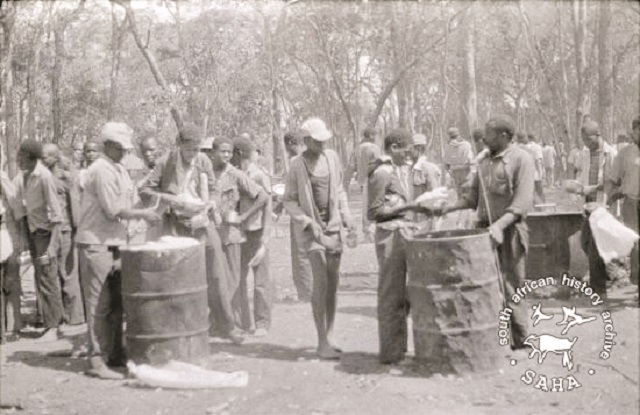

NAMPUNDWE Camp which was the main site of induction for new recruits for Zipra combatants was not a facility for the faint hearted.
According to a booklet titled Adelante (Forward) — Cuban trainers, Zipra soldiers and the making of a liberation movement army in Angola authored by two United Kingdom-based professors, Jocelyn Alexander and JoAnn McGregor, interviewees spoken to narrate how their induction at Nampundwe took the form of expectations dashed and cruel lessons learnt.
The arrival at Nampundwe was remembered as distressing and disorienting owing in part to the stark difference between the recruits imaginary of war and what they found in the camp. On arrival at Nampundwe many had expected to be handed a gun and then quickly dash back to the then Rhodesia to engage the enemy in combat.
However, that was not to be as the induction at Nampundwe was not complete without going through what was known as “meeting the old man,” a term used to refer to the late Dr Joshua Mqabuko Nkomo. Dr Nkomo, a figure of heroic proportions had inspired many to join the armed struggle.
According to excerpts of the booklet it made sense to recruits that Dr Nkomo would welcome them, but what happened subsequently was described as terrible shock.
Green Mpofu who had been a machinist in a Bulawayo factory and had left for Botswana and then Zambia with a group from his home described how they had arrived at the camp filled with “excitement”. The next morning they were assembled and told they were “going to meet the old man, Nkomo” on a nearby rocky hill. Green recounted how men rushed to put on their best attire, even suits and ties, in giddy anticipation. When they arrived at the hill: Things went topsy turvy, upside down.
“When we got there, it was tough . . . Right, crawl, go down, crawl, roll, crawl. There was no time to say, ‘no these trousers are special’ or what. Things got out of hand. We looked at each other . . . There was no time to pity anyone. We rolled, crawled, others (were) vomiting . . . (It’s) difficult to describe. We couldn’t imagine this, we were being conditioned . . . I became extremely thirsty . . . and asked can I have a drink. I still remember the laughter which he (the commander) emitted: “this one here is saying he wants water!” Go down, crawl. It was as if I’d insulted him by asking for a drink . . . it was an introduction to the system. That was the initiation. It was said we’d met the old man. That was the meeting.
Tales of “meeting the old man” were commonly recounted with dark humour — in the destruction of the fine South African clothes of migrant workers, injiva leaving them all but naked, or in the memorably obscene language of the instructors, one of whom was described as “just a bag of insults.” But there were also stories of being made to do things that were hitherto unthinkable.
“‘Meeting the old man” stood out as an expression of this military power over men’s bodies, as well as their emotions: expressions of exhaustion, pain and fear were ruled out. Recruits were reduced to bodies in a system that demanded human feeling be endured, overcome and controlled — indeed this is a prime intention of military training in many contexts. As Bonus Hlabangana, another new arrival put it: “we cried, we were kicked”. Jabulani Sibanda summed up his feeling after “meeting the old man”: “Everyone then knew it was war.” Other lessons learned in Nampundwe concerned military disciple, and were at times recalled with bitterness. These disciplinary regimes tolerated no objection, targeted non-military solidarities among recruits, and underlined individuals’ expendability, all important themes in accounts of liberation movements’ camps more widely. It was a logic that offended new arrivals’ sense of justice.
Green Mpofu also recounted an incident of collective punishment, meted out following a minor incident early in his stay at Nampundwe. A member of his company had stolen sweet reeds from a field while the group was bathing in a stream following a training run. The commanders decided to punish the entire company, but some men objected, saying, “No, we can’t be punished for something we didn’t do”. Mpofu explained: ‘before you understand military discipline, you think you can resist certain things. You don’t appreciate.” The response was a terrible demonstration of disciplinary power in which complaint was equated with enemy action. In Mpofu’s account: these guerillas said, “Ah! What is this? There should be Selous Scouts (a notorious Rhodesian counterinsurgency unit) among these people, to have people disobeying orders”. Then one of them said one thing that l’ve not forgotten ever since. He said, “such a situation must be controlled by weapons. Some people will have to be shot” . . . They got hold of these guys and dealt with them so vigorously and harshly so that those guys said, “no, it wasn’t us, it was the others.” Then they were paraded. They said, “walk along the lines and identify some of your group (of recruits)”.
The accused walked along the line of men, “battered as they were”, and identified people at random, including Mpofu. The group of people with whom Mpofu had travelled to Zambia said nothing: “I looked at their faces. They were so dejected because they couldn’t say anything on my behalf, that no, this one, we were together, he’s not part of that group”. Those identified were kicked and beaten before being taken to a rocky outcrop and made to “monkey walk” over sharp gravel, that is to crawl on one fist and knees, feet held in the air, the other hand tied behind the back.
These stark lessons in the bodily and emotional discipline required by Zipra formed only a part of the military training at Nampundwe. Other aspects of this “system” were bureaucratic and orderly and worked to produce a new identity, shared politics, and physical capacity — the basis for common bonds. A universal aspect of induction into the military was the bureaucratic process of screening new recruits, taking down their biographies, and allocating war names by which they were known henceforward. The latter were a marker of inclusion as well as a means of securing recruits’ own and their family’s safety by rendering them unrecognisable to the Rhodesian state. Nampundwe was often also the place where recruits had their first political lessons, gaining a new and shared clarity regarding the purpose of the struggle.
Bonus Hlabangana, a former school teacher, recalls being taught about the Zapu Manifesto and learning about socialism: “We didn’t know much about that, we only knew capitalism about America. We didn’t know much about the Soviet Union, Cuba and so on. So we were told about all the eastern countries.”
Nico Ndlovu, who described himself as part of an “erudite group”, remembered a library at Nampundwe, with books from the “USSR, Hungary, Cuba and elsewhere”, covering history, politics and ideology. He walked around the camp with “a book tucked in my belt”.
Another important aspect of military training at Nampundwe was the inculcation of pride in physical fitness that merged a particular ideal of manhood with that of the soldiers. Young men’s bodies were transformed through daily exercises, runs and drills in which all participated.
Among these exercises was the ubiquitous toyi-toyi, a high-kneed run accompanied by song and chanting that had been introduced to Zapu in the Algerian training camps of the 1960s. The toyi-toyi was performed across all of Zipra’ camps, serving as one of the recognizable “glues” that held the army together.
The men we interviewed emphasised both the harshness of their physical training and their pride in their fitness, noting how it had impressed the Cubans and Soviets when they arrived in Angola, and contrasting themselves favourably to other liberation movements.


 Online Reporter