admin
admin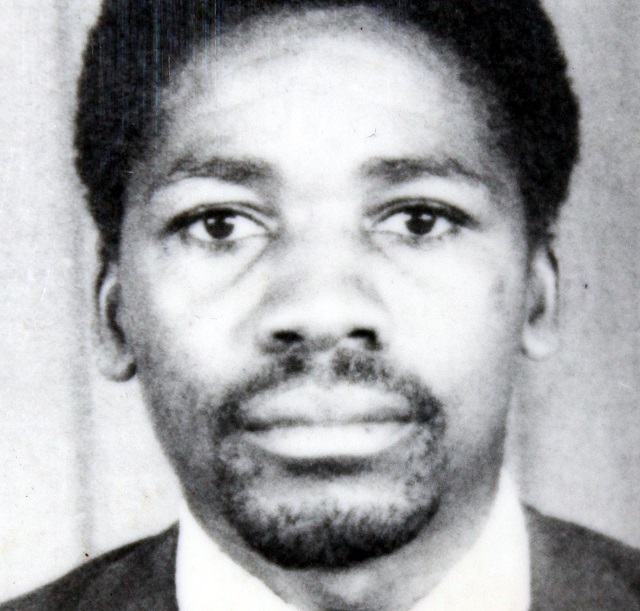

In today’s Lest We Forget column we continue with the interview we had last week with Cde Zephaniah Moyo pseudo name, Cde Jeckonia Zulu. Cde Moyo joined the armed struggle in 1976 in Zambia after serving in the Rhodesian police force.
He then rose through the ranks to become a senior intelligence officer holding the rank of Deputy Director of Public Security in the Dumiso Dabengwa-led National Security Organisation (NSO). In today’s instalment Cde Moyo speaks to our Assistant Editor Mkhululi Sibanda (MS) about the structure of the NSO, deployments, operations and the Mboroma Camp situation.
He picks up the interview on his group’s return from a rigorous intelligence training in the then Soviet Union at the Moscow Academy of Intelligence Studies. Below are excerpts of the interview:
MS: Cde Moyo, tell us about the training in Moscow.
Cde Moyo: Our group of 25 not 29 as I earlier said which was led by Joel Sijiye took nine months in the Soviet Union. We learnt a lot there even I who had worked in the police force although some things at first were like acclimatisation. We learnt a lot because that training was advanced. The Soviets were advanced people in security matters. They were also advanced in terms of technology, remember we are talking about a country which was a super power.
MS: What were some of the things that you covered?
Cde Moyo: Some of the things are not for newspapers, but I can just scan through areas that we covered. The disciplines that we covered were political economy, intelligence, counter intelligence and military science, information analysis and dissemination, political science, propaganda techniques, sabotage, surveillance and photography, counter insurgency, advanced interrogation procedures, criminology, forensic ballistic studies and so on. After completing the course we were then taken to a place where 23 homesteads and their occupants were burnt and killed by the Nazi Germans of Hitler in 1943.
At that place we saw 23 bells representing each homestead and they would ring simultaneously as part of remembering the atrocities that were carried out by the Nazis. Bodies of the victims were also kept and preserved in that badly burnt state. The reason for keeping those bodies was to remember the incident and teach future generations about what their country went through. It’s a unique and well thought out plan of keeping history.
MS: After nine months I suppose you returned to Zambia. What happened to your group?
Cde Moyo: Yes, we returned to Zambia and we were taken to Moscow Camp, which was for intelligence officers. While waiting for deployment we were doing physical exercises at the gorges. That was meant to keep us fit and I think after less than two months I was called to the Zimbabwe House in Lusaka and this was during the time when the NSO was being fully structured and transformed from its predecessor, PRO. I was then appointed the Deputy Director of Public Security, deputising the now late, Noah Mvenge, who was the brother of Zanu-PF MP for Mutare Central, Moses Mvenge.
MS: Then tell us about the complete structure of the NSO.
Cde Moyo: The head of the NSO was Dr Dumiso Dabengwa who was also a member of the Revolutionary Council where he was the secretary for security. Under Dabengwa there were directors for various departments.
MS: Give us a breakdown of the whole structure. Who were those directors?
Cde Moyo: There was the now late national hero, Cde Swazini Ndlovu who was the head of NSO’s department of finance and administration. Cde Ndlovu, I can describe as a perfectionist who besides being an intelligence officer was an economist by training as he was a holder of a degree in economics. Swazini was very dedicated to his job and very disciplined and wanted everything done according to the book. There was Cde Victor Mlambo who was the head of the department of intelligence.
Officers who worked under Cde Mlambo were the ones who were deployed to the front where they were attached to the guerilla units in the operational areas. Their job was to gather information on the enemy activity, general political situation in the operational areas and then report back. Later on their job was made a bit easier as we had communication radios. We then had Cde Gordon Butshe who was the head of counter-intelligence. Some of Gordon’s officers worked at the rear while others were also deployed to the front.
His boys were also working in communities even in Zambia as we had a lot of locals there, sniffing around for information and also infiltrating the reactionary forces. They were also monitoring the enemy activities especially on its plans to attack our positions. The department of training in the NSO was headed by Cde Nephat Madlela, who was an ex-teacher. They were responsible for the selection of those going for training. Our group was the first one that was sent to the USSR and then it was quickly followed by the one that had the likes of former Zanu-PF chairman for Bulawayo Province, Cde Macleod Tshawe.
Later on some of the groups were trained in Zambia although some people were still being sent overseas, the co-ordination of those activities were done by the department that was headed by Cde Nephat Madlela. There was also the directorate of military intelligence, which was an arm of the army and it was headed by Patrick Nhamo Mhandu who passed on last year and had attained the rank of Brigadier-General. We used to call him sekuru and he is the guy who was responsible for the deployment of military intelligence officers who were going to the front and he was in charge of those that were already on the ground. Even at Independence Cde Mhandu was installed as a director in the military intelligence together with his deputy during the war, Cde Madida.
The department of close security unit that provided security to our VIPs including the party President, Dr Joshua Nkomo was under Albert Nxele, but NSO had nothing to do with itas it was sort of autonomous, but Nxele, Dabengwa and the army commander who at that time was Mafela (Lookout Masuku) liaised at the top. Some of the people who served under Nxele are now in Government and I believe have served the State very well.
MS: Okay, then what was the role of your department headed by Cde Mvenge, that of public security?
Cde Moyo: Ours was responsible for the correction and rehabilitation of suspects like those people who were in detention pits at Mboroma, providing security for the party leadership, liaising with the Zambian government on security matters, liaising with other liberation movements such as the ANC of South Africa on intelligence issues, protection of our rear bases, Zapu administration offices and the refugee camp schools.
Remember we were also preparing to take over the country, so our department was also responsible for recruiting cadres who were being trained to be police officers, customs and immigration officers.
MS: Then there is the contentious issue of Mboroma. In the past weeks we spoke to some of the former inmates and your name kept on cropping up, what was your role there?
Cde Moyo: When I was appointed the Deputy Director of Public Security I was assigned to look closely into the issue of those people who were arrested on their arrival to join the armed struggle in Zambia by the MI. So I was tasked to take over all the detention pits. The other responsibility was to visit all the camps for security reasons. Although there were people for other intelligence units they wanted someone from public security to take charge. My first assignment was to go and check on Mboroma and make an assessment of what was supposed to be done.
I also had to go through the documentations that were done during the interviews of those people. I was also supposed to do the vetting of each and every individual, look at each and every case to see whether those people were really enemies of the revolution. I would like to agree that it was a difficult and highly complex task. Because when people were arrested and brought to a transit camp they were slapped with some allegations that they were enemy agents sent to spy on Zipra.
MS: Having looked at the cases did you think that the situation of those people was handled in a proper manner. What was your opinion on that?
Cde Moyo: I don’t want to judge anyone but normally in an intelligence organisation you need to investigate an individual’s life, check his childhood background and so on. To nail someone there with a case there should be exhibits as well on the suspect if one had come for military spying such as maps, radios, but there was none found on those people. None of the inmates had those items. As a former CID and Special Branch I had learnt that one had to have a lead that would be used to say that there is something close to the crime when dealing with a suspect.
However, after some assessment we concluded that at least 90 percent of those people were innocent. We also found out the reasons why some people were picked by the military intelligence officers at Nampundwe, it was because they had a history of having worked for the Smith government. A majority of them were former civil servants, I mean former agritex officers, police officers and some were related to people working for the Special Branch. Others were guerillas who were deemed to be lacking discipline. Some of them were just like me, people who had left their jobs to join the struggle and because of that they became suspects. However, at personal level I understood what was going through the heads of the MI officers when they arrested those people because if you don’t suspect anybody in a guerrilla war situation you might find yourself in serious problems.
MS: After coming to such a conclusion what did you do?
Cde Moyo: After assessing I saw that none of those people were flight risks so we started re-organising the way they were living. After my recommendations were accepted by the commanders and also by the party it was decided that they should be allowed to train and do other duties either at the front or at the rear. While doing that we didn’t believe that amabhunu would actually manoeuvre their way to the camps, more than 1 000 kilometres from Salisbury then and attack the camp because it was in the middle of nowhere.
There was also this belief that the host country Zambia which was said to have a functioning military and intelligence system would not let the whites move up deep into camps like Mboroma. We did not expect the Zambian government to allow the Rhodesians to do as they pleased, but it was a big mistake on our part. Then we got information that there was a group of SAS that were doing reconnaissance missions and assessment of the situation at Mboroma.
MS: Then what did you do?
Cde Moyo: I decided to de-congest Mboroma by putting the medical team three kilometers away from the main camp, the logistics and food in the mountains of Mboroma and the signals also three kilometres away and now we were on high alert. There was word doing rounds where comrades guarding the camp were saying that there were sounds of a hissing radio at night. It was difficult to believe and I asked “did you investigate and they said yes, we did”. On getting all this information it was not difficult for me to believe because I was aware that the Rhodesian army had hardened soldiers, remember they had mercenaries who had participated in the second world war, some from Israel and other developed countries.
I then went to the Zipra chief of staff, the late national hero, Enoch Tshangana (Retired Major-General Jevan Maseko) and asked for heavy weaponry, I was hoping to get at least three Zegues but I got one, maybe because there wasn’t enough, I don’t know. I then gave it to the guys that were inmates at Mboroma and among them were those arrested for an attempt on the life of Zipra commander, Nikita Mangena and one of them was called umfana kaDaggie. They were about 12 of them and those boys were experienced soldiers. The weapons were meant to improve their security. If they were enemy agents they could have killed every security detail there. However, those guys were given the weapons after serious assessments that they had reformed and were no longer dangerous. We had to try them out.
MS: Maybe before you go further why was there an attempt on the life of Mangena?
Cde Moyo: The Mangena issue was an internal one. It started when it was felt that Dr Nkomo, the party president was not supposed to officiate at pass-out parades in Zambia after discoveries that the Rhodesians were now able to carry out raids in Zambia. So Dr Nkomo had to be persuaded not to officiate so there was that suspicion as to why. Because of lack of proper communication some guerilla fighters felt Mangena was now usurping the powers of Dr Nkomo while the issue was purely of security nature. So some guerillas shot at Mangena and he was injured.
MS: Then the attack on Mboroma, Operation Vodka. What happened?
Cde Moyo: When the camp was hit we received communication while in Lusaka that those guys were under attack. It could have been 15 minutes after they came under attack. We then thought they were going to give us feedback but there was nothing so we knew that there were under serious attack. However, because of the precautionary measures that we had put the damage was limited. I think what assisted was that after carrying their reconnaissance mission, the Rhodesians delayed in carrying out the attack, it took them more than a month to do that. So by the time they attacked Mboroma we had changed the set-up and the harvesting of our people they expected was no longer possible.
Next week we continue the interview with Cde Moyo talking about attacks on Mkushi, Freedom Camp where he was present and the bombing of the NSO headquarters in Lusaka. Cde Moyo as a former senior intelligence officer will also give his assessment on why the Rhodesians were able to carry those raids in Zambia when the host country had its own army and a functioning intelligence system.
He will also touch on allegations that the NSO was a feared organisation even within the Zipra ranks. Don’t miss your next copy of the Sunday News.



 Online Reporter