admin
admin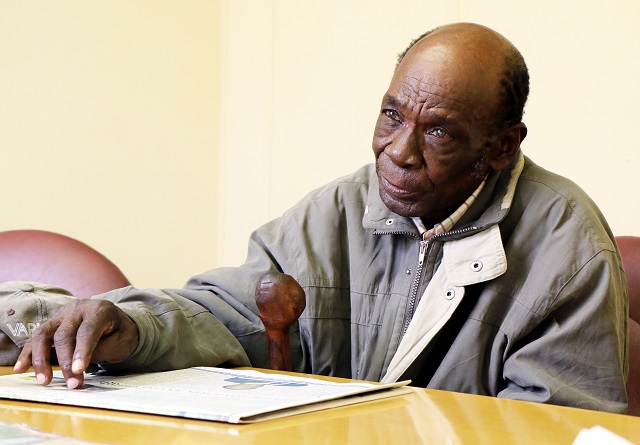
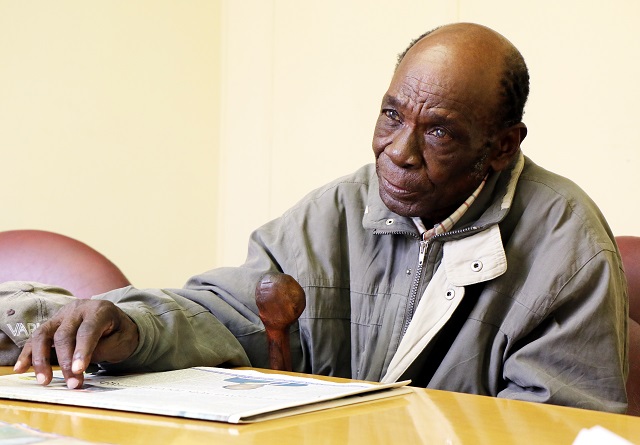
IN our Lest We Forget column we continue our interview with former Zipra camp commander, instructor and a member of the High Command, Cde Jack Mpofu about how he, the late Roger Ncube (Matshimini) and now Retired Brigadier-General Abel Mazinyane executed a military operation which signalled the resumption of military operations in April 1972 following the internal problems that had afflicted Zapu in zambia.
In our last issue Cde Mpofu was still speaking about preparations for the attack on a goods train near Victoria Falls which was meant to be used as a propaganda stunt. Below are excerpts of the interview with our Assistant Editor Mkhululi Sibanda (MS).
MS: Cde Mpofu, may we resume our conversation about the operation as last week we were still talking about how the goods train was identified as the target.
Cde Mpofu: A suggestion by some of us to target the passenger train instead of a goods one was harshly dismissed by the members of the Zipra High Command. The reason was that it was not an economic or military but a civilian target.
To counter the civilian issue it was suggested that the operation will be of high precision where explosives would target the first and second class coaches only. This was considering that the third and Mbombela coaches were for the poor. This will send a message that we were waging a class struggle. This would also make it difficult for the Rhodesians to conceal it as causalities would include foreign tourists. This would sabotage Rhodesia’s effort of hiring whites to settle in Rhodesia.
This was very important for Rhodesia as it would boost its defence forces as all whites had to serve in the industry which needed experts.
MS: But how was the situation in Rhodesia in general?
Cde Mpofu: The Rhodesians had reached a stalemate in this battle as figures of whites leaving the country were not encouraging. Such an operation would push up the emigration figure of whites up and of those who want to settle in Rhodesia down. No sane person would want to drag their family into a war zone. Rhodesia was desperate to hire whites to settle in the country. The white’s natural population increase was being choked by the black increase. We thought this was one weakness in their armour. To attack the passenger train the High Command dismissed the idea as racial. We were lectured that Zipra is a “People’s Revolutionary Army”, it respects life. All former Zipras will bear testimony that violating that policy would have easily classified one as working for the other side. The High Command was applying Zapu’s policy to the letter. The goods train like the Viscount was a legitimate target. So goods train was supposed to be hit.
MS: What was the ritual before such an operation?
Cde Mpofu: Normally before any military operation could be executed a reconnaissance of the target was supposed to be conducted. However, no reconnaissance was conducted in that operation because there were few guerillas and resources at the disposal of the High Command to execute that task. Only about less than 20 soldiers were immediately available for operational deployment into Rhodesia. Our numbers were depleted because of the internal problems as some comrades had deserted. Movement to and from the target also risked compromising this mission and the element of surprise, after all it would have meant using the same three who were to execute the operation. This would have not made guerrilla warfare operational sense. Then it had to be hit and go. The “Operational Orders” were “Cross the Zambezi into Rhodesia at Third Gorge at about 9pm, plant explosives at a small bridge close to the rail/road bridge (all marked on the orders map). The objective of the mission; to destroy the locomotive, its coaches, and their contents and damage the rail/road bridge.”
MS: So how was the crossing considering the size of the Zambezi River?
Cde Mpofu: The crossing went smoothly but negotiating the third gorge proved more difficult than we thought. The three of us had to negotiate the impassable thorny thicket of the gorge. After this mission we had to visit our clinics as our bodies were pierced by thorns. Blessed with Matshimini for a commander who needed an enemy? He believed removing thorns from one’s body wasted valuable date time. After an hour plus we emerged on the Rhodesian side after conquering a very steep gorge that had not been navigated before because of its impassable nature. The movement from the river to the rail line was easy but locating the exact spot to place the explosive was a challenge. The challenge was that on the map there was a small bridge but on the ground it was just a water drainage. As this was a high precision operation we had to synchronise the map with what was on the ground. Our High Command wanted nothing but precision. After cross checking and verifying we confirmed the spot. This was D-day. The young man (Mazinyane) was given his orders to plant the explosives while myself and Matshimini saw to it that this great step in the journey to Zimbabwe’s independence was not disturbed. About 20 kilogrammes of explosives were wanted to help our target meet its maker. To make it interesting and offer free Zapu membership to Victoria Falls residences we scattered Zapu membership cards into the town. This was planned and they were well placed to achieve those results.
MS: Then take us through the execution of the operation.
Cde Mpofu: About 30 kilogrammes of explosives were placed on the railway line for the purpose of blowing the Rhodesian train to Kingdom come. The source of fire was a small Eveready battery. After placing the explosives we hurried to our Zambezi crossing point to avoid being casualties of the explosion. As I have indicated, we were running late due to unforeseen realities of our mission. The train met its demise before we had even reached the crossing point let alone crossed as planned. I think that we also fell behind schedule because from the target Cde Matshimini ordered us to take off our boots and walk with only our socks on. Mazinyane and myself were not happy about it but it was an order. The commander had the authority to make do it. May his soul rest in eternal peace. This was a thorn infested terrain. Matshimini was not only brave, courageous and steely he had more. When the explosion happened debris flew above us. And the ground shock under our feet. On reaching the crossing point we signalled those who were to take us across the river, there was no response. We tried several times without much joy. At first light (dawn) we decided to book good cover and prepare ourselves for a fire-fight against the Rhodesians.
MS: What was the reaction of the Rhodesians after the goods train was hit?
Cde Mpofu: The Rhodesians started bombing all navigatable points around our position. There was smoke and smell of explosives drifting to our position. We thanked our commander for choosing this position because the Rhodesians did not suspect that it was being used for crossing. Our crossing point had a very strong current and a very prohibitive impassable thicket that no sensible person could choose it for crossing the mighty Zambezi. Thank God guerillas believed in making the impossible possible. Our armament was one AK and 30 bullets each only and good use of the terrain. Picking a fire-fight against the Rhodesians meant quick annihilation.
We were between the proverbial hammer and the anvil, between a rock and a very hard surface. We spent two nights hiding from the Rhodesians.
MS: What was going through your minds at that time?
Cde Mpofu: Mazinyane and I even suggested we storm the Victoria Falls Bridge to which Matshimini vetoed. Maybe the man had a death wish, after spending two nights, having tried to cross using some self-made boat without success we were finally rescued by our colleagues who had hurriedly concealed our boat when the Rhodesians started bombing. They had concluded that Rhodesians had intercepted us on our way to the crossing point and we were engaged in a fire-fight. However, after those two nights and upon spotting us we were whisked to Lusaka where we gave a detailed report to both JZ Moyo and the High Command. The High Command congratulated us for an accomplished mission but roasted us for taking too long.
MS: I suppose at one point your comrades thought you were dead.
Cde Mpofu: On their arrival in Lusaka and giving their report and conclusion without us, JZ and Mangena immediately ordered them to go back and collect our bodies. They were relieved to return to find us alive. We were told Zapu membership grew in Victoria Falls as its cards were delivered by air.
JZ was summoned by President Kaunda to explain. Zambia had suspended free movement of guerillas during Zapu political crisis. This operation had taken Zambia by surprise. JZ pleaded innocent to President Kaunda and said he suspected guerillas who were already inside Rhodesia. He also requested that Zipra be allowed to start operations so that they can re-supply the stranded comrades. President Kaunda agreed, Zipra then legally started launching operations from Zambia. Progressive forces started coming forward with assistance to Zapu. It was now clear as to who was waging the armed struggle in Zimbabwe.
The Rhodesians desperately tried to give an explanation, the disruption of the rail traffic and loss of goods. They wanted to assure those they had sweet talked to settling in Rhodesia with a promise of peace and prosperity.
They even came up with a ridiculous explanation, for the disaster claiming that baboons had placed rocks on railway line. Unfortunately from then on the falsely accused baboons made it routine to place rocks on the Rhodesian railway line probably in support of the Zipra cause. Maybe Zipra had more alliances than we are told.



 derick.khumalo