admin
admin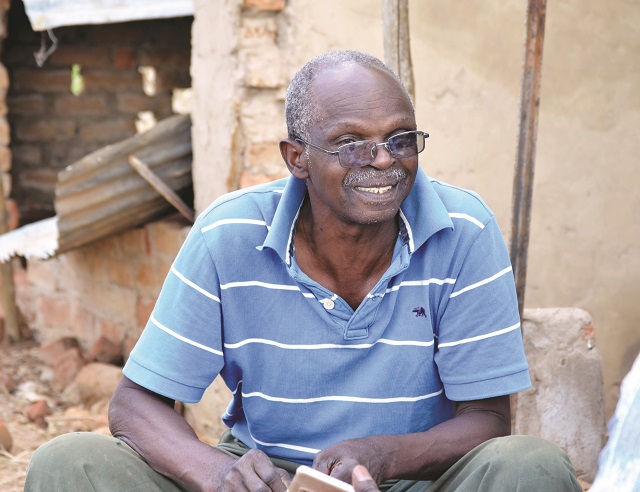
TODAY we round off our interview with former regional commander and Zipra Deputy Chief of Reconnaissance, Cde Peter Ndebele, pseudo name Todd Mpisi. While regional commander Cde Mpisi operated in the Jambezi area of Hwange, they later on expanded their operations to areas like Tsholotsho.
In the past weeks Cde Ndebele spoke about his training, first operations and excursions into the country. Today Cde Ndebele speaks about his recall to the rear where on arrival he was sent to the then Soviet Union for further training. Below are excerpts of the interview:
MS: Cde Ndebele last we spoke about the relationship with the masses, what about the operations?
Cde Ndebele: When we got to the ground we started intensifying our operations. Many people were also coming forward wanting to join the armed struggle. We were no longer making appeals to the people, they were coming on their own in large numbers to join the war. We were facilitating for the people to cross over to Zambia. As for the battles many were fought and that gave the masses confidence because at first they thought we would not win against the Rhodesians but as they realised that we were serious people started to support us openly.
MS: Then you were recalled to the rear, tell us more.
Cde Ndebele: Just before I left for the rear we fought a fierce battle at Sikanda Stores in Jambezi against the Rhodesians where we did inflict a lot of damage on the enemy despite that it was better equipped. They had to summon helicopters and typically to us guerillas, we melted into the jungle. I then returned to Zambia from where I was sent for further training in the then Soviet Union. Among the people that I went with was Gilbert Khumalo (Nicholas Nkomo) we had trained together at Morogoro. Then after our further training in the Soviet Union we were deployed as instructors as there was a new base called Mwembeshi. The camp was a large bush where there were large mosquitoes and the group that we became later on to be known as the Group of 800, which was referring to the number of recruits. In that group there were 12 girls.
However, we didn’t stay there for long as we told to go to Tanzania as it was the period of the integration of all the nationalist forces, that is Zipra and Zanla to form Zipa. That arrangement, however, did not last long probably because of ideological problems and it fell apart. I was to be later on redeployed to the front where I became regional commander. We continued with the intensification of the war and serious battles were fought and I will give the attack on the Jambezi Camp as an example.
MS: May you please give us more details on that one?
Cde Ndebele: We raided the camp at about 5pm and the battle went on to about 12 mid-night. We had a big unit of about 47 guerillas which had attachments from some specialist forces such as the artillery which was under the command of Marshal Mathe (Mpofu) who at the moment is working at the war veterans offices at Mhlahlandlela Government Complex in Bulawayo. We were armed to the teeth as we had a B10, mortars, Gun 75 and an assortment of heavy weaponry.
MS: What was the mission of that battle?
Cde Ndebele: The aim was to capture the camp and such a move was going to neutralise the operations of the enemy.
MS: Then give us an account of the battle.
Cde Ndebele: As I have said the battle was a fierce one as we were heavily armed and it was big deployment. We attacked it heavily but we could not penetrate the camp as it was pillboxed. There was a huge wall right round the camp so the white man would be looking at us through the wall and when fired mortars they would hit the ground. We pinned them down until they ran out of bullets and each time we were advancing. When we moved from the initial line of fire we were only 100 metres from the security wall. We were going to enter if it was not for the reinforcement that came probably from Victoria Falls. The battle raged on for hours and to our advantage it was at night when we intensified the battle. We managed to corner the enemy and managed to make it run out of ammunition.
MS: As the battle was going on and you kept on advancing what made you keep on going?
Cde Ndebele: We realised that we were winning when we managed to move from the initial line of fire. To test whether the enemy was still capable of fighting we started making mock commands of assault and we could tell that they were now frightened as whenever I called for mock commands of assault they would stop firing. I think they were ready for an overrun. However, we failed to make a capture as the Rhodesians received reinforcements. After Independence while I was at Papa Assembly Point I met Captain Mensar who was involved in that battle and he confirmed that they were ready to surrender. We had managed to defeat them, they were only saved by the high walls. He had met the now late national hero Stephen Vuma at Midlands Hotel here in Gweru and he told him that he would like to meet the commander of that Jambezi battle. Cde Vuma told him that I was in Mashonaland West and by chance we met at Makuti and he gave an account of that battle. He told me that he was very impressed with the way we fought that day. His words to me were “ the 100 of us were empty”. He meant they did not have ammunition. In hindsight I feel we should have gone for them, but we took the caution and it works in a war situation.
MS: I am told some of your operations involved on attacks on tourist facilities especially in Victoria Falls and surrounding areas.
Cde Ndebele: We attacked quite a number including facilities such as the famous Elephant Hills, Peter’s Motel and Indlovu Camp. We attacked the Falls many times. There are some islands in the Zambezi River from the Zambian side and what we used to do was to mount i B-10 or mortars and then hit tourists facilities such as the Elephant Hills.
MS: By attacking those facilities were you not targeting ordinary people as well?
Cde Ndebele: Those attacks were part of our propaganda machinery. Ian Smith was telling the whole world that there was no war and when we carried those attacks on foreigners, there was a serious political effect. The attacks were also part of the economic sabotage, it was not supposed to be business as usual for the Rhodesians.
MS: Then as the war raged on I suppose the number of guerillas kept on growing.
Cde Ndebele: Yes, we had more guerillas at the front. While I concentrate on the Jambezi, Victoria Falls areas which are in Hwange District as well as moving inland to Tsholotsho, there were other units under the command of Gilbert which were in Gwayi area. From my units which had become very big we were ordered to move some to Matabeleland South. One of my junior commanders Mphini was given the task to move to Gwanda and Kezi. He later on became the regional commander for the southern front there that covered most parts of Matabeleland South. However, he was killed in combat in early 1979 in Kezi. However, in 1978 I was recalled to the rear where I was promoted to the rank of deputy chief of reconnaissance deputising Ananias Gwenzi (Lt-Gen Philip Valerio Sibanda) who is now the commander of the Zimbabwe National Army.
MS: Then who took over from you?
Cde Ndebele: The comrade who took over from me was Joel Donga (Dube) but he did not last as after about three months of being in charge he was captured together with the person who had been my driver, a coloured fellow called Samuel Right Philips. I think the Selous Scouts had studied our movements, so they pounced on them and captured them. What happened was that the Selous Scouts mounted a roadblock pretending to be Zambian security forces and they fell for the trap. However, Joel was killed after being airlifted. While airborne he fought the Rhodesians and after failing to subdue him they shot him. Rights later told me that after their capture the Rhodesians were arguing among themselves, some saying they had got the wrong people as they were looking for Todd Mpisi. After the demise of Joel, John Nyamupingidza was then promoted to regional commander of the northern front one.
MS: Then tells us about your role as the deputy chief of reconnaissance.
Cde Ndebele: Our duties were basically to carry out surveillance of the enemy forces, look at their deployment, movement and operations. Although we were the commanders of that unit we also went into operational areas. Some of our officers were also attached to guerilla units. I operated in the Vuti, Hurungwe, Kazangarara and Karoi areas in Mashonaland West Province. At that time Zipra was also deploying its regular forces and we were taking the war to another level.
MS: After the war what did you do?
Cde Ndebele: I moved to Papa Assembly Point where I became the camp commander. That is where as a way of creating entertainment we put money together and bought musical instruments to form a band. Among the guerillas there was Solomon Skuza who later on took music seriously from the instruments we had bought. His music career was conceived from the camp band and he never looked back. From Papa Assembly Point I was attested to the Zimbabwe National Army as an officer, but I did not stay long as I went to business. What happened was that I met Paul Chidyausiku, a brother to the late Chief Justice Chidyausiku who told me that he was selling his business buildings near Loreto Mission. I fell for the idea and bought the business that had a grocery shop, bottle store and grinding mill. I then left the army to start my business there. That is how I stopped being a serviceman.


 derick.khumalo