Online Reporter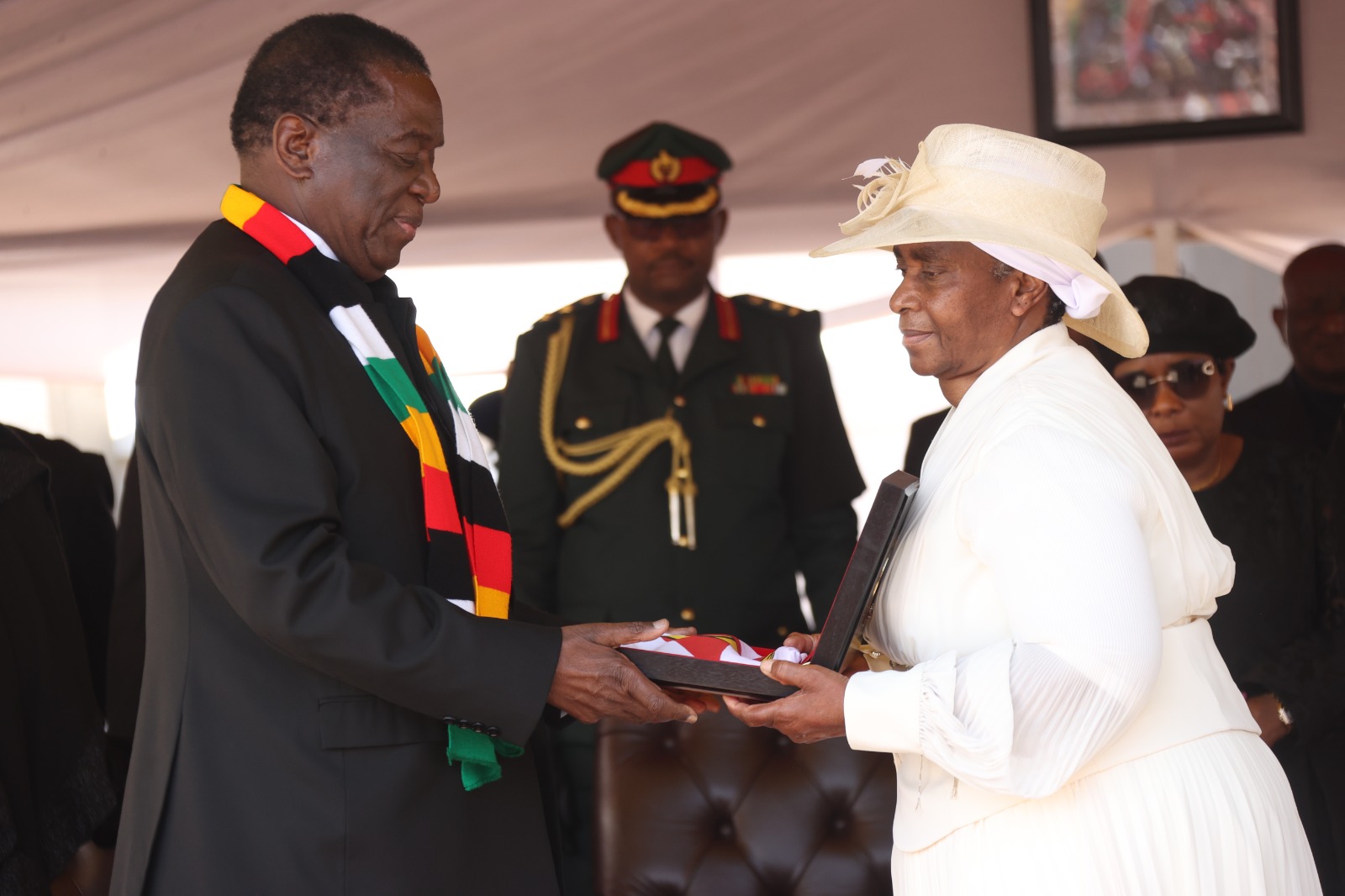
Joseph Madzimure and Wallace Ruzvidzo, Zimpapers Reporters
THE Second Republic stands ready to facilitate the establishment of local industries and mutually beneficial partnerships to transform and drive the economy up the global value chains, President Mnangagwa has said.
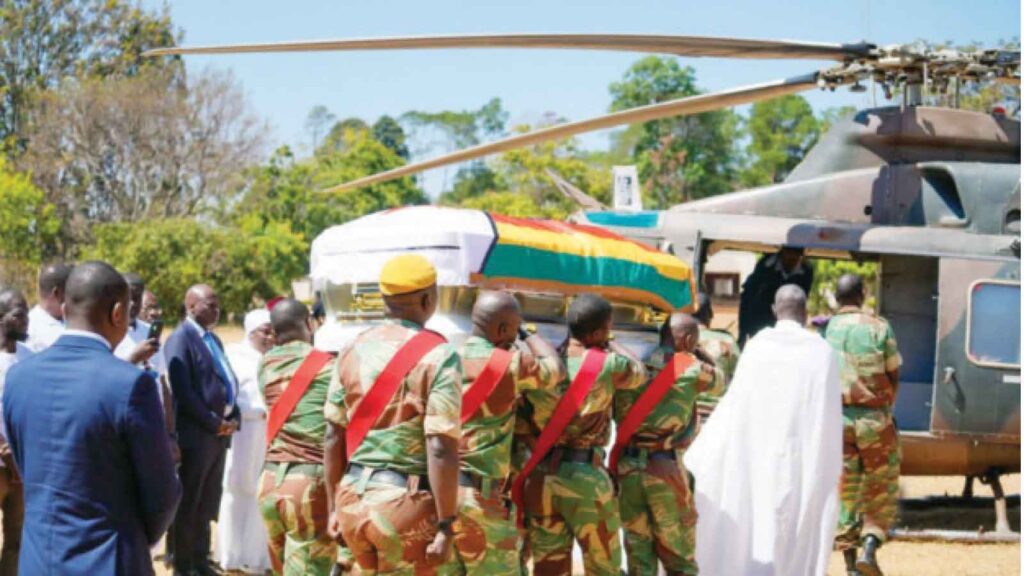
Speaking at the burial of the late national hero Cde Edward Raradza, President Mnangagwa who was the chief mourner, said the misnomer which saw Zimbabwe being a mere exporter of raw materials had been decisively addressed.
“My Administration, stands ready to facilitate the establishment of local industries, mutually beneficial partnerships to transform and move our economy up in the global value chains.
In all sectors of the economy, we must continue to break new grounds and celebrate emerging corporates owned and operated by Zimbabweans.
“Let more industrialists in the mould of our late national hero, Cde Raradza emerge,” said President Mnangagwa.
The Government has banned the export of raw minerals to promote value addition and beneficiation as a way of creating employment for locals and creating wealth.
Beneficiation of minerals is key to unlocking value for industrialisation through the development of strong downstream industries.
President Mnangagwa implored Zimbabweans to celebrate emerging enterprises owned by black entrepreneurs in honour of the late national hero, Cde Raradza, who was the first black person to own a coal mine in Zimbabwe
He highlighted that the liberation icon’s life must continue to inspire the nation.
“Today, we befittingly inter a deserving patriot, who distinguished himself as a nationalist, an agricultural visionary, miner, industrialist and devout spiritual leader. The passing on of Cde Raradza on 4 September 2026, here in Harare, was received with shock. We endure this loss, within our revolutionary party, ZANU PF, as well as in those critical sectors where the late National Hero, left an indelible footprint” said President Mnangagwa.
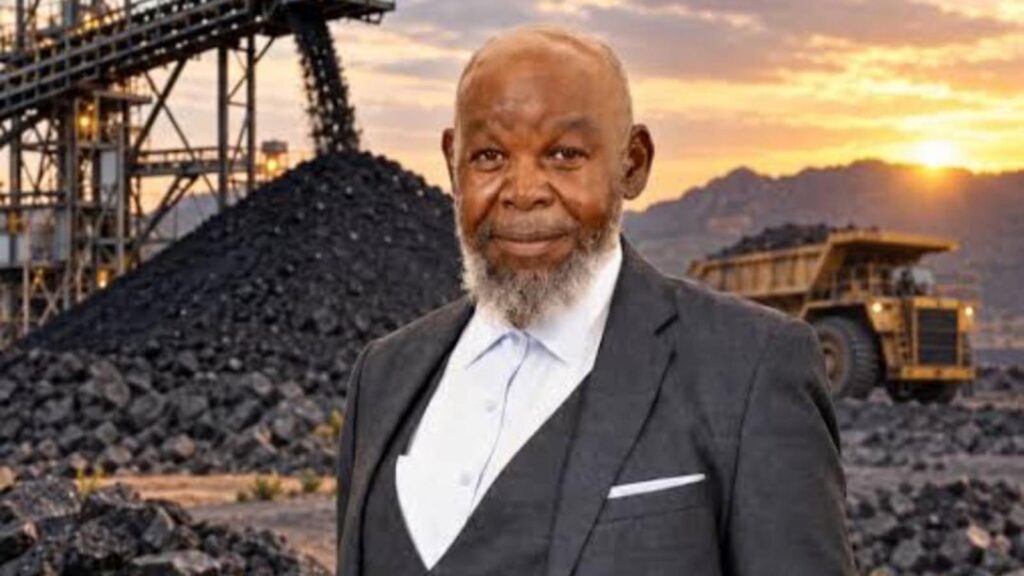
The nation, he said, will find comfort in his exceptional achievements and eminent life of service to the people and Zimbabwe at large
President Mnangagwa indicated that the late National Hero, Cde Raradza also leaves behind a history of innovative industrial legacy in the mining sector.
“For over a century, the mineral wealth of this country was an exclusive sector for foreign conglomerates and capital.
“Cde Raradza vehemently rejected this status quo. By founding Zambezi Gas-Zimbabwe Private Limited, he shattered the glass ceiling, becoming the first black Zimbabwean to establish, own, and operate a large-scale coal mining company,” said President Mnangagwa.
He said through Zambezi Gas, Cde Raradza demonstrated that Zimbabweans possess the corporate acumen, technical capacity, and vision to manage mega-extractive industries.
“Zambezi Gas, has become a primary supplier of coal to feed our national electricity generation plants, stabilising our energy grid, while also exporting high-grade coal across the region and beyond. It is not just extracting wealth; but building communities by creating thousands of direct and indirect jobs for our citizens,” said President Mnangagwa.
He said the late Cde Raradza’s enterprise stood as an embodiment of national development philosophy: Nyika inovakwa, inotongwa, inonamatigwa nevene vayo/ Ilizwe lakhiwa, likhu-le-ke-lwe ngabananikazi balo.
President Mnangagwa said Cde Raradza’s contribution to the liberation struggle and national development should be remembered with respect.
“Cde Raradza dedicated his life to serving the people of Zimbabwe, and his contribution to our nation and our revolutionary struggle will be remembered with gratitude and respect. In honour of
Cde Raradza, we must celebrate emerging enterprises owned by black entrepreneurs, recognising the courage and determination demonstrated by those who continue to build the nation.”
President Mnangagwa traced Cde Raradza’s political journey from childhood, recalling how colonial oppression shaped his resolve.
“In 1955, while still in primary school, the late Cde Raradza came face to face with the harsh realities of colonial oppression and the suffering endured by the people of Zimbabwe under the colonial system. This early experience awakened in him a deep political consciousness and a firm commitment to the liberation struggle” he said.
President Mnangagwa said Cde Raradza’s early involvement in resistance activities reflected his conviction and courage.
“As he grew older, Cde Raradza sharpened his political understanding and became actively involved in various activities of the liberation movement, including direct resistance to colonial oppression.
His early involvement reflected the courage, conviction, and unwavering commitment to national liberation. This would go on to define his life of service to the people of Zimbabwe” he said.
President Mnangagwa implored the church and all stakeholders across the socio- political spectrum to continue fostering social cohesion, unity and peace while promoting the dignity of hardwork as
well as fighting drug and substance abuse among other social ills.
He noted that the life of the late Bishop and National Hero, Cde Raradza illustrates the unbreakable synergy that must exist between the Church and State.
“As we implement National Development Strategy 2, participation of the Church as both a moral force and dependable partner is critical. “Economic frameworks towards building a nation must be complemented by a solid foundation of Godly patriotism, integrity, discipline, honesty, and love for one’s country,”said President Mnangagwa.
Born on July 2, 1947, the late Cde Raradza grew up under the brutal, oppressive minority white Rhodesian regime.
At an early age, he witnessed the inhumane treatment, and the degradation of dignity of people.
In 1965 while studying at St. Benedict School in Macheke, the late Cde Raradza, came face to face with restrictions of the colonial administration in the education sector. These sought to limit
African pupils to basic education.
However, the brave and courageous young Edward overcame the numerous obstacles deliberately placed in the way of Africans.
Upon completing his studies, he moved to the then colonial Capital, Salisbury, in 1966 joining the Youth League in Highfields.
There, Cde Raradza was mentored by early nationalists such as the late, Cde
Josiah Chinamano, and Cde Robert Marere who sharpened his politics and revolutionary consciousness.
Alongside other Zimbabweans, he participated in many political activities and protests in direct resistance to colonial oppression and subjugation.
In 1977, the late National Hero, Cde Raradza was arrested by the Rhodesian Special Branch, and detained at St. Mary’s Police Station, until 1978.
The brutal Smith regime eventually released him, with severe conditions and restrictions.
Upon the attainment of Independence in 1980, Cde Raradza seamlessly availed himself for the task of post-colonial nation-building.
He served the party, with consistency and persistence, becoming the Branch chairman for ZANU PF for Chitungwiza in 1980.
By 1985, he was the Political Commissar for Malbereign in Harare, and between 1990 and 1995, he took over as District Chairman for Hwata, in Centenary.
His unparalleled loyalty and service to the revolutionary party, saw his election to the Central Committee in 2008, a position he served with distinction until his demise.
The late Cde Raradza recognised that political independence without economic independence is incomplete. When the Third Chimurenga was prosecuted towards returning the land to its rightful owners, the late Cde Raradza became one of the active leaders of that historic and defining agrarian revolution.
As the Vice President of the Zimbabwe Farmers union (ZFU) and its provincial chairman for Mashonaland Central, he led a nationwide membership mobilisation drive for ZFU, establishing functional chapters across the country. This transformed the ZFU into a powerful vehicle that saw the broad-based empowerment of farmers.
Cde Raradza will be remembered as a cadre who did not just mobilise and teach farmers; but became one of the key players in the agriculture space, scaling to levels where he became part of the nationally recognised eminent tobacco and cotton farmers.
His livestock production won him the coveted National Farmer Award of Excellence two years in a row, (in 2003 and 2004), at the Zimbabwe Agricultural Show.
When some countries in the West, imposed illegal sanctions on Zimbabwe, the late National Hero, Cde Raradza heeded the Look East Policy.
He was instrumental in spearheading the importation of agricultural machinery and equipment from China.
This in turn facilitated the initial phases of the mechanization programme to boost agriculture production and productivity.
As the Group Executive Chairman of Farmers World Holdings, he revolutionised small-scale farming by importing critical inputs, including fertilizers.
He expanded his vision across borders by setting up a fertilizer blending plant in Malawi, showcasing Zimbabwean industrial capacity.
His leadership as the Chairman of Implementation and Coordination of Agriculture Research and Training in the SADC Region in 2005, and his tenures at the boards of the Agricultural Finance Corporation, Grain Marketing Board and Dorowa Minerals, solidified his status as a key personality in the national agriculture and food security programmes.
Between 2008 and 2013, the late National Hero, Cde Raradza was a Member of Parliament for Muzarabani South Constituency.
As a servant-leader, his tenure in Parliament was defined by tangible, grassroots development programmes and projects.
He helped develop modern agriculture capacities that directly benefitted small-scale farmers, including women cooperatives across Muzarabani South. Despite his success in political settings,
and industry, the late Cde Raradza never lost his ideological grounding and compass in the party.
He remained a humble, and spiritually anchored national leader.
In 2022, he was ordained as a Bishop for the African Apostolic Church, under the late National
Hero Archbishop Paul Mwazha.
This was not an honorary title; but a sacred spiritual calling. He lived a balanced life; one of a patriot who wholeheartedly served the people; an industrialist who helped build his country and economy; and a Bishop who ministered to many souls.
He leaves behind a history worthy of emulation and a legacy of patriotism, loyalty, consistency, persistency, hard work and achievement.