


 Sundaymail Editor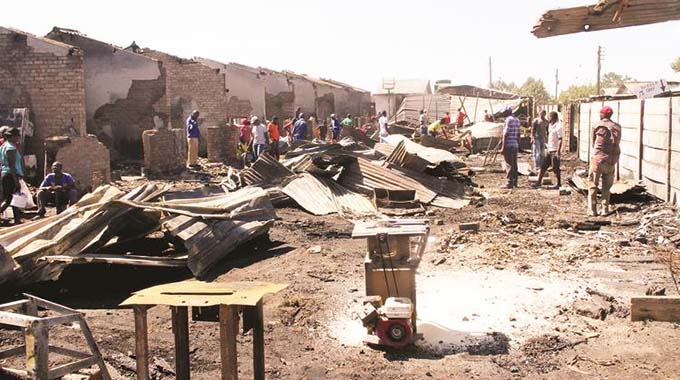
Munyaradzi Hwengwere
For most people, starting is always easier than finishing.
And yet without finishing, you never get into history books.
Life rewards those who complete their journeys.
The story of the thriving small-scale furniture manufacturing industry in Harare’s Glen View 8 speaks painfully to well-intentioned but half-hearted efforts by Government to transform lives of urbanites.
The story also demonstrates limitations of policies that view development as an event and not a process.
At conception, there were slightly above 400 shop owners allocated operating space at the Glen View 8 home industry.
Given the growing urban population in post-independent Zimbabwe, it would have made sense to anticipate that furniture manufactured at the complex would be taken up by low-income families that were filling up high-density suburbs.
What was not envisaged and perhaps rightly so, was that large-scale retailers and high-income groups would also be drawn to the same market.
Glen View 8 soon expanded from its designed capacity and exploded into a place that now has over 4 000 shop owners.
It has grown tenfold.
Infrastructure has remained exactly where it was at inception.
Through a combination of poor urban politics, bureaucratic inertia and petty jealousy among the many shop owners, the Glen View 8 furniture industry soon became an ungovernable place full of people with different agendas, skills and interests.
Today, its business value has grown from a few thousand dollars a year to approximately US$10 million cash sales.
It is estimated that over 20 000 people derive their livelihood from this furniture industry.
At some point, the international labour organisation (ILO) came on board and installed equipment worth millions of dollars, hoping that the SMEs could be transformed into a leading furniture production hub for the local and international market.
Sadly, the equipment still sits there and has not been used.
The promise of becoming a leading furniture hub in Zimbabwe has also been beset by challenges that confront the industry every year.
When the summer season comes, a series of fire outbreaks hit the place.
Because the market produces and warehouses furniture, families literally lose all they have.
Assets that would have taken a lot of time and money to accumulate disappear in a day without recourse to insurance.
Shop owners have no other choice but to restart the business with the little they can muster.
Instead of building structures that can endure the next fire, all they can do is put in place makeshift shops intended to reduce exposure and then start producing again.
This makes it even easier for the next fire to break out.
It is estimated that over 80 percent of value is lost through these fires every other year.
When the rainy season commences, Glen View 8 becomes a dirty unpassable place, prone to disease outbreaks.
During that season, it takes only the courageous shopper to bother visiting the sprawling complex.
These cycles are predictable.
They are known.
They keep repeating themselves year in, year out.
Were it not for the fact that we are dealing with lives and lost income, the cycles at Glen View 8 would compete for a tragic comedy of errors.
The irony is that none of the events that take place are either hidden from public view or impossible to correct.
Risk mitigation is possible.
Decongestion of the place is possible.
Separating warehouse from production is possible.
Having more water points is possible.
Getting the shop owners to be more organised is possible.
Government has made the attainment of Vision 2030 cardinal.
The work already put in at Glen View 8 places the area as an ideal model that transforms urban livelihoods.
It points to the possibilities of relocating troubled young persons from vending into high-earning long-term engagements.
If successful, the model can be replicated in every urban location where the lack of jobs has turned youths into angry vendors, who do not realise the connection between production, productivity and money.
President Mnangagwa has traversed the country, speaking on his model of development – Nyika inovakwa nevene vayo.
Glen View 8 suggests that this can only happen if the citizens are more united and focused.
We dare not lose this.
The ministries of Small to Medium Enterprises; Industry and Commerce; Finance and Economic Development; the banking sector and Buy Zimbabwe have a job to do at Glen View 8.
The work must start now.
Munyaradzi Hwengwere is chairman of Buy Zimbabwe, an organisation that promotes market access and production and preference of local goods and services.



 Bongani Ndlovu
 Online Reporter