Kudakwashe Mugari in ADIS ABABA,Ethiopia
PRESIDENT Mnangagwa has called on African leaders to aggressively invest in water-damming and irrigation infrastructure to insulate the continent’s agriculture from increasingly unpredictable weather patterns.
Speaking before his departure from the 39th African union (AU) Summit in Ethiopia this weekend, the President highlighted water security as the primary pillar for the continent’s survival and economic sovereignty.
The summit, held under the 2026 theme: “Assuring Sustainable Water Availability and Safe Sanitation Systems to Achieve the Goals of Agenda 2063,” positioned water not just as a resource, but as a strategic security imperative.
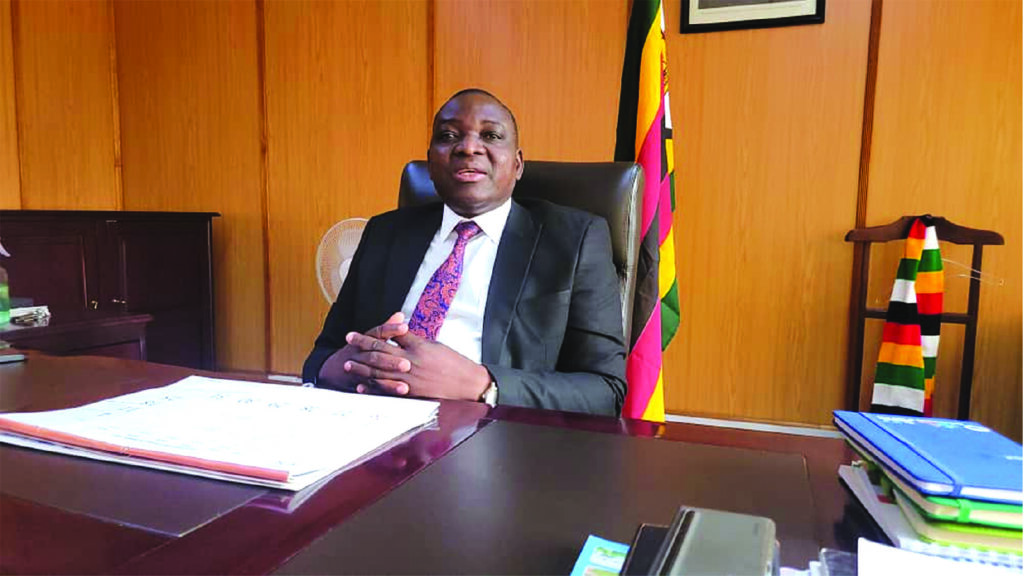
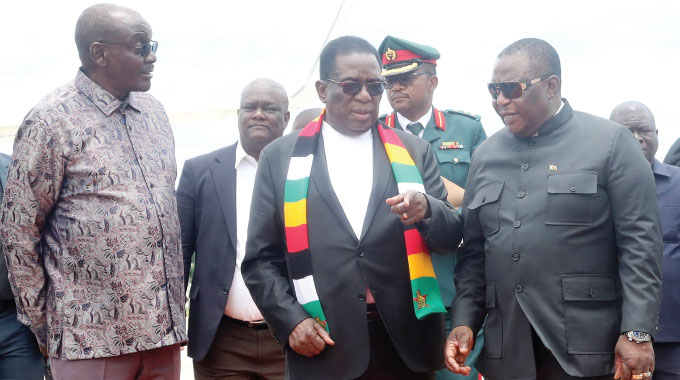
The President returned home yesterday and was welcomed at Robert Gabriel Mugabe International Airport by the two Vice Presidents Dr Constantino Chiwenga, Cde Kembo Mohadi, Information, Publicity and Broadcasting Services Minister Zhemu Soda, permanent Secretary in the Ministry Mr Nick Mangwana, Service Chiefs and Senior Government officials.
President Mnangagwa emphasised that while Africa possesses vast natural potential, its reliance on rain-fed agriculture remains a critical vulnerability.
“Africa’s main lifeline is agriculture,” President Mnangagwa said. “Modern agriculture can best be improved through irrigation. Irrigation depends on the damming of water.
He also pointed to Zimbabwe’s progress in dam construction as a blueprint that, if adopted across the continent, could secure food self-sufficiency.
“The objective is that each country must have enough land and irrigation to safeguard its own security,” he added.
The 2026 Summit was held at a critical time for the continent as AU data indicates that over 400 million people in Africa still lack access to basic drinking water.
President Mnangagwa said provision of water and infrastructure development were the major challenges facing African leaders today.
Reflecting on the evolution of the AU, the President compared the mission of today’s leaders to that of the continent’s founding fathers.
“If you look to the generation of the Nyereres and the Kaundas, there were different challenges. Ours is different,” he said.
“The next generation will be different. But we must stand up to the challenges that face our generation.”
While acknowledging the existence of regional “hotspots,” the President remained optimistic about continental peace.
“The question of a secure situation is across the world,” he said.”But of course, in Africa, I think we are doing better than most continents. In Africa, we have small hotspots here and there. But on the world, we cooperate in bringing about order and supporting each other to bring about security and peace on the continent.”
Meanwhile, President Mnangagwa has described the just ended 39th AU Summit as a resounding success that has further solidified Zimbabwe’s standing among continental peers.He expressed satisfaction with the summit’s outcomes, noting that Zimbabwe had accomplished its strategic objectives through a series of high-stakes bilateral engagements and policy contributions.
“I think from my own point of view, we accomplished what we had intended to accomplish. And I’m happy that most Heads of State attended. And as for Zimbabwe, I had the opportunity of meeting several Heads of State, exchanging bilateral relations.”
A major highlight of the President’s itinerary was a nearly hour-long private discussion with South African President Cyril Ramaphosa.
Addressing the nature of the lengthy sit-down, President Mnangagwa characterised the meeting as a bridge between generations.
“It was a discussion between an elder brother and a younger brother,” the President said.
He noted that Ramaphosa sought “wisdom” from the older generation of leaders, while he sought to understand the
“wisdom of the younger generation” to navigate modern crises.
The 39th Summit concluded with a collective commitment from Member States to elevate water and sanitation to the level of global security priorities, seeking to bridge the infrastructure gap that currently leaves over 400 million Africans without access to clean water.