Chronicle Editor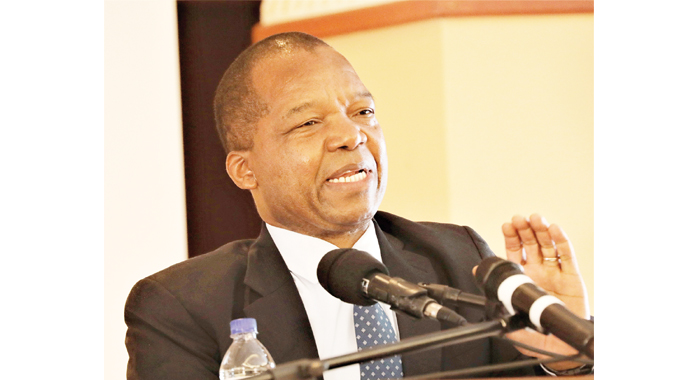
Prosper Ndlovu and Leonard Ncube in Victoria Falls
RESERVE Bank of Zimbabwe (RBZ) Governor, Dr John Mangudya, has warned Zimbabweans against lobbying for a return to full dollarisation saying such a path has proved to be unsustainable in the past and would reverse the economic gains achieved so far.
The Government ditched the United States-dollar dominated multi-currency system in 2018 after the country had operated as a dollarised economy since 2009.
During that time, industry leaders complained over loss of domestic product competitiveness as the destination became expensive amid an influx of cheap imports, which squeezed local firms from the market.
Addressing delegates at the annual Chamber of Mines Conference, which ended here yesterday, Dr John Mangudya said it was disappointing that despite restoration of economic fundamentals and successful reform of the financial services sector, some Zimbabweans were bent on dragging the country backwards through speculative acts of sabotage that undermine the local currency.
He said even after the Government has allowed partial dollarisation, which fosters use of the local currency and foreign currency for purposes of smooth payments, some players were frustrating stability by fuelling illicit forex trading at obscene exchange rates so as to justify abandonment of the local currency and a push for a return to yester-year dollarisation.
“Let’s not destroy our own currency and our own economy,” pleaded Dr Mangudya who went on to explain that the Government chose to partially dollarise as this was the most sustainable way for the economy at the moment.
He said the country has enough foreign currency stocks to sustain its needs hence there is no justifiable need for speculative demand for the greenback.
“I have said this too many times and I will continue saying it that this country has no capacity to fully dollarise.
“Partial dollarisation is best for this economy and you can use either foreign currency or local currency, there is no problem,” said Dr Mangudya.
“I’m here to appeal to you as business leaders that let’s work together in harmony and we will succeed. Let’s have dignity and stability of our own currency. When we say partial dollarisation, we are not saying don’t use it (local currency), we are saying use foreign currency but don’t undermine local currency.”
The Apex Bank Governor urged all Zimbabweans to embrace the local dollar so as to enhance its value through enhanced confidence, and to jealously guard it.
He said the use of the local currency has also enhanced domestic industry capacity, which has risen to about 60 from 47 percent in 2020, with export receipts totalling US$6,3 billion, according to official figures.
Dr Mangudya said the speculative tendencies which have seen the parallel market exceeding $400 per US-dollar was unfortunate and does not make business sense.
Based on this, some shops and businesses have also joined the bandwagon and are reportedly refusing to accept local dollar transactions, preferring the United States dollar, thereby shortchanging the generality of citizens who have local currency at their disposal.
Dr Mangudya said such practices were a demonstration of lack of patriotism, which is critical for progress and bemoaned the baleful impact this has in terms of erosion of incomes and weakening of aggregate demand.
“Confidence is the most important currency in the whole world. From 2009 to 2013 there was confidence but fundamentals were weak.
“When we talk about full dollarisation, it’s like we are saying lets go back to the old system. Please don’t depreciate our local currency,” said Mangudya.
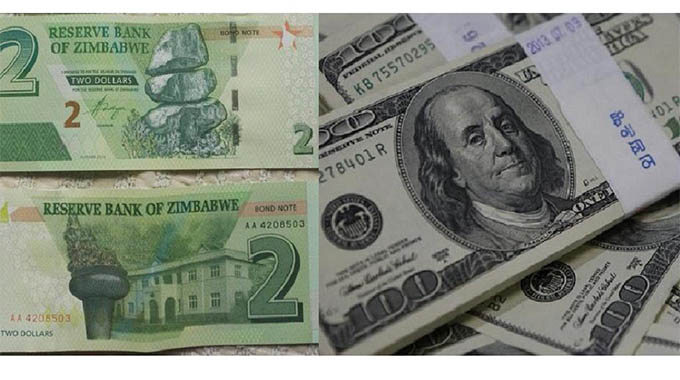
“Government has put in place measures to restore market confidence and one of them is use of partial dollarisation. We need to restore confidence and we can’t continue to live in the past, let’s now go forward with what is there, which is partial dollarisation,” he said.
“We are saying the dual currency, which is partial dollar system is the most appropriate for this economy and we want to be consistent with our policy measures.”
During the plenary session delegates asked several questions regarding the measures that the RBZ was taking to tame inflation, restore price stability and retain the store of value of the local currency. Others sought clarity on discrepancies in the forex action platform and asked for assurances that stability will be maintained.
In his response, Dr Mangudya said the Government will continue supporting the mining sector as it is the foreign currency engine of the economy, accounting for close to 80 percent of foreign currency earnings.
He said despite public criticism, the country has deployed more than US$3 billion to the auction system to support the productive sector.


 Online Reporter