
COMMUNION with Bishop Lazarus
Storytelling was part of the cultural fabric in the village.
Didactic and sometimes feel-good stories were usually handed down from generation to generation around an evening fire before people retired to bed in preparation of another day of toil.
There is a story Bishop Lazi will never forget that always draws a chuckle yet carries a profound truth about the human condition.
It was the story of a village old-timer who was toiling in his fields one fine afternoon when the silence of the savannah was shattered by a thundering roar from the heavens.
He naturally looked up, bewildered, and there it was: a metal bird — a helicopter — cutting through the clouds.
Astonished, terrified and completely captivated by this defiance of gravity, he dropped his hoe, pointed a trembling finger at the sky and shouted to the village: “Efulaimachina!”
His guttural roar captured the essence of culture shock.
It was the thrill of novelty and the awe of witnessing something beyond one’s imagination.
This was a story of technology arriving in a world that never expected it.
You see, anything that is unexpected almost always inspires awe, especially if it has unimaginable capabilities.
This is now typically the story of our life, particularly in a world where fast-paced technology is changing the way we see and imagine the world.
Maniacs masquerading as drivers
Today, that same sense of bewildered astonishment has migrated from the rural fields to the bustling, chaotic intersections of Harare.
But this time, the “flying machine” is not in the sky; it is perched on a pole, silent and unblinking.
It is the new Smart Traffic Management System (STMS), which has brought chills down the spine of many a motorist in the capital, Harare. For years, driving in Harare has been less of a commute and more of a contact sport.It has been a theatre of the absurd where the Highway Code was treated as a mere suggestion, a piece of fiction to be ignored at will.
We had perfected the art of the rolling stop, the creative U-turn and the philosophical justification for running a red light.
Bad driving had become a lifestyle and a cultural norm passed down from generation to generation like a family heirloom.
But this is now changing.
The recent deployment of the artificial intelligence-powered electronic STMS has been nothing short of a biblical reckoning.
All told, over five million traffic violations have been captured in a matter of months.
From running red lights to picking up passengers at undesignated points, from the sacrilege of using a mobile phone while driving to the simple negligence of not fastening a seatbelt — the smart cameras have seen it all.
For the motorist who thought he or she was invisible, this is his “Efulaimachina” moment.
The days of driving with impunity are over.
Romans 2:5-7 says: “But because of your stubbornness and your unrepentant heart, you are storing up wrath against yourself for the day of God’s wrath, when his righteous judgment will be revealed. God ‘will repay each person according to what they have done.’
To those who by persistence in doing good seek glory, honour and immortality, he will give eternal life. But for those who are self-seeking and who reject the truth and follow evil, there will be wrath and anger.
There will be trouble and distress for every human being who does evil: first for the Jew, then for the Gentile; but glory, honour and peace for everyone who does good: first for the Jew, then for the Gentile. For God does not show favouritism.”
For Bishop Lazi, the genius of this new system does not lie in its ability to capture traffic violations, but the pervasive impact of the aftermath through forcing the many maniacs on our roads to change their behaviour.
When errant motorists feel the pain through their pockets, they are not likely to repeat their mischief.
According to the law of effect, which was first proposed by American psychologist Edward Thorndik, behaviours that are followed by consequences that are satisfying are more likely to be repeated, while behaviours that are followed by unpleasant consequences are less likely to be repeated.
The carrot-and-stick effect of the new traffic management system will, therefore, help motorists unlearn bad behaviours and thankfully get back to the basics prescribed in the Highway Code.
It is a necessary rehabilitation.
We are being forced to relearn the rules we long abandoned, not because we forgot them, but because we never believed we would be held accountable.
This is the beauty and immutable efficacy and efficiency of technology.
We, however, have to remember that the crackdown is not merely about punishing drivers; it is about saving lives.
A harbinger for good things to come
What the Bishop found particularly interesting through the awesome capability of this technology are the multiple possibilities to improve service delivery and improve lives and livelihoods.
The STMS is a single, visible function of a much larger, more sophisticated platform — the Zimbabwe Population Registration System (ZPRS), which is a civil registration framework and centralised database.
As a country, we have moved beyond silo-based Government databases to an integrated digital ecosystem, presenting opportunities to curate online services for everyday convenience for our people.
The introduction of the Online Border Management System by the Department of Immigration, which allows traveller clearance to be made through electronic gates at ports of entry, is one such service that we have seen of late. It reduces clearance times and improves security.
It is of course one of the positive spin-offs from the ZPRS.
Quite clearly, an interoperable system, allowing for real-time verification of identities through biometrics and forensic systems and linking various Government agencies, presents a lot of possibilities.
Therefore, the success of the STMS should be the springboard for a broader e-Government revolution.
Looking East
We need only look to the East to see what is possible.
In China, technology has been woven into the very fabric of daily life.
They have a better version of our own STMS, which they call the “City Brain” system. In 2016, for instance, the Chinese city of Hangzhou and Alibaba company launched the ET City Brain to alleviate traffic congestion.
The system integrates data from people, vehicles and road infrastructure into a unified platform, applying artificial intelligence (AI) algorithms to generate an operational, real-time model of city traffic conditions.
This enables city officials to dynamically manage transport systems, such as providing real-time parking availability and optimised route guidance.
So, it has gone beyond ensuring safety on the roads to guarantee convenience for road users as well.
The world’s second-biggest economy has also become a predominantly cashless society as over 87 percent of internet users rely on mobile payment ecosystems like Alipay and WeChat Pay, which allow citizens to hail taxis, pay utility bills and book hospital appointments with a swipe.
Imagine a Zimbabwe where your national ID is linked to a digital wallet. Imagine a system where you can apply for a birth certificate and pay your rates without ever setting foot in a Government office.
Imagine a system where corruption — that insidious vice that has held us back for decades — is eliminated because the interface between the citizen and the State is a secure, encrypted digital transaction, rather than a human encounter with a stretched hand.
It is both heartening and comforting that the Reserve Bank of Zimbabwe, which is presently in advanced talks to adopt India’s Unified Payments Interface (UPI) as the backbone of a new national digital payments system, is already exploring the limitless possibilities that come with new technologies. With the way we love our smartphones, those gadgets could come in handy in delivering life-changing and transformative services to the people.
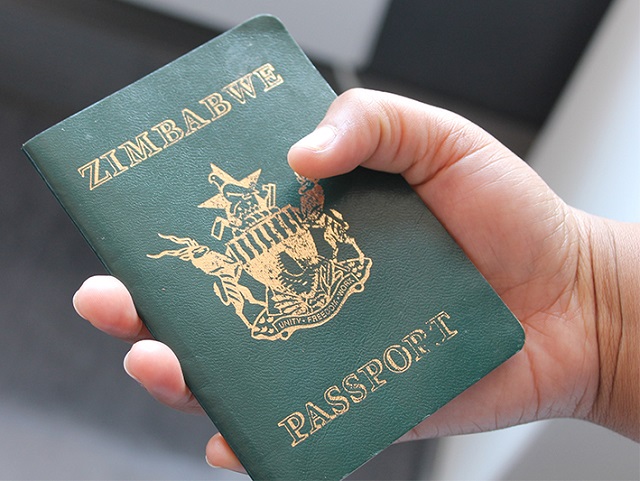
Hopefully, sooner, rather than later, we will be able to apply for passports from the comfort of our homes.
The Chinese experience shows that with high public openness to testing new tech, adoption cycles can accelerate rapidly.
We are at that tipping point.
The success of the traffic cameras proves that when the system is enforced, we comply.
We are a law-abiding people; we just needed the technology to hold us to our better selves.
Embracing the future
Now that we have experienced in real life what technology can do, we need not fear to explore the limitless possibilities on the horizon and many good things we can unlock.
As President ED always exhorts, we need to leverage new technologies to leapfrog our way to development, especially after being held back by the ruinous Western sanctions for decades.
We need to reject the lingering spirit of the Stone Age and embrace the digital age.
As technology continues its irreversible march forward, especially with the Fourth Industrial Revolution well and truly underway, let us use this momentum to build a truly integrated digital government.
Let the cameras on our roads be the first step towards a smarter, cleaner and more efficient Zimbabwe.
Bishop out!