admin
admin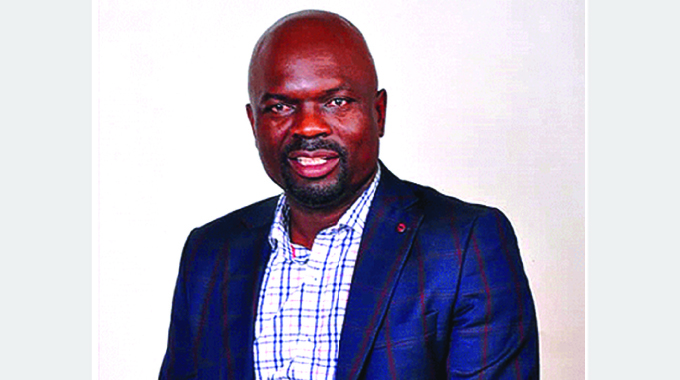
Alois Bunjira-Special Correspondent
SO recently I talked about how football gradually died at national and club levels over the last three decades in Zimbabwe. But we cannot talk about the death of Zimbabwean football in that period without talking about schools’ football, which is the bedrock of any football development all over the world. Remember almost every child goes through school where early development of the sport really starts.
The death of football at national and club level also cascaded and affected schools football. With very little going on at the top, I think it dampened the spirit and gradually football in schools also started deteriorating. The motivation was gone. There was less and less to look forward to.
At times schools used to curtain raise in top-flight matches. But once the Premier Soccer League and ZIFA abolished curtain-raiser matches, the last motivation that was left disappeared. The sponsored tournaments also dwindled. The schools reverted to a football calendar where tournaments were played over one weekend and that was it for the year! Surely we can’t expect to develop young talent like that.
When I was in primary and secondary school, we used to have our local schools football and netball leagues during the second term. We had 11 primary schools in our Zone in Zengeza/St Mary’s in Chitungwiza and we would play each school at a neutral venue. That was 10 matches in total.
I remember we used to start preparing for the primary schools’ football league towards the end of the first term, just after the athletics season finals. We would even have pre-season preparations complete with pre-season friendly matches. I remember at Zengeza 7 Primary School we used to play pre-season friendly matches against schools like Dudzai and Tamuka in Seke as well as Ruvheneko in Glen Norah to prepare us for our local league.
As soon as the second term started, we would kick-off the league. The games usually spilt into the third term when the winners would go to the regional and provincial finals, just before the exams.
In high school it was the same. All the six schools in our zone played against each other twice, home and away. The winners would then proceed to the district and then provincial finals.
At the same time, I was also playing for Hotspurs Juniors in the Area Zone League in Chitungwiza. That was a lot of football for a youngster and great for development. All that is gone and with it the death of proper football development. Those are the structures which used to feed into the regional junior leagues, which were also destroyed.
Now, if the children grow up without football in their neighbourhood or without the instilled interest of football when growing up how then do we expect them to love football and be football fans or fanatics when they grow up? How do we expect them to pour money into football when they grow up to be captains of industries when they were raised with no football in their neighbourhood?
What about the City Councils? Have the councils played their part in the development of football in this country? Or they have played their part in the decline of football in the country? It was always the duty of the councils to maintain the football grounds in the neighbourhoods for kids to have free access to these facilities.
Many kids were developed in these facilities. But the councils have neglected these local football grounds. Unfortunately, they left the maintenance of these grounds to the locals who then fight over who exactly would fork out the money to keep the grounds maintained.
The result is that most of these grounds deteriorated and are now even dangerous for young boys to play in. Some of them have been invaded by members of the community and are now used as maize fields. Some of them have been taken over by the very councils and housing stands allocated on them.
The councils also used to employ sports officers at different area boards around the councils’ jurisdictions. These officers co-ordinated and organised area zone football leagues from juniors to seniors. All that was also abolished by the councils. The councils have also failed to maintain the main football stadiums in cities and towns. All this has played a part in the death of football in this country and a loss of interest by the business community over the past decades.
Sometimes, corporates, especially parastatals, need a Government push to get involved in football. Sometimes the push comes through policies attached to sport. I have seen it happening in other countries.
Morocco and Tanzania are a good example in Africa. South Africa and Egypt are also other good examples. How the National Sports Stadium has remained the way it was since 1985 beats me. In that time, the FNB Stadium in South Africa has seen numerous facelifts and is now one of the biggest stadiums in the world.
The South African government was involved in the projects. I would love to see the Zimbabwean Government involved more in the sports infrastructure development in the country, especially in football where I have an obvious bias. The good thing is that the Government has pledged to step in this year in infrastructure development.
But the Government cannot do all the work alone.
When all stakeholders come together, have a united front and common goal for our football, naturally things start happening. The product becomes of good quality, the delivery of the product becomes attractive, and naturally fans start flocking back to the sport, to be entertained.
But as it stands, every stakeholder is busy pulling in its own direction and football continues to suffer while the stakeholders are busy blaming one another. They don’t realise they are playing a big role in the death of football in this country.
When all these stakeholders turn around, realise the roles they need to play and they all have one common goal, the wheels of positive change start moving and we see the upward movement of football in this country.
We remain banned from international football. Was it wise for the Sports Commission to suspend ZIFA and get us banned by FIFA? Should Felton Kamambo be reinstated immediately so that we get readmitted urgently? Are we ready to be readmitted? What are the possible solutions for Zimbabwean football? What needs to be done?
Let me start by saying that contrary to some narrative that the Sports Commission killed football. No, the Sports Commission didn’t kill football. They actually found football dead and tried to act. Their only crime is that they tried to do it when it was too late and when they did act, they used an iron fist.
They were supposed to intervene well before football reached its death bed. But indeed, the Ssports Commission suspended ZIFA because at that point football was already dead.
Yes, I agree it was very wise for the Sports Commission to raise a finger. I know they tried to bring ZIFA to book but to no avail. They tried to bring ZIFA to the discussion table but ZIFA kept refusing. The Sports Commission were within their mandate to do so. However, I did not think and I don’t believe all this should have led us to get suspended by FIFA.
Somehow a solution should have been found to deal with this matter. I do blame egos for the stand-off that ensued after the ZIFA suspension by the Sports Commission. FIFA didn’t suspend Zimbabwe straight after the Sports Commission suspension of the Kamambo-led ZIFA board. They gave us a very long rope and a long grace period for the two parties to resolve the issues of football in this country.
ZIFA remained stubborn and didn’t want to move or change. At the same time the Sports Commission was not going to back down because reform was necessary. These two parties were supposed to come together during the FIFA window period to map the way forward.
Does the move by FIFA benefit Zimbabwean football? No. I hated it and got disappointed when we got suspended. It was never supposed to go that far. Where was the love for football from the football leadership in this country when we were facing the imminent ban?
I have heard so many people saying that we should just reinstate Kamambo and have the suspension lifted. I don’t agree with that. I am of the school of thought that we are already suspended. Why don’t we use this period to restructure football, put all the destroyed structures back together.
We also have issues with our stadiums. We could use this time to rebuild/renovate our stadiums to CAF standards. Football is for all members of the society regardless of one’s political affiliation. When we are ready, with all systems in place, with all the stakeholders now pulling in one direction, we can then engage FIFA for reinstatement.
Even if it means reinstating Kamambo at that time, so be it. But that would be an issue for the ZIFA Congress to decide since they have recalled him along with former board members Philemon Machana and Bryton Malandule.
Yes, there are casualties at this moment, but with things like these, there would always be casualties.
My biggest problem, however, is, is there anything happening at the moment that can show we are moving in the right direction?
We should be calling to see reconstruction and restructuring movement.
Even the national team players abroad should not be selfish to just call for themselves to play again yet they know junior national teams, both boys and girls, are non-existent.
They should be making noise for such positive changes. They had the privilege of playing at junior national level. They should feel for their younger brothers and sisters who are being denied the same opportunities they enjoyed. Things need to get back in order first.
So, yes, almost everyone is to blame for the mess we find ourselves in. So all the stakeholders must come together and start pulling in one direction. We are here now. We are already suspended.
Being reinstated without solving the pending issues will not help us.
This is not the time for throwing blame all over the place. What do we do or go from here? What are the real solutions? Let us talk about that in Part 3 next week.
■ Alois Bunjira is a CAPS United legend who won the league title with the Green Machine in 1996 before he moved to South Africa where he played in that country’s top-flight league for a number years. He also featured for the Young Warriors in the 1995 All-Africa Games. He writes this column in his own capacity.



 Online Reporter