Chronicle Editor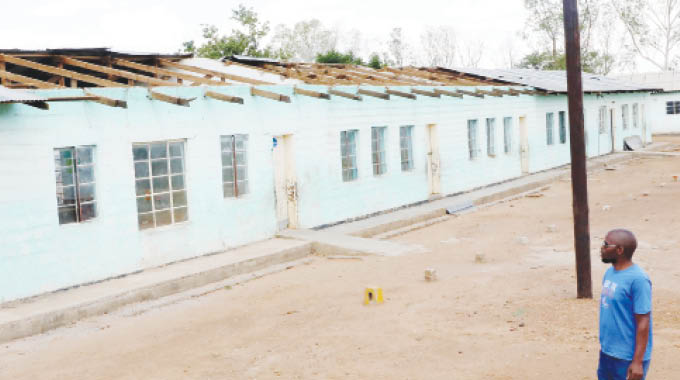
Sukulwenkosi Dube-Matutu, Gwanda Correspondent
THERE is need to mainstream disaster risk management to become an agenda that will be tackled on a daily basis in order to realise the expected outcome of resilience among communities and risk reduction.
This was raised by stakeholders during a Matabeleland South Provincial Disaster Risk Management Bill consultation meeting that was held in Gwanda recently.
The Civil Protection Unit (CPU) is in the process of crafting the Disaster Risk Management Bill which is aimed at mainstreaming issues of disaster preparedness and ensuring resilience among communities and risk reduction.
The CPU is in the process of conducting nationwide consultations on the Bill to collect contributions from various stakeholders on what they want to be incorporated.
The country has recorded a number of disasters over the years which have cost billions of dollars which include cyclones, floods, storms and fires among others. The recent incident being Cyclone Idai.
The country has, however, fallen short when it comes to disaster preparedness and response due to limited resources.
Speaking during the meeting, Gwanda District development coordinator, Ms Kiliboni Ndou said there was need for various stakeholders to incorporate issues of disaster risk management into their programmes and plans.
“In order for us to achieve the desired outcome of resilience and risk reduction when it comes to disaster risk management, we have to take a different approach. At the moment, we plan after disasters have struck in a bid to come up with intervention strategies.
“We have to take disaster risk management as an issue that is tackled on a day to day basis. We have to stop being reactive as a country but plan in advance and have measures and interventions put in place which can be used to mitigate and address issues of disaster risk management,” she said.
Ms Ndou said local authorities had to set aside a budget at local level which could be used for disaster responses. She said disaster risk management committees had been formed at local authorities but they were inactive and hence needed to be revived.
Also speaking during the same meeting, Department of Climate Change project officer for Bulilima District, Mr Zenzo Mpofu said there was a need for a stand-alone institution or parastatal which would focus on disaster risk management as part of efforts to mainstream the agenda. He said this would ensure that disaster risk management issues were prioritised throughout the course of the year.
He said just as environmental issues had been prioritised and entrusted under the care of the Environmental Management Authority (EMA) the same had to be done with disaster issues.
Mr Mpofu said the country continued to lose a lot to disasters and some losses could be averted with the right programming.
“We are living at a time when we are experiencing climate change which has resulted in a number of disasters being recorded in the country. As a result, we have to be proactive and take issues of disaster preparedness and management seriously. This will be evidenced by how we will choose to tackle this matter and the importance that we will give to it.
“There is need for a stand-alone parastatal or institution which will be given funds that will focus on disaster risk management. At the moment, various departments have a number of programmes they are dealing with and we don’t want disaster management to be one of the other programmes which they deal with during certain times. A stand-alone parastatal will adequately deal with the issue to ensure that it gets all the attention it needs and for us to record the desired outcome as a nation,” he said.
Mr Mpofu said there is need for thorough programming throughout the year which will cover all parts of the country including the remote parts.
Gwanda Municipality town clerk Ms Priscillah Nkala said availability of resources was a key factor when it came to response and reaction to disasters. She said as long as authorities responsible did not have resources to respond to disasters, then the country would not manage to achieve its desired goal.
She said Government had to put in place funds to cater for acquisition of resources that will be used by local authorities to cater for disaster response.
“As a municipality, the challenge that we have right now when it comes to issues of response and reaction to disasters is of resources. We have a challenge with rescue vehicles such as fire brigade or ambulances as the ones we have don’t have the capacity to service the whole town. I’m sure that this is a common challenge within various local authorities.
“As we mainstream issues of disaster preparedness and seek to achieve resilience, can resourcing local authorities become one of the top agendas as without funds we can’t do anything,” she said.
Matabeleland South Provincial meteorological officer, Mr Rodgers Munyira said once the Bill had been approved, there was need for the programme to be properly supervised so that desired goals were attained. He said there had to be close monitoring of funds and resources to ensure that they were channelled properly.
Mr Munyira said the bill had to give a clear outline on how victims were going to be assisted and the kind of intervention that would be implemented.
He said each province had to be allocated funds according to how often they recorded disasters and the nature of disasters experienced. Mr Munyira said Matabeleland South Province was each year experiencing a recurring disaster of drought which needed continuous intervention.
He said issues of disaster risk management had to be mainstreamed from village level right up to national level adding there was need for community awareness programmes.
Matabeleland South acting provincial development coordinator, Ms Sithandiwe Ncube said there was need to allocate funds to the Ministry of Primary and Secondary Education under disaster risk management. She said in Matabeleland South Province a number of disasters were recorded in schools during the rainy season as the infrastructure was in a dilapidated state. She said some schools had to be rehabilitated as a strategy under disaster risk management.
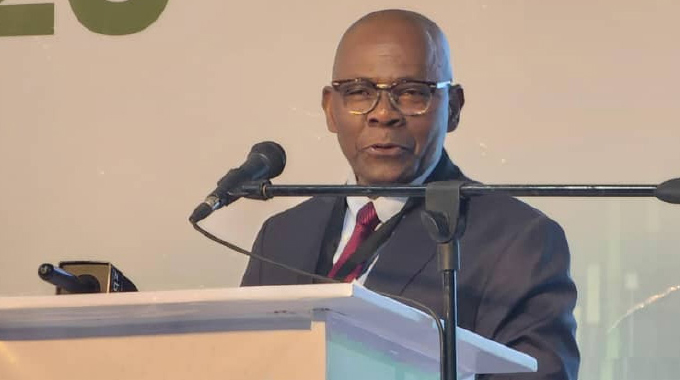
Speaking during the meeting, CPU deputy director, Ms Sibusisiwe Ndlovu said the new Bill sought to address gaps which existed in the current Civil Protection Act. She said the current legislation was more oriented towards preparedness for response than reduction of risk to disaster.
Ms Ndlovu said a bill had once been presented to have a parastatal formed that would be responsible for disaster risk management but the then Cabinet rejected the proposal.
“It was once proposed that a parastatal be formed for the purposes of disaster risk management but the Cabinet which was there at the time rejected the bill saying it must be under a public office and not a parastatal considering the way our parastatals have been performing.
“It’s difficult to have a well-resourced parastatal and we were therefore directed that disaster risk management must be under a public service department. We have noticed that parastatals perform well in countries whose economy is performing well. However, we’ll take this suggestion and incorporate it in the draft bill and present to the current Cabinet,” she said.
Unpacking the contents of the Bill, Ms Ndlovu said it sought to address issues of funding. She said they had proposed that Government allocates one percent of the national budget towards disaster risk management. She said other funding would come through levies from potential hazard areas such as roads – that is toll fees and insurances among others.
Ms Ndlovu said the Bill will also ensure easy access to emergency services such as ambulance and fire brigade even for people in rural communities. She said it also sought to ensure integration, mainstreaming and coordination of risk management and enhance emergency fire or rescue services adding that a disaster risk management organisation encompassing all local levels would be established.
Ms Ndlovu said the bill was expected to reduce risks to disaster, minimise severity to disasters and ensure optimal preparedness, response and early recovery resulting in resilience.
She said the process of coming up with this bill started in 2005 after the realisation that the country was lagging behind in terms of disaster risk management following Cyclone Eline in 2002. She said the policies and legislation that the country had in place for disaster risk management were not up to standard.
Ms Ndlovu highlighted that the process of coming up with the bill was later abandoned in 2011 hence the need for its completion. – @DubeMatutu


 Online Reporter