Andrew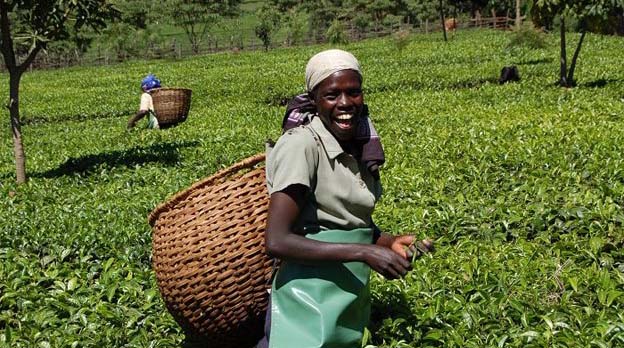
Trade Focus
Allan Majuru
WITH just two weeks to the end of the year, 2022 has recorded milestones in export growth.
The country has witnessed sustained export growth, thanks to spirited economic diplomacy by President Mnangagwa’s Second Republic, whose target has been re-integrating Zimbabwean businesses into global supply chains.
From the re-engagement thrust, Zimbabwe’s exports to non-traditional markets have witnessed unprecedented growth. For example, Zimbabwe’s exports grew by 12,8 percent, from US$3,75 billion the previous year to US$4,22 billion this year, according to ZimStat.
This growth has been anchored in Zimbabwean products finding new markets in countries such as the United Arab Emirates (UAE), China, Belgium and Italy.
Figures show that from January to August in 2019, Zimbabwe’s exports to UAE amounted to around US$501 million, and these have grown to US$1,38 billion during the same period in 2022.
Exports to China have also grown to around US$454 million during January-August this year, compared to the same period in 2019, where exports amounted to only around US$12 million.
Exports to Italy have also recorded an impressive growth during January-August this year.
They stood at US$40,38 million, up from around US$1,49 million recorded during same period in 2019.
Zimbabwe’s exports to Belgium have almost doubled, from US$47,78 million in 2019, to US$82,26 million this year.
Although these are huge successes to celebrate, there is still more export potential to be realised across the country, which, if unlocked, will propel Zimbabwe into a prosperous and empowered upper middle-income society by 2030.
What is crucial going forward, in line with the Government’s devolution agenda, is understanding and unlocking opportunities at district level, riding on natural resource endowments.
To understand these opportunities, the national trade development and promotion organisation, ZimTrade, has conducted surveys across all provinces to determine key export opportunities.
For example, the study of Manicaland province revealed that low-hanging fruits are in areas such as field and plantation crops.
The districts in Manicaland are each endowed with unique climatic conditions that could help grow their contribution to national exports if various capacity interventions are put in place.
Plantation crops
Most parts of Manicaland province enjoy favourable climatic conditions, which are conducive for agricultural activities, including plantations.
Common plantations with huge export potential in districts such as Mutasa, Nyanga, Chipinge and Mutare include those of macadamia, tea, coffee, apples, bananas and timber.
Manicaland is positioned to tap into the global market for macadamia nuts, which grew from around US$220 million in 2017, to around US$286 million in 2019, and are expected to reach over U$300 million in 2022.
Already, production of macadamia has been growing in Manicaland, according to the Ministry of Lands, Agriculture, Fisheries, Water and Rural Development (MLAFWRD) and increased output makes it easy to meet quantity requirements in export markets.
Figures show that annual production of macadamia increased to 10 000 tonnes in 2020, from 5 494 tonnes in 2015.
There is, however, room for macadamia producers to earn more from export markets if they export value-added produce, instead of nuts in shell, which make up the bulk of current exports.
The kernel, the main output of the macadamia nut, is rich in oil that can be used in soaps, sunscreens and shampoos, while the remaining press cake can be used for animal feed.
Value-added macadamia products can be targeted at specific markets that will guarantee sales.
For example, peeled macadamia is an ingredient for some traditional dishes in Japan. In Europe, the nuts are used to produce nut oil, macadamia milk, macadamia honey, butter and chocolate coating.
The Kenyan experience has shown that export revenue can increase, and Zimbabwe can pursue that model.
In addition to macadamia, Manicaland province has huge experience in avocado production, with more farmers joining the sub-sector in recent years.
According to Trade Map, Zimbabwe’s avocado output for export increased from 2 746 tonnes in 2017 to 5 806 tonnes in 2021.
With increased production, and new smallholder players planting more trees, there is scope for Manicaland province to increase exports of avocados.
Just like macadamia nuts, farmers will earn more if they complement exports of fresh avocados with value-added products such as avocado oil, which earns more in international markets.
Bananas are also low-hanging fruits for Manicaland districts like Mutasa, Honde Valley, Rusitu, Chimanimani and Chipinge.
There is scope to earn more if additional farmers engage in banana production, which, according to the MLAFWRD, reached 1 080 970 tonnes at peak in 2010.
There are new plantations that have been coming up in areas such as Middle-Sabi, and a model to integrate smallholder farmers into the mainstream export business, riding on current successful exporters, will help boost banana exports from Manicaland.
Here, capacity building and interventions, as well as financial support, must be provided to growers, especially smallholder and rural farmers, who make up the bulk of banana producers in the province.
Manicaland-produced tea is renowned in international markets, and is already touted as one of the key products for branding Zimbabwe due to its high quality.
Tea is largely grown in districts such as Mutasa, Chipinge and Chimanimani. Figures show that in 2014, production stood at 24 486 tonnes but reduced to 7 830 tonnes in 2017, before production reached 40 185 tonnes in 2019.
The recent boon in tea production is meant to meet the growing demand for Zimbabwe’s tea in export markets, and Manicaland is well-positioned to grow the country’s exports.
Related to tea, there is also room for Manicaland to grow coffee exports. Coffee is also mainly grown in Mutare, Chipinge, Mutasa and Chimanimani districts. In order to unleash coffee exports to the levels where they used to contribute around five percent of the country’s gross domestic product, there is need to encourage and incentivise farmers. Value addition of coffee is essential for increased export earnings.
Plantations of fruits such as apples, stone fruits and mangoes are also low-hanging fruits for Manicaland. Estates in Nyanga, which used to be big in exports of apples and stone fruits, are working towards increasing production, which will make it easy to grow exports.
With increased production, Manicaland districts can reclaim lost international markets such as Europe, which already regard Zimbabwe-grown fruits as being of high quality, and tasty compared to competition.
There is also need to promote value addition so that producers of fruits can realise more foreign currency earnings and also reduce post-harvest losses.
Further to this, Zimbabwe-grown timber has high demand in regional markets such as Botswana, Mozambique, Zambia and Malawi. Manicaland currently accounts for the largest share of production and exportation of Zimbabwe’s timber, and has potential to do much more.
The province is home to several types of wood that can be used, for example, for structural purposes in building and construction; treated and untreated poles for transmission lines; hardwood for furniture manufacturing; and industrial wood for packaging, pallets and cable drums.
Current producers in Manicaland employ internationally recognised forest practices, and this has resulted in some of the highest quality and sustainably managed plantations in Africa.
To earn more from timber, businesses in Manicaland province need to ensure that the majority of wood exports are value-added products, and this can improve commodity demand in export markets.
Local producers could consider coming up with collapsible furniture designs that can be easily assembled at the final market or by the end user at their home.
Here, the cost per unit in production and transportation is cheaper, and this can make Manicaland-designed wood products highly competitive in regional markets and beyond.
Currently, there are local producers who have diversified to include bark extract from timber plantations.
Bark extract has a ready market in Asian markets for leather tanning, and with increased production, local producers can increase their share of the international market.
Other export opportunities
Tied to plantations are horticultural products, whose export opportunities are abundant across districts in Manicaland.
There is scope to grow production of vegetables such as peas, carrots, cauliflower and sweet potatoes.
According to MLAFWRD, sweet potatoes are mainly grown in Chipinge and Makoni districts, and the province usually comes third after Mashonaland East and Midlands in terms of production capacity.
This position shows that Manicaland province has huge potential in exporting sweet potatoes, especially if farmers concentrate on viable varieties such as the yellow-fleshed ones.
In the province, sesame is widely grown in Chipinge, followed by Nyanga, Makoni and Buhera.
Figures show that the province contributed about 40 percent of the country’s annual production in 2019, coming second from Mashonaland Central, which had around 53 percent.
This analysis shows that sesame has great export potential for Manicaland province, considering the huge demand of the seed in the Mozambique market, whose proximity to the province offers additional logistical and competitive advantages.
Flowers, which already have a lucrative market in countries such as Netherlands, offer export opportunities for growers in areas such as Nyanga, Vumba and Mutare.
To grow flower output, there is need for established players to onboard small players, which will guarantee access to markets.
Manicaland province is also emerging as a key producer of chillies, peppers, wild fruits and essential oils.
ZimTrade is currently capacitating producers of products such as baobab powder and oil, as well as mapfura/marula-based products.
Capacity interventions such as branding, packaging and product development are expected to improve the competitiveness of Manicaland-produced wild fruits and essential oils in international markets.
Allan Majuru is the ZimTrade chief executive officer.



 Online Reporter