admin
admin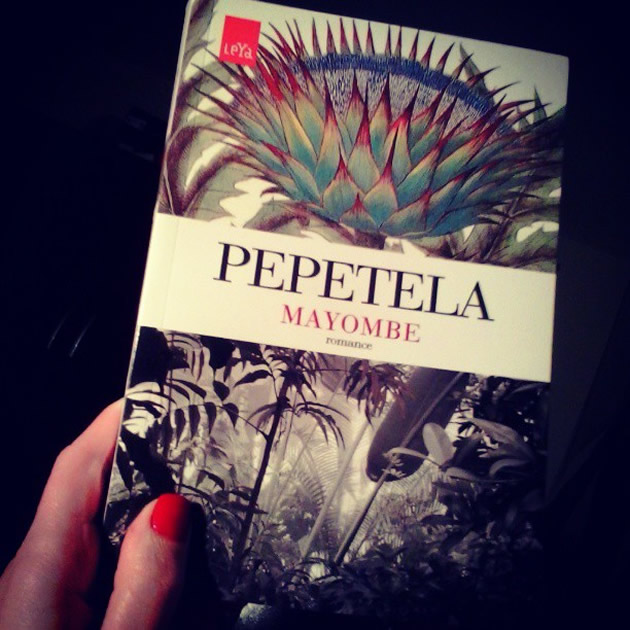
Lovemore Ranga Mataire The Reader
MAYOMBE by Pepetela is a must0-read book for anyone in search of a better understanding of the dynamics of liberation movements in Africa particularly in Angola where the guerrilla movement was a melting pot for various people from different ethnic and racial backgrounds united by the need to dislodge the Portuguese colonial establishment.
Pepetela or Arthur Maurico Pestana dos Santos, born in Benguela, Angola in 1941 is an author who is more concerned with a broad examination of national culture, past and present with a view for the construction of a coherent, multifaceted national self-awareness.
Set in the forest of Cabinda along the early 1960s, near the onset of the colonial war against the Portuguese administration of the Overseas Provinces.
The characters comprise of a group of guerrillas from various backgrounds and as their military activity proceed in the novel, so is their attempt at coming to terms with their own ethnic and regional diversity and understanding of the overall goals and administration of the independent movement.
The group includes the Kikongos, Kimbundus, Cabindas and a “detribalised” urban youth, a mulatto and others caught in the traditional inter-tribal tensions with a need to overcome these for the benefit of the nationalistic cause. The predominantly masculine characters comprises of Euro-educated Marxist theorists, pragmatic rural residents and soldiers of varying degrees of politicisation portraying a wide scope of personal and partisan commitment for the independence of Angola.
Unlike other African books on liberation struggles in Africa, Mayombe has “thinking” guerrillas who take time to reflect on the essence of the war instead of being just killing machines.
The novel uses several episodes from the Angolan revolution to portray the relationship among MPLA fighters in the Angolan northern Cabinda province. Ethnic and ideological differences and tribalism tend to distract the guerrillas from their many shared ideals and perspectives. Prejudices, suspicion, racism and jealousy creep in as major ingredients for serious contradictions.
These differences are so acute that they hamper the collective resistance against colonial domination and thus lead to tensions among the guerrillas and even those in the high command. Fearless, one of the commanders alludes to this tension following the refusal by some guerrillas to rescue Muatianvua.
Fearless warns that the significance of unity and collective action will be lost and the struggle to advance and force the Portuguese out of Angola will also be lost if guerrillas are unable to bury their ethnic differences aside.
The unity of the guerrillas is being undermined by each one of the guerrillas’ personal motives, which originally drove them to join the struggle.
Theory, who comes from Gabela and is of mixed blood, joins the struggle so that so that he be regarded as Angolan despite his skin colour. On the other hand, Struggle comes from Cabinda and since the Cabinda people have refused to ally themselves with the guerrillas and are considered treacherous, he sacrifices to be on the front-line to remove any doubt of his commitment to the struggle.
New Word sees himself as not driven by any personal motives as he leaves Europe to join the struggle. He is a Marxist and applies Marxist fundamentalism in rationalising the struggle.
For him, “man as an individual is nothing, only the masses can make History.” New World’s allusions expresses in theoretical terms what Fearless tries to convey earlier when he says that a people’s war is not measured by the number of enemies dead but by the degree of popular support.
Pepetela’s constant underlying message is for guerrillas to transcend the forces of division with a new multiculturalism based on the culture of resistance and which is shaped by the liberations struggle. Jao and Fearless are the architects of the culture of resistance for nation-building so that a person will no longer act as Kimbundu or Kikongo but as Angolan. The statement by Fearless that he doesn’t care if someone is Kikongo or Kimbundu testifies his wish for multiculturalism, which should bind people together.


 Online Reporter