admin
adminon official estimates.
Inter-communal fighting in Libya’s west last week left at least 20 people dead and hundreds wounded before the government secured a ceasefire with the help of the nascent army and revolutionary brigades.
The unrest, coupled with calls for autonomy in the east, has raised concerns over the ruling National Transitional Council’s grip on power in the country where decades of dictatorship left an institutional void.
It has also put into question the NTC’s ability to conduct elections for a constituent assembly which are scheduled for June.
“Clashes will escalate and may well become more frequent simply because there is no effective central authority,” predicts George Joffe, co-editor of The Journal of North African Studies.
There are many possible triggers: ambitions for autonomy in the east, resentment against individuals or groups which allegedly collaborated with the former regime, racial tensions, and the desire to hang on to power, Joffe said.
Tribal clashes, he said, “could easily derail Libya’s transition to democracy simply by preventing the organisation of an effective poll.”
Peter Cole of the International Crisis Group stresses that while the root cause of the violence is not always tribal in nature, communal and tribal loyalties come into play when grievances do arise.
“These communal conflicts risk growing in scale and frequency if the government does not put a justice system in place,” he said, because people tend to take matters into their own hands to defend or punish a community.
“The country is not at a tipping point, but it is vulnerable,” he said.
Returning from Sabha, Cole said reconciliation councils and tribal leaders in the city were at a “breaking point” trying to prevent individual squabbles from becoming all-out conflicts.
“Without a justice system to refer cases to, they can only do so much.”
Fred Abrahams, special adviser to Human Rights Watch in Libya, says the interim government needs “to take reconstruction of the judicial system much more seriously” and demobilise militias, who hold “roughly 8 000 detainees.”
It is no surprise, Abrahams added, that tribes and militias are stepping up to fill the power vacuum and no coincidence that the latest rounds of fighting were concentrated in border areas.
“The struggles are mostly about business and the control of smuggling routes where a lot of money is up for grabs and where disputes are fraught with danger due to the proliferation of weapons after Gaddafi’s fall,” he said.
The response time of the government had improved since the first serious outbreak of violence in Kufra late February, Abrahams noted.
Analysts agree the disarming of militias, who control several strategic sites and provide services as diverse as traffic control to border patrols, is key to a smooth transition.
But the NTC has proved powerless on this point. — AFP.


Online Reporter
- Herald
- September 23, 2026
- 38 views
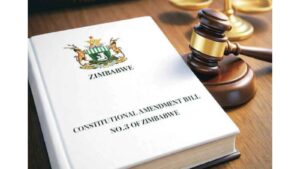
Court reserves judgment in CAA3 challenge
Fidelis Munyoro Chief Court Reporter THE Constitutional Court has reserved judgment in a high-profile challenge to Constitutional Amendment Act No. 3 (CAA3), after lawyers representing President Mnangagwa, the Minister of…