admin
admin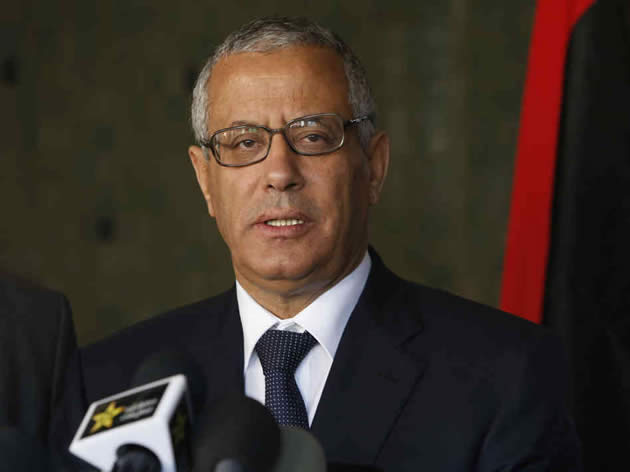
TRIPOLI. — Libyans in Tripoli began a three-day strike yesterday to mourn dozens killed in clashes at an anti-militia protest over the weekend, the deadliest violence in the Libyan capital since the 2011 uprising. The weak central government has struggled to rein in former rebel brigades who helped end Muammar Gaddafi’s 40-year rule but have since grown into increasingly menacing militias.
Demonstrators protesting against the militias on Friday were fired upon from a base belonging to battle-hardened fighters from the western city of Misrata, who killed several protesters before rival militias swept in, with gunfire and explosions echoing across the city.
The fighting raged overnight and into Saturday, as the Misrata base changed hands and reinforcements rushed into the city, before other former rebel brigades under the nominal control of the government secured the area and the Misrata fighters stood down.
At least 43 people were killed and another 450 were wounded in the fighting, the health ministry said.
Most businesses in Tripoli were shuttered yesterday, with the exception of a handful of grocers and cafes. Banks were closed, as well as many schools and universities.
“Unfortunately, many schools are closed,” education ministry spokesman Samir Jarnez told AFP, adding that he did not have an exact figure for the closures.
Tripoli’s city council had announced the three-day strike “in all private and public sectors” late Saturday, saying it was intended to express mourning and solidarity with the victims of the latest violence.
The city council urged citizens to exercise “calm and restraint,” and to give mediators a chance to resolve the conflict.
Prime Minister Ali Zeidan has also called for calm, saying “the coming hours and days will be decisive for the history of Libya.”
Zeidan’s government has struggled to convince militias to disarm or join the national security forces, as many of the groups are more loyal to their commanders, towns or tribes than to Tripoli.
Zeidan himself was briefly kidnapped by militiamen last month before being released, underscoring his limited power. A security chief claimed responsibility for the abduction and said he was “proud” of it.
Meanwhile, Libya’s deputy intelligence chief Mustafa Nuh was abducted yesterday in Tripoli, a security official told AFP, as tensions ran high in the capital following deadly violence over the weekend.
“The vice president of intelligence was abducted shortly after his arrival in Tripoli from a trip abroad,” said the official, who declined to be named.
Contacted by AFP, an intelligence source confirmed that Nuh had “disappeared” but did not elaborate.
Private channel Libya al-Ahrar reported he was abducted, but it did not cite any sources for its report.
There was no immediate claim for the abduction, which came as Tripoli began a three-day strike to mourn dozens of people killed in clashes at an anti-militia protest — the deadliest violence in the capital since the 2011 uprising. – AFP.


 Online Reporter