Online Reporter
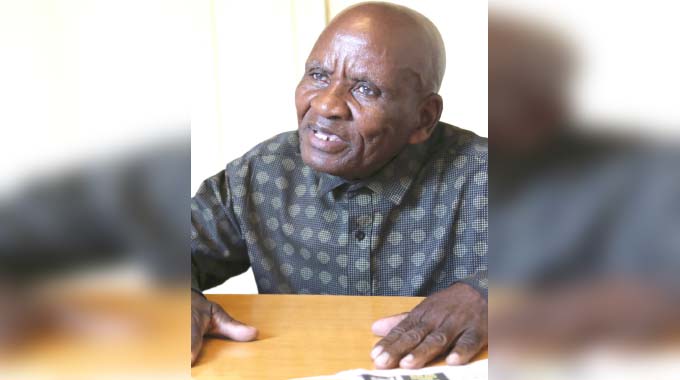
WE continue our interview with former freedom fighter Lieutenant-Colonel (Rtd) Njabulo Gwembetsha Ngwenya, pseudonym Cde Dokotela Makhalima. In previous interviews, Lt-Col (Rtd) Ngwenya spoke about his training in Zambia and Tanzania. In our last edition, he shared with our Assistant Editor, Mkhululi Sibanda (MS), how he was selected to undergo a cadet officers’ course at the Zambia Military Academy in Kohima. Below, he continues his account of the armed struggle, focusing on the training at Kohima and deployment to CGT.
MS: Let us resume our conversation for this week, with you taking us through your training at the Zambia Military Academy at Kohima.
Lt-Col (Rtd) Ngwenya: We began our training on 10 October 1977 and completed it on 29 September 1978. Among the cadres I trained with, were the now Zimbabwe National Army Commander, Lieutenant-General Emmanuel Matatu, the former Ambassador to Mozambique, Lt-General Nicholas Dube (Cde Bhuzwa), Major-General (Rtd) Chancellor Diye, John Nyamupingidza (Colonel Waison Tshipa) and Colonel (Rtd) Peeps Gonde, who is now an academic at the National University of Science and Technology (Nust).
Also with us were the late Brigadier-Generals Toddy Mpala and Milton Siziba, Carlos Mudzingwa, Baberton Sibhona and the late Captain Francis Zimuto, popularly known as Black Jesus during the land reform programme. Captain Zimuto was particularly active at the turn of the millennium when war veterans occupied commercial farms. I do have a full list of the Kohima cadres I trained with, but unfortunately, I cannot mention them all here. To those I have not named, please forgive me—it is not intentional.
MS: You may continue.
Lt-Col (Rtd) Ngwenya: Of the 95 of us, we were organised into four platoons. The senior intake we found already at the academy comprised Zambians and Tswanas. We went through proper cadetship, with our group leader being Dhlula (Carlos Mudzingwa), who was the senior under officer and was presented with a sword during the pass-out parade.
MS: After Kohima, where were you deployed?
Lt-Col (Rtd) Ngwenya: After our pass-out parade at Kohima, we were sent to Freedom Camp (FC). However, two weeks later, we were transferred to Emagojini, where there were two facilities: Camp Guerrilla Training (CGT) One and Two. It was shortly after we left FC that the Rhodesians launched a deadly attack on both FC and the girls’ military camp, Mkushi. These were bombed on 19 October 1978, resulting in heavy losses on our side. On that day, Rhodesian aircraft flew over our positions at Emagojini at very low altitude, but they did not attack. They were engaged by our anti-aircraft units and subsequently flew away.
MS: Why do you think they did not bomb your positions?
Lt-Col (Rtd) Ngwenya: The Rhodesians may have assessed the layout of our camps. For those unfamiliar, CGT was divided into two camps — one for artillery and one for infantry. The troops stationed there had received training in countries such as Angola, the Soviet Union and Ethiopia, making it a formidable deployment. Our assessment was that the Rhodesians realised the difficulty in attacking such a stronghold and aborted the mission. Our reconnaissance units had even observed enemy forces being dropped at nearby positions. We began deploying accordingly but they could not be located. Due to the threat of attacks, the command decided to evacuate unarmed troops early each morning and have them return in the evening. Many of these comrades had just arrived from training in Angola and were yet to be armed. Only those who had trained in Ethiopia arrived fully kitted and armed—Ethiopia trained, equipped and deployed its trainees with personal weapons, such as AK-47s.
MS: How long did you remain at CGT?
Lt-Col (Rtd) Ngwenya: I was never deployed anywhere for long and CGT was no exception. One day, Baberton Sibhona and I had taken the troops out of camp as a precaution. Upon our return in the evening, we found a truck that was about to leave camp. We had been away all day, as usual. When the camp commander — now Colonel John Nyamupingidza (Tshipa) — saw me, he stopped the truck and asked one of the comrades to disembark. He instructed me to pick up my few belongings and take the comrade’s place. The person I replaced was Cde Chris Mukahanana, whom I had trained with at Kohima. Chris was then deployed to the front and operated in Guruve, Mashonaland Central Province.
MS: Where were you being taken?
Lt-Col (Rtd) Ngwenya: We were being sent to Solwezi to serve as instructors at a newly established training centre called Mazoe Training Depot (MTD). When the Smith regime intensified its air raids on ZPRA camps around Lusaka — such as FC — the command decided to relocate training operations further north to the Solwezi region. That’s where we went. It became a new pool for instructors.
MS: Do you remember any names from that team?
Lt-Col (Rtd) Ngwenya: The camp commander was a seasoned veteran, Cde Busobenyoka. He was later succeeded by Bitwell. The Chief of Staff was Velaphi Nyoni (Lt-Col Binoni Benjamin Dube), who was deputised by Brigadier-General (Rtd) Brave Matavire. Others included Cde Moto (logistics), Mlonyeni (personnel) and Cde Tambudzo Shoko (administration). In the pool of instructors were myself as the medical officer, Nicholas Dube, Walker, Peeps Gonde, Makoni, Zebediah, the late Lt-General (Rtd) Sibusiso Busi Moyo, Austin, Attempt, Dry Phetsheya, Gibson Mabusa, Soweto, Kumbirai and Phinda.
MS: How large were the numbers you were training?
Lt-Col (Rtd) Ngwenya: We trained large numbers. The training syllabus was focused on guerrilla warfare, with some elements of conventional tactics. Recruits numbered in the thousands, and many of those who had completed training in countries like Ethiopia, Libya, Angola, and the Soviet Union were assembled there. At Mlungushi, there were four battalions that had completed conventional warfare training. Notably, the battalion that was deployed directly to Tsholotsho under the late Colonel Smile Madubeko Moyo (known as Middle) was selected from MTD. The numbers eventually grew to the equivalent of four brigades. However, arming all those troops became a major challenge. We were under the Department of Training, but the responsibility for arming lay with the Department of Operations.
To be concluded next week, with Lt-Col (Rtd) Ngwenya discussing his deployment to ZPRA headquarters alongside National Hero, the late Lt-Gen Sibusiso Busi Moyo. He will also reflect on the ceasefire period and attestation into the Zimbabwe National Army, prior to his posting to 4:3 Battalion, then commanded by National Hero Brigadier-General (Rtd) Victor Rungani.