Chronicle Editor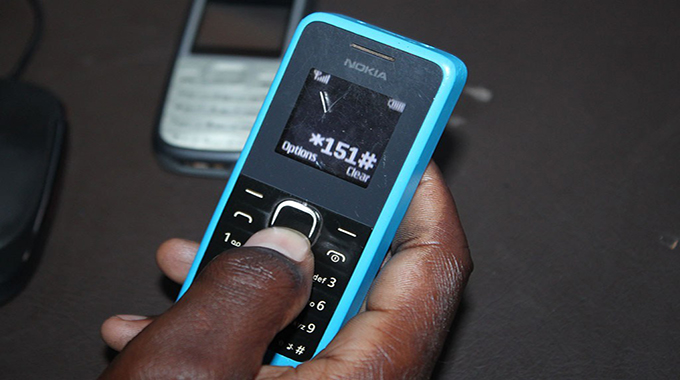
ZIMBABWE has now completed over 310 days under lockdown since the country recorded its first case of Covid-19 in March last year.
As a time when much of the population (excluding essential workers) has been restricted to staying at home to reduce the rate of infection of the deadly virus, many people have taken to EcoCash to conduct their day-to-day transactions safely.
The mobile money platform – owned by Cassava Smartech Zimbabwe – has been instrumental in enabling social and physical distancing and keeping citizens safe during the pandemic. According to figures released by industry regulator, EcoCash accounts for more than 95 percent of all mobile money transactions in Zimbabwe.
Confederation of Zimbabwe Retailers president Denford Mutashu said there was a need for the public, supermarket owners and all retailers to adhere to lockdowns regulations, including encouraging the use of mobile money in order to “stop a looming catastrophe amid rising cases of Covid-19”.
“We are in an extraordinary situation which calls for extraordinary measures and discarding the ‘business as usual’ approach. Therefore, we should adhere to Covid-19 guidelines. The measures are necessary to save lives,” Mr Mutashu said.
Zimbabwe is experiencing a second wave of Covid-19 coronavirus infections, blamed on many people relaxing and letting down their guard during the festive season. Cases were moderately low last year compared to many other countries. However, by the end of November 2020, eight months after the first case was recorded, Zimbabwe had 9 950 cases and 276 deaths.
And that number has now more than trebled to over 33 000 cases and 1 200 deaths, prompting the government to impose a strict national lockdown and to encourage the use of online and mobile money payments, to reduce physical contact and reduce infections.
Mobile money allows users to transfer money and make payments with minimal physical contact, helping mitigate the spread of the virus.
“When the Covid-19 pandemic first hit, I was worried I might be one of the first to be infected because I handle cash every day. I was even scared to queue in a crowded bank where I could be exposed to the virus,” said Trust Mazonde, who runs a supermarket in Chinhoyi.
“However, EcoCash has allayed those fears as I don’t necessarily have to handle cash now, or make cash deposits at the bank. I now do most of my transactions on my phone,” he added.
In addition, mobile money has a significantly larger number of access points, compared with traditional banking services, allowing users to limit travel time and distance covered in times of lockdown restrictions.
To use mobile money services, one simply needs a basic mobile phone. Once one registers for EcoCash, they can carry out a wide variety of financial transactions, including peer-to-peer money transfers, bill payments, in-store purchases, sending and receiving remittances and receiving social programmes benefits – among many others services.
“I don’t even remember the last time I visited a Zesa outlet to buy electricity as I now simply purchase the tokens on my phone. This has really brought me great relief as I dreaded standing in queues for fear of contracting the coronavirus,” said Lynette Nkomo from eMganwini in Bulawayo.
Calton Ndudzo, from Mhangura, said while the Covid-19 pandemic has brought with it a lot of pain and suffering, it had also pushed many companies to introduce new digital platforms to serve their clients.
“It’s a relief that people can now have their queries attended to on digital platforms without the need to visit shops.
For instance, last week I forgot my EcoCash PIN and I got all the information I wanted while at home. This is how life should be,” he said.
Cassava Smartech Zimbabwe last year accelerated its digital transformation journey by completing a number of automated selfcare initiatives to improve the customer experience.
These include a USSD portal, where customers can simply dial *150# to access EcoCash selfcare services, such as PIN resets, transaction reversals and so much more. The selfcare services can also be accessed on https://selfcare.ecocash.co.zw/portal/
“The national lockdown has compelled people to operate remotely, but life has to go on,” said Monalisa Dube from Lupane.
“For me, my baby boy attends online lessons with his school here in Lupane, and I use Ecocash to pay his school fees.
All I need to do is put a merchant code and reference number and the money is sent directly into the school’s Ecocash account.
“We realised that when the lockdown is over, life must go on but kids have to learn, even when they are at home,” she said.



 Online Reporter