

 Vusumuzi Dube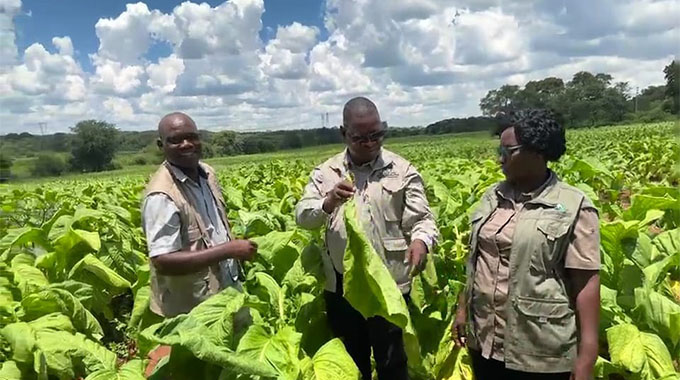
Theseus Shambare, [email protected]
FROM continental diplomacy to curing barns in Matabeleland, the country’s future is being shaped by water, which is no longer viewed simply as a resource in Zimbabwe.
It is policy. It is infrastructure. It is diplomacy. And increasingly, it is strategy.
When African leaders gathered at the 39th Ordinary Session of the Assembly of Heads of State and Government of the African union in Addis Ababa recently, the theme was clear: sustainable access to water and sanitation is essential for inclusive growth.
Climate change is tightening rainfall cycles. Aquifers are under pressure. Shared rivers are becoming potential points of tension. But while many nations focused on vulnerability, Zimbabwe presented a different posture — intent.
Not water as welfare, but water as economic architecture. And the clearest evidence is found not in summit declarations, but in the dry soils of Matabeleland.
The tobacco frontier
For decades, Zimbabwe’s flue cured tobacco was concentrated in Manicaland, Midlands and the Mashonaland provinces — areas with dependable rainfall and established irrigation infrastructure.
Matabeleland was different. Drier. Riskier. Marginal.
Not anymore.
This season, farmers in Matabeleland North planted 40 hectares of flue-cured tobacco. In Matabeleland South, 500 tonnes of air-cured tobacco are expected, with farmers in Mangwe District producing under contract arrangements.
It is now the third year that local firm Atlas Agri has partnered farmers in the province. The golden leaf is moving into areas once deemed unsuitable. The driver behind this shift is singular: underground water.
Beyond the statistics, the change is best illustrated by the experience of farmers themselves.
For Mrs Nyasha Chikukwa, a smallholder farmer in Matabeleland North, tobacco was once a crop she associated only with Zimbabwe’s traditional growing belts. Today, it is central to her family’s income.
“Before I ventured into flue-cured tobacco, we relied mostly on maize and sorghum, but the rains were no longer predictable,” she said.
“Tobacco has given us reliable income. I have been able to pay school fees on time and improve the quality of food in my home.”
In a region long considered marginal for tobacco production, farmers like Mrs Chikukwa are reshaping its agricultural reputation. With improved agronomic training, better seed varieties and institutional support, tobacco is no longer confined to high rainfall zones.
For her, the transformation is as psychological as it is economic.
“It has restored confidence,” she said.
“We now plan beyond one season. We think about expansion, irrigation and even building better curing facilities.”
Her experience reflects a broader shift in Matabeleland North, where diversification into high-value crops is enhancing household resilience in the face of climate shocks.
As farmers prepare to deliver tobacco from 4 March, Zimbabwe’s investment in irrigation is being tested in one of its most challenging environments.
Zimbabwe remains Africa’s largest tobacco producer. The sector’s expansion is anchored by the Tobacco Value Chain Transformation Plan (2021-2025).
But policy alone does not grow tobacco in dry regions.
Water does.
Beyond the borehole
Central to the country’s strategy is the 35 000 borehole programme, designed to guarantee safe and reliable water for every village.
Speaking in Addis Ababa, Lands, Agriculture, Fisheries, Water and Rural Development Minister, Dr Anxious Masuka, said: “The theme for 2026 focuses on sustainable access to water and sanitation services. For Zimbabwe, this is not a future aspiration; it is already under implementation.”
But boreholes are only one component.
Major dam projects such as Lake Gwayi-Shangani and Kunzvi Dam are being built not merely as reservoirs but as climate buffers — supporting irrigation, stabilising urban supply and opening new production zones.
Government is also targeting the construction of 50 small dams and weirs to embed water harvesting in rural areas.
The objective is clear: reduce dependence on rain fed agriculture.
Lessons from Hanover
The irrigation drive is intentional and globally informed. Late last year, Deputy Minister Vangelis Haritatos led a delegation to Agritechnica 2025 in Germany, the world’s leading agricultural machinery exhibition.
“We want to expand irrigation to 496 000 hectares across the country. Currently, we have just over 220 000 hectares of functional irrigation. Climate change is affecting us and we need to shift farmers from rain-fed agriculture to sustainable irrigation,” he said.
Doubling irrigated land would transform Zimbabwe’s agricultural risk profile — stabilising yields, protecting export earnings and insulating farmers from erratic seasons.
But irrigation requires more than water infrastructure.
“Our soils are very acidic. We need technology and methodologies to improve soil health and productivity,” Deputy Minister Haritatos said, highlighting the delegation’s interest in soil mapping, testing and AI-driven efficiency tools.
Then came the philosophical shift: “Farming is a business. We are here to learn best practices from global experts and bring these innovations back to benefit our farmers,” he said.
Water, in this model, becomes economic capital.
Climate demands scale
Back home, Chief Director for Agricultural Engineering, Mechanisation, Farm Infrastructure
Development and Soil Conservation, Engineer Edwin Zimunga, views climate change as a daily operational challenge.
“The face of climate change really requires that conservation — especially of our biodiversity and natural resources — happens at a much bigger scale. Soil conservation remains a strategic pillar of agricultural production,” he said.
With mid-season dry spells now common and erosion worsening, he said farmers must intensify preventative measures.
“The best time to start a Pfumvudza/Intwasa plot, to build contours or to construct field drainages is during the dryer periods. In the old days, we pegged and built contours before the rains to channel and retain water — that has not changed. Only now we are doing it at a greater level because rains are more erratic and erosion more severe,” he said.
He also warned that poor dam maintenance has contributed to deadly breaches in past seasons — highlighting the need for stewardship alongside construction.
Signs of a record harvest
During a recent tour of the country’s traditionally drier regions, Permanent Secretary Professor Obert Jiri expressed optimism.
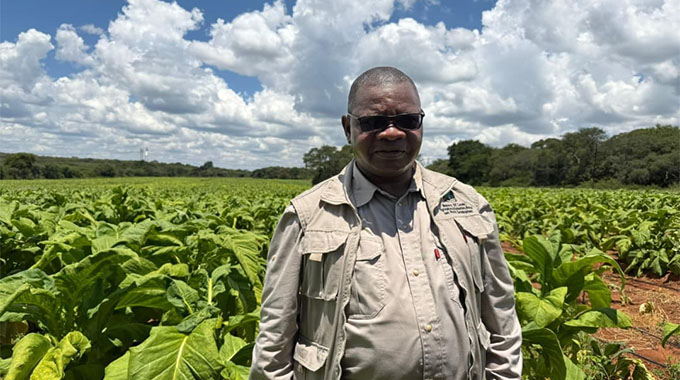
“We have been doing rounds in these areas assessing where we are as a nation. What I have witnessed is that we are bound for a great harvest ahead. We are expecting nothing less than 360 million kilogrammes of the golden leaf nationally,” he said after touring Woodcroff Farm in Ward 15, Umguza District.
If achieved, the output would reinforce Zimbabwe’s leadership in Africa’s tobacco sector and secure vital foreign currency inflows.
But beyond exports, the Matabeleland project represents something deeper. It spreads climatic risk. It unlocks previously idle land. It shows that dry does not mean unproductive.
Water as an economic multiplier
Reliable water supports more than tobacco. It underpins livestock production, aquaculture, horticulture, agro processing and rural industrialisation.
In Matabeleland North, Lake Gwayi Shangani is expected to open new irrigation opportunities, while Kunzvi Dam will ease pressure on Harare’s supply and support peri-urban agriculture.
At regional level, cooperation over shared systems such as the Zambezi River enhances stability, with nearly 80 percent of Africa’s freshwater lying in transboundary basins.
Domestic resilience reduces economic and geopolitical vulnerability.
The real test
The targets are ambitious: 35 000 boreholes. Fifty small dams and weirs. Almost 500 000 hectares of irrigation.
But success will not be measured in speeches or exhibitions abroad. It will be measured in sustained groundwater levels, functional irrigation schemes, reduced crop losses, safe dams and farmers delivering tobacco from areas once deemed impossible.
In rural communities, the impact is immediate. A borehole shortens a walk. An irrigation line stabilises a crop. A contour preserves precious soil.
Small changes. Large consequences.
In a warming world, control over water is control over destiny. Zimbabwe has chosen to engineer its response — not wait for the rain.
And beneath the curing barns and fields of Matabeleland, where the golden leaf now grows against the odds, the country’s agricultural transformation is quietly taking root.
Not in the clouds — but underground.



 Online Reporter