

 admin
admin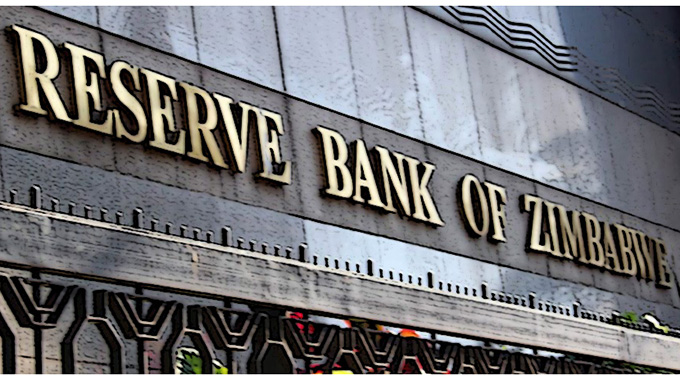

The lack of liquidity remains the biggest immediate challenge the Zimbabwean economy faces, with most business strategies for 2014 and going forward of any sane local company, now focusing more on the generation and preservation of cash as economic fundamentals continue to deteriorate.
At the epicentre of this so-called perennial liquidity crunch is the country’s banking sector, which has been operating without a lender of last resort since dollarisation and looking at the current state of affairs, is likely to continue to operate in that manner for a long time as Government struggles to recapitalise the Reserve Bank of Zimbabwe. The absence of a lender of last resort has meant that banks have had to be more cautious in their lending practices as well as in their liquidity management as there would be no central bank to bail them out in times of distress.
As witnessed since the inception of the multi-currency regime, banks that have not been prudent in their practices have in most cases collapsed, a development that has further diminished the public’s trust in the country’s banking sector after the lost decade of hyperinflation. This is also the reason why foreign suppliers of capital are not keen on extending lines of credit to banks in Zimbabwe because the correct architecture of the country’s financial system remains fundamentally flawed.
In the 2014 National Budget statement, the Finance Minister announced a series of noble measures that were aimed at restoring confidence in the country’s financial sector such as, the assumption of the RBZ’s $1,35 billion debt by Government, the proposed raising of between $150–200 million to recapitalise the RBZ, and finally the introduction of a $100 million Interbank Programme supported by the African Export-Import Bank as a guarantor, all of which were to be achieved before the March 31, 2014. With the deadline passed it is becoming apparent that very little is going to be achieved this first half of 2014, as Government has remained mum on these key issues.
While the assumption of the RBZ’s debt by Government is more of a legal issue than anything, the real work with regards to the restoration of a functional financial system starts with the recapitalisation of the RBZ and the resumption of the inter-bank market. Thus far, little has been mentioned by the Finance Minister with regards to the $200 million earmarked for the recapitalisation of the RBZ, and in our opinion with the pressure of the unbudgeted civil servant increments around the corner, it is most likely that the budgeted RBZ issue has been sidelined, for yet another populist short sighted policy.
It is becoming very clear that raising $200 million to recapitalise the RBZ under the current budgetary constraints is next to impossible. The $100 million Afreximbank guaranteed inter-bank programme has also hit a snag before its implementation as it has become apparent that local banks in need of liquidity from the inter-bank market would have to cede security in the form of the CBZ Diaspora bond, Government Treasury Bills/bonds and security issued by grade rated investment entities, amongst a number of other stringent measures, to get liquidity support from the market.
The fundamental problem with this arrangement is that the banks that desperately need the liquidity are not in possession of such security, while on the other hand, banks that do not need liquidity support or the inter-bank market altogether such as the foreign owned banks, are the same banks that qualify for liquidity support under the Afreximbank programme.
This arrangement in our opinion maintains the current status quo in the banking sector and therefore is of limited benefit in the absence of a functional lender of last resort.
It is therefore against this background that restoring the lender of last resort function at the RBZ becomes the only solution to the banking sector liquidity crunch as the central bank will through its own discretion, support both weak and strong banks with liquidity, thereby creating a level and stable playing field. However, the million dollar question remains, how will the lender of last resort function be established?
Although fighting the scourge of corruption is paramount in plugging the leakages in the economy, this noble agenda should however not distract Government and the country at large from the formulation and implementation of key economic policies.
Going to town about the salaries of 73 parastatal heads as if resolving the issue will turnaround the Zimbabwean economy, is not a key result area for the Ministry of Finance as stated in the 2014 National Budget. If Government took the RBZ recapitalisation issue as seriously as it did with the parastatal salaries issue, surely the economy by now would be headed in a more positive direction.
This article was written by Zimnat Asset Management for FinX.


 Online Reporter