Online Reporter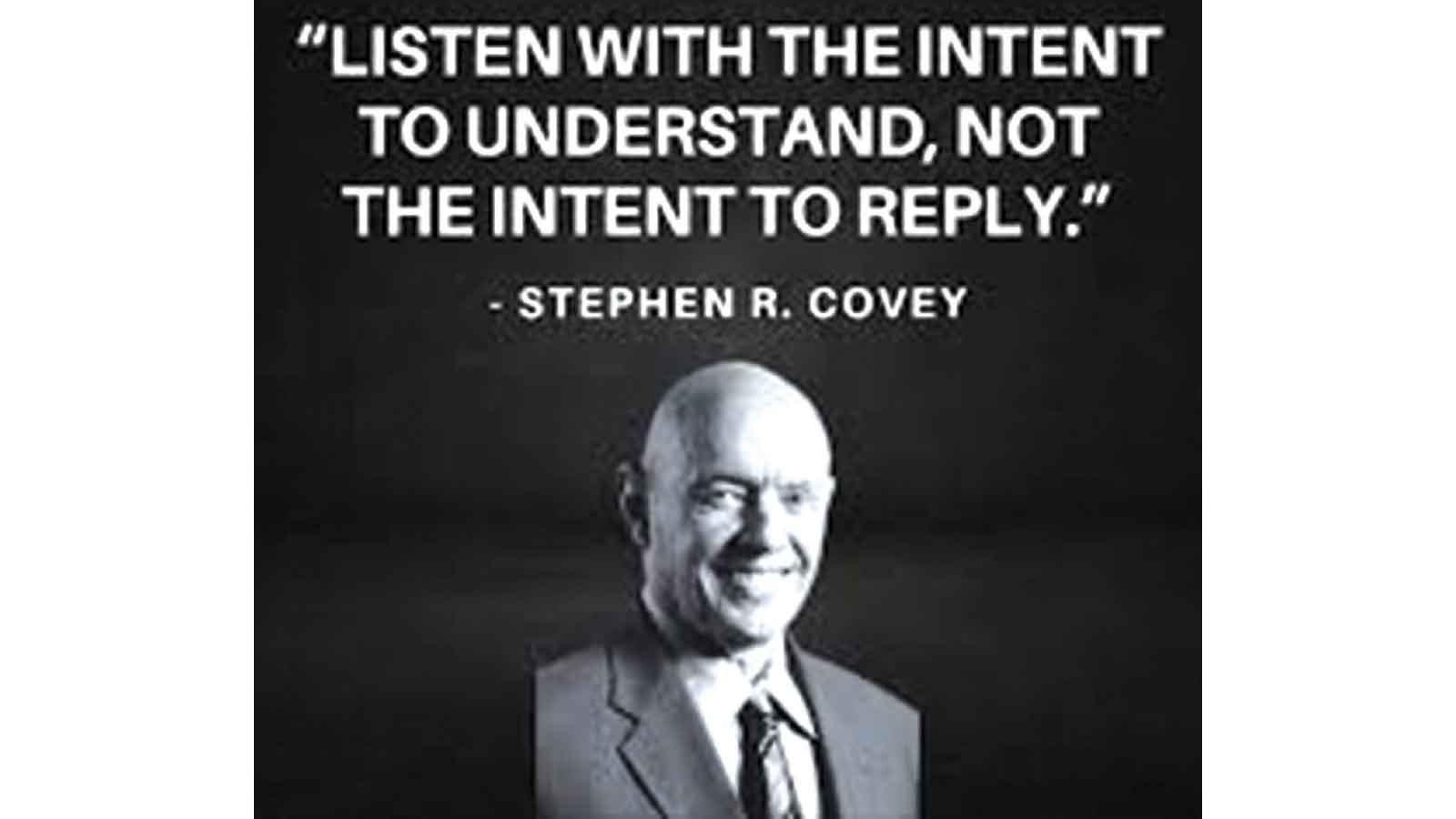
Hunt For Greatness
Milton Kamwendo
THE late Stephen R. Covey once remarked: “Most people do not listen with the intent to understand; they listen with the intent to reply.”
That should sound familiar.
In a noisy, distracted world, listening is becoming rare. We speak more. We post more. We respond faster. We interrupt more quickly than ever before.
Conversations are easily reduced to waiting for turns rather than truly understanding.
Yet beneath all great leadership, strong relationships and meaningful collaboration lies a powerful but underdeveloped skill: listening.
In a loud world, the one who listens deeply stands out quietly and leads powerfully. Listening is the pathway to greatness.
“KIKU” (聞く), in Japanese, carries the idea of listening with intention. You move beyond simply hearing to truly attending, understanding and responding well. KIKU builds trust. KIKU lowers conflict. KIKU helps you catch what people mean, not only what they say. Listening is strategic. When you listen well, you gather data, read the room and make better decisions. In a noisy world, disciplined listening is a competitive advantage and a posture of humility.
In “Kiku — The Japanese Art of Good Listening”, Dr Haru Yamada explains that Kiku embodies attentive, respectful and empathetic listening. Kiku is not passive. Kiku is active presence. Kiku is not silence. It is engagement.
Strengthen your Kiku by strengthening your ability to connect, to lead and to understand.
Hearing and listening
Most people hear. Few truly listen. Hearing is automatic. Listening is intentional. Hearing registers sound. Listening seeks meaning.
When you strengthen your Kiku, you move from surface-level interaction to deeper engagement. You begin to listen not just to words, but to tone, context and unspoken signals.
According to Yamada, this is where you listen with your heart. This is where understanding begins.
Presence discipline
Kiku requires presence. In many conversations, people are physically present but mentally elsewhere.
You may be thinking about what to say next, checking devices or drifting into distraction.
Deep listening demands focus. Kiku is a gift you give. You give full attention. You suspend distractions. You are mentally available. Presence communicates respect. When people feel fully heard, trust begins to form.
Listening leadership
Strong leaders are powerful speakers and powerful listeners. Listening allows a leader to understand realities on the ground. Through listening you identify hidden issues. You build trust with teams. You make informed decisions.
Leaders who do not listen operate on assumptions. Leaders who listen operate on insight. Kiku transforms leadership from directive to responsive.
Beyond words
One of the key insights of Kiku — the Japanese approach to listening — is sensitivity to what is not said.
Dr Albert Mehrabian conducted extensive studies on the structure of how communication is received and processed. His research gave rise to the 7-38-55 rule of communication.
This states that 7 percent of the message is verbal, 38 percent is the tone of voice used and 55 percent is non-verbal gestures.
People communicate through words, tone, pauses, body language and emotion. Strengthening your Kiku means paying attention to these signals.
Sometimes the most important message is hidden beneath the words. Deep listening uncovers what surface listening misses.
Silence power
Silence is sometimes uncomfortable. In Kiku, silence is not emptiness. It is vital space. Silence allows for reflection, clarification and emotional expression.
When you resist the urge to fill every gap with words, you create room for deeper communication. Silence strengthens listening.
Trust building
Trust is built when people feel understood. When you deploy Kiku and listen deeply, people feel valued. Communication becomes honest. Relationships strengthen.
Poor listening leads to frustration, misunderstanding and disengagement. Kiku is a trust-building communication tool.
Emotional intelligence
Kiku listening is central to emotional intelligence. It helps you recognise the emotions in others. You can then respond appropriately. Through Kiku you navigate conflict and build empathy.
When you listen well, you move beyond reacting to understanding. Understanding strengthens relationships. Kiku is the glue that holds relationships together.
Listening barriers
Several habits weaken listening. These include interrupting, forming responses too quickly, judging prematurely, multitasking and listening only to reply.
To strengthen your Kiku, consciously reduce these behaviours. Listening improves when ego decreases.
Practising Kiku
Kiku grows when you are intentional about practising it daily. In your next conversation, practise “3-2-1”: Ask three questions, reflect back two key points and give one clear next step. Then repeat. Like any skill, listening improves with practice.
Strengthen your Kiku by maintaining eye contact. Ask thoughtful questions. Paraphrase to confirm understanding. Allow pauses. Avoid distractions.
These simple practices transform the quality of conversations. Listening becomes intentional rather than automatic.
Listening advantage
In a world where everyone wants to be heard, those who listen gain a unique advantage. When you listen, you understand faster. You build stronger relationships. You solve the right problems more effectively. Kiku allows you to influence more naturally. Listening is often underestimated. Very few people have been taught how to listen.
Listen to lead
To strengthen your Kiku is to strengthen your connection with people and your effectiveness as a leader. Listening is not weakness. It is discipline. It is awareness. It is respect in action.
In every conversation, you have a choice: to speak and be heard, or to listen and truly understand. Choose to listen. Be present. Be attentive. Be empathetic.
Because in the quiet act of Kiku listening, influence grows, relationships deepen and leadership strengthens.
Milton Kamwendo is a leading international transformational and motivational speaker and author of more than 12 books. He is a cutting-edge strategy, team-building and organisation development facilitator and consultant. His life purpose is to inspire and promote greatness. He can be reached at: [email protected]. WhatsApp: +263772422634.