dyton mupawaenda
Lovemore Chikova-Development Dialogue
Beneficiation and value addition of lithium was the major step taken by President Mnangagwa’s administration in mining in 2023, to ensure the country’s minerals benefit locals.
It all started with the Government banning the export of raw lithium in December 2022, a move that jostled those in the lithium sector to seriously consider establishing plants to processing the mineral.
Now, the country boosts of several lithium processing plants that have given the mining industry a new impetus.
This contributes to the attainment of Vision 2030 of becoming an upper-middle income economy as beneficiation of lithium means creation of work for local people and the addition of value to the mineral.
It was expected that the lithium sector was to generate more than US$1 billion this year, and increase rapidly as more producers start operations, with some already at advanced stages.
Zimbabwe’s earnings from beneficiated minerals increased by 283 percent over two years since 2020, according to the official statistics from the Ministry of Finance and Investment Promotion, demonstrating the positive impact of various forms of support the Government has rendered to investors in the sector.
Several lithium producers have entered into memoranda of understanding with the Government to participate in the development of the mines to energy park, a transformative project aimed at maximising the value of the country’s mineral resources.
President Mnangagwa was busy this year commissioning lithium processing plants in various parts of the country that are expected to uplift the country’s Gross Domestic Product by adding value to the mineral.
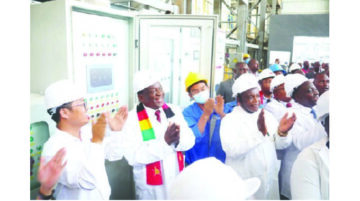
President Mnangagwa officials commissioned the Bikita Minerals lithium processing plant.
The following are some of the companies that have lithium processing plants that are already running.
Bikita Minerals
Bikita Minerals’ US$300 million Spodumene and Palatine plants, which will add value to lithium ore, were commissioned by President Mnangagwa in November, signalling the intention to ensure the country stops exporting its minerals in their raw form.
Exporting the minerals in such a form means losing huge revenues to other countries.
Speaking at the event, President Mnangagwa said Government was determined to see its citizenry deriving maximum benefits from mining activities.
“I commend Sinomine Resource Group for taking heed of my Government’s call for beneficiation and value addition of lithium ores by investing over US$300 million into the various stages of the project,” he said. “This has contributed to the realisation of our target of attaining a US$12 billion mining economy by year end.
“The milestone represents part of my Government’s efforts to consolidate our position as a regional and global hub for lithium mining and related industries.”
Prospect Lithium Zimbabwe (Goromonzi)
President Mnangagwa commissioned the US$300 million lithium at Prospect Lithium Zimbabwe in Goromonzi in July after the plant that was constructed in a record nine months.
Speaking at the event, he said: “I recall that in November 2018, we convened here when this area was merely an empty field, for the groundbreaking ceremony commencing initial work at this site. In June 2021, we were back here to commission the pilot petalite processing plant which was a precursor to this bigger and more advanced processing plant with a total capacity of 4.5 million tonnes per year.
“As we look back, Prospect Lithium Zimbabwe is one of the many testimonies of the successes of the Second Republic under the “Zimbabwe is Open for Business” mantra and Engagement and Re-Engagement Policy.”
Sabi Star Lithium Mine
In September, President Mnangagwa officially commissioned the Sabi Star lithium floatation plant that will add impetus to the country’s economic development.
The plant, located in Buhera, dovetails with the Second Republic’s thrust of mineral value addition and beneficiation and is a key enabler towards the sustainable growth of the critical sector that will breach the US$12 billion target.
In his remarks after opening the plant, President Mnangagwa, said: “As you may recall, I was here in December last year for the ground-breaking ceremony of the flotation plant being commissioned today. I would like to thank all stakeholders who have worked tirelessly to complete this lithium flotation plant in just eight months. Well done to you all.”
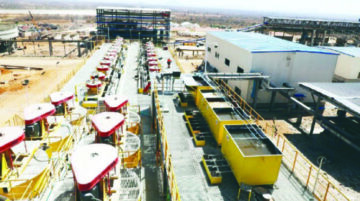
The Sabi Star lithium processing plant.
“The growing global demand for lithium and the presence of our own processing facilities reduces exports of unprocessed minerals and positions Zimbabwe as a key player in the lithium markets.
“Over and above enhancing profitability and foreign currency generation, this development will further have positive spill-over effects to surrounding communities and the nation as a whole.”
Shengxiang Investments Limited
Another lithium processing plant completed this year is the Shengxiang Investments (Pvt) Limited US$40 million plant in Goromonzi District, Mashonaland East.
Construction of the plant, which has a capacity to produce 2 000 tonnes of pure lithium carbonate per day, started in January and was completed recently.
Shengxiang Investments director of operations, Mr Terence Ncube, said: “Here in Goromonzi, we are constructing a lithium processing plant which will produce lithium carbonate in Zimbabwe.
This is the first company to have this plant in Zimbabwe.
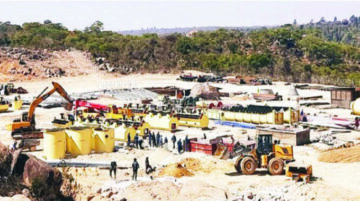
Shengxiang Investments Limited.
“Currently, we employed over 60 local people and once operations start, we will employ between 300 and 400 local people. We are working hard to ensure we meet our target so that processing begins for the benefit of the nation.”
Zulu Lithium and Tantalum project
London-listed Premier African Minerals Ltd has already started producing spodumene concentrates at its Zulu Lithium and Tantalum project in southern Zimbabwe following the completion of its milling plant.
“I am pleased to confirm the completion of the installation of the mill including all necessary feeds and discharge components, pumps, control circuitry and grinding media requirements that are expected to support planned production of up to 1 000 tonne per month of spodumene from November 2023 at Zulu,” said chief executive Mr George Roach.
The Zulu processing plant has the capacity to produce nearly 50 000 tonnes of spodumene concentrate annually.



 Online Reporter