

 Online Reporter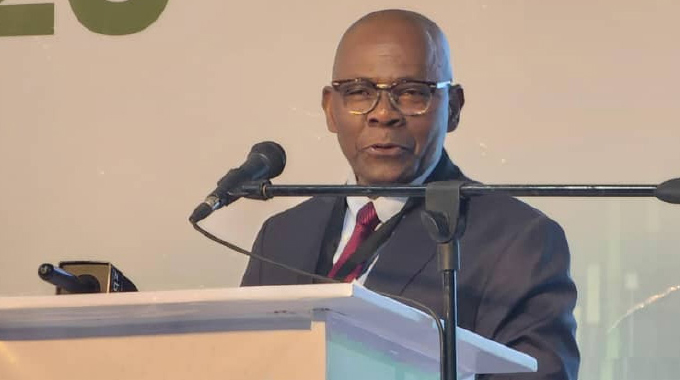
Rutendo Nyeve, [email protected]
THE Reserve Bank of Zimbabwe is positioning the country’s surging lithium sector as a cornerstone of macroeconomic stabilisation, with export proceeds set to anchor foreign exchange availability, support the ZiG currency, and drive the nation’s broader industrialisation agenda, Deputy Governor Dr Innocent Matshe has said.
Speaking yesterday at the Annual Chamber of Mines Conference in Victoria Falls, Dr Matshe said the central bank is facilitating and accounting for lithium exports to maximise national benefit.
“Lithium exports influence Zimbabwe’s Balance of Payments, foreign exchange availability, exchange rate stability and monetary policy effectiveness,” Dr Matshe said.
“A coordinated framework ensures maximum benefit to the nation through efficient export facilitation, accurate valuation and accountability of lithium trade.”
Zimbabwe is Africa’s leading lithium producer, with spodumene deposits rapidly developed through foreign investment. The sector is now transitioning from exporting low-value spodumene to higher-value lithium sulphate and battery-grade chemicals.
Dr Matshe revealed that lithium exports have maintained impressive volumes even during periods of global price weakness, demonstrating Zimbabwe’s strategic role as a key global supplier.
However, he cautioned that this also exposes the nation to the risk of losing the mineral at low values.
“Export volumes kept increasing even during global lithium price weakness, showing Zimbabwe’s role as a key supplier but also exposing the nation to the risk of losing the key mineral at low values, with local producers posting financial losses yet increasing export volumes during the period of weakened prices,” he said.
The Deputy Governor emphasised that the Exchange Control Act empowers the Reserve Bank to regulate foreign exchange transactions and ensure fair export values, with Foreign Exchange Guidelines establishing procedures for managing export proceeds.
He outlined the institutional ecosystem supporting lithium exports, saying the Minerals Marketing Corporation of Zimbabwe manages mineral valuation and export marketing, while Zimra handles customs clearance and revenue assurance to prevent smuggling.
“The Reserve Bank supervises foreign exchange flows, export proceeds accounting, and Balance of Payments reporting to safeguard the country’s finances,” Dr Matshe said.
All export receipts are routed through Authorised Dealers who report transactions to the Reserve Bank within prescribed formats and timelines. The central bank also ensures statutory upfront sale of export proceeds to the market, supporting foreign exchange reserves and liquidity management.
However, Dr Matshe acknowledged key challenges facing the sector, including global price volatility, which has created uncertainty in export earnings and complicated revenue forecasting.
“Global lithium price volatility over the previous years created uncertainty in export earnings and complicated export revenue forecasting and accounting,”he said.
Dr Matshe however said transparency remains key among lithium players.
He highlighted risks such as mis-invoicing, delayed repatriation, and documentation gaps, calling for multi-stakeholder collaboration, dialogue and transparency.
Looking ahead, Dr Matshe stressed that investments in value addition and industry collaboration are vital for sustainable export growth. The transition to beneficiation in line with Government policy introduces new operational and financing demands.
“Coordination is crucial during shifts from raw to processed lithium exports to maintain data accuracy and market confidence,” he said.
Dr Matshe said lithium exports present an opportunity for Zimbabwe to accelerate its long-term economic transformation.
“The Reserve Bank facilitates lithium exports through effective management and accounting of foreign trade and investment,” he said.
“Sound institutional coordination and aligned policies enable lithium exports to underpin Zimbabwe’s export-led strategy.”
Dr Matshe urged lithium exporters to comply with Government policy, foreign exchange and mining laws for the benefit of the nation.
The conference, which brought together mining industry leaders, policymakers, and financial sector representatives, heard that Zimbabwe’s lithium sector is set for significant growth as global demand for clean energy minerals continues to surge.
The Government has announced plans to ban raw lithium concentrate exports by January 2027, a move expected to accelerate local beneficiation and maximise value retention from the country’s mineral wealth.



 Bongani Ndlovu