Online Reporter
Rutendo Nyeve, Victoria Falls Reporter
LITHIUM producers in Zimbabwe have unveiled the country’s ambitious roadmap for lithium beneficiation, with significant successes and future projects set to position the country as a global leader in the lithium value chain.
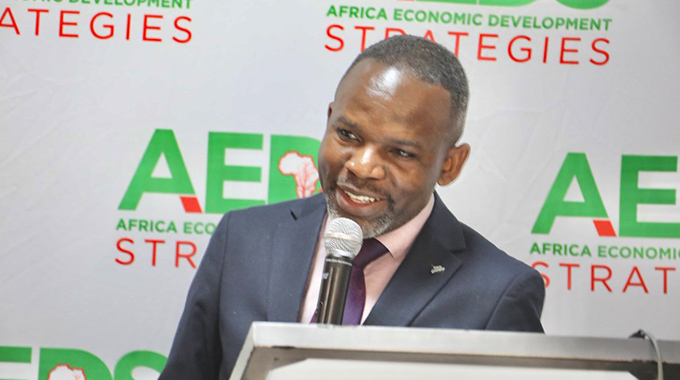
Speaking during the recently held Chamber of Mines Annual Mining Conference 2025 in Victoria Falls, the Chairman of the Lithium Producers Committee and Managing Director of Bikita Minerals, Mr Xuedong Gong spoke about value addition plans which the producers are embarking on.
Zimbabwe is ranked among the world’s top 10 lithium resource holders and is rapidly advancing the lithium sector with six major producers at various stages of development.
These include Bikita Minerals, Kamativi, Sabi Star, Prospect Lithium Zimbabwe, Bravura, and Sandawana.
The sector has already created over 5 000 direct and indirect jobs, playing a critical role in the nation’s economic development.
Mr Gong said Zimbabwe has a strategic advantage, noting that the country boasts Africa’s largest lithium reserves.
“The lithium resources are a national treasure and we are committed to maximising their value through beneficiation, which will drive industrialisation, job creation, and export growth as enunciated by the Government,” said Mr Gong.
Mr Gong said the sector has registered significant progress in lithium extraction and processing, with state-of-the-art operations at Bikita and Kamativi mines leading the charge.
“Bikita Minerals, Zimbabwe’s oldest lithium producer has expanded into midstream processing, while Prospect Lithium Zimbabwe has significantly boosted spodumene and petalite exports.
“New entrants like Sabi Star and Kamativi are already achieving remarkable production capacities, with Sabi Star producing 300 thousand tonnes per annum (TPA) of spodumene concentrate,” said Mr Gong.
He said other key milestones include 600 thousand TPA of spodumene and petalite processing capacity by Bikita Minerals and Prospect Lithium Zimbabwe as well as 300 thousand TPA of spodumene concentrate production by Sabi Star and Kamativi.
New concentrator plants are also under construction by Sandawana and Bravura, with Bravura set to commence production next month.
Mr Gong said the sector is further pursuing a leap into downstream lithium sulfate production, a critical component for battery manufacturing and advanced industrial applications.
“As the lithium producers, we are set to invest over US$700 million across multiple projects between 2025 and 2026, with production expected to commence by 2026–2027,” said Mr Gong.
He said once operational, these projects will add more than 160 thousand TPA of lithium sulfate capacity, marking a major step toward full integration into the global battery supply chain.
“This is not just about mining; it is about transforming Zimbabwe into a hub for lithium-based value-added products
“Our goal is to move beyond raw material exports and establish a thriving downstream industry that creates sustainable economic opportunities,” said Mr Gong.
While the sector’s growth is impressive, Mr Gong acknowledged challenges such as infrastructure gaps, high capital expenditure requirements and regulatory hurdles, including a five percent VAT on unbeneficiated lithium exports.
He called for aligned policies and increased investment in power, water, and logistics to unlock the sector’s full potential.
However, Mr Gong said despite these hurdles, the lithium industry has already attracted over US$1 billion in investments since 2021, making it the third-largest mineral export after gold and platinum.
“We are not just building mines, we are building communities and ensuring sustainable development through transparent reporting, local hiring policies and ethical business practices,” said Mr Gong.
Chamber of Mines President Mr John Musekiwa weighed in saying lithium producers, Ministry of Mines and Ministry of Finance agreed on lithium sulphate as the minimum beneficiation threshold for Zimbabwean lithium industry, not lithium carbonate as previously announced.
“This followed submissions by lithium producers that lithium carbonate is best efficiently produced using brines while lithium sulphate can be economically produced from the country’s hard rock lithium resource.
“The producers have already started developing beneficiation facilities that are scheduled to be completed between 2026/2027 in line with the roadmap agreed upon with the Ministry of Mines,” he said.
@nyeve14