Online Reporter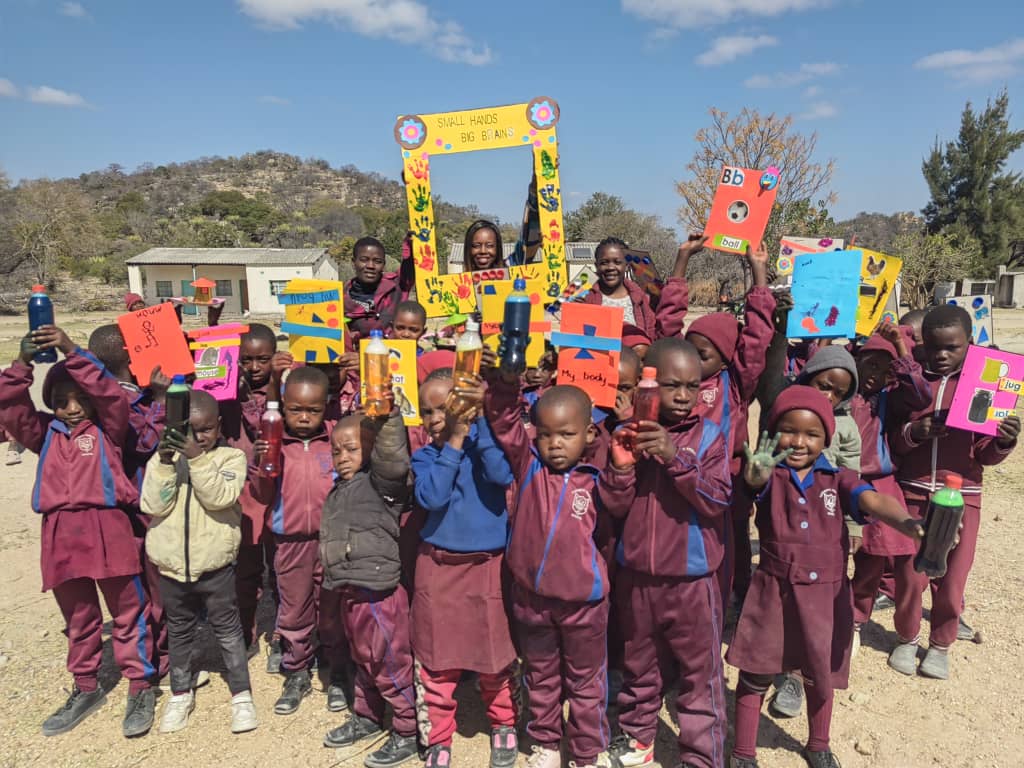
Mthabisi Tshuma, [email protected]
Young learners from Gwanda rural are discovering new confidence and voice after taking part in the Little Hands, Big Minds co-creation session, a project designed to put children at the centre of their own learning through art, play and storytelling.
The one-day session held recently brought together learners who used creative and hands-on activities to explore their ideas, emotions and understanding of the environment around them.
Activities included building a My Village model, crafting a concertina book themed My Body and Objects in the Environment, as well as mood meter and photo frame exercises that encouraged children to express how they feel and see themselves.
The project is supported through a micro grant from the British Council and Swiss Embassy, and is being implemented by Magitare Africa Trust.
It explores how children can actively participate in shaping creative learning experiences within their own communities, rather than being passive recipients of information.
Project leader, Proficience Cadder, said the initiative was rooted in child-centred learning.
“Little Hands, Big Minds is a child-centred co-creation project exploring how young learners can actively participate in creating learning experiences that reflect their own environment, ideas and emotions,” said Cadder.
“The My Village model and concertina book activities were inspired by the STELA Toolkit, an initiative being rolled out by the Ministry of Primary and Secondary Education, which we adapted to suit our local context and the learners we were working with. The mood meter and photo frame were additional activities developed as part of the co-creation process.”
Cadder said the most powerful outcome was watching children take ownership of their learning.
“What stood out was seeing the learners move beyond simply receiving information and becoming creators, contributors, and storytellers. Through the activities, they explored their community, their bodies, their emotions and the world around them while expressing their own ideas,” she said.
“I was particularly applying the Human Centred Design approach, which says that as artists we should produce products with the user in mind.”
The Gwanda-based creative said the project is part of her broader work in arts education and entrepreneurship. She is the lead on #HerArtStory Pilot Project, Creating Educational Media using Recycled Material, a scripted legacy initiative that made it to the top 100 start-ups in the 6th Value Creation Challenge.
“For me, this journey is also about showing that art can be a tool for education, healing and economic opportunity in rural areas. When children are given materials and space to create, they surprise you with how much they understand about their world,” said Cadder.
She added that the lessons from Little Hands, Big Minds will now extend into the wider creative sector in Matabeleland South.
“This journey is also extending into the creative sector. I will be exhibiting at the upcoming Art Unplugged Exhibition, while also mobilising creatives in Gwanda to access and participate in the SoCreative e-learning course by the British Council,” she said.
Cadder said she had personally benefited from SoCreative and wants other young artists in the province to do the same.
“Having personally experienced the impact of SoCreative on my own creative entrepreneurship, I became interested in creating similar access for other creatives. I believe that equipping creatives with knowledge, skills and opportunities can contribute to changing the narrative around our creative industry,” she highlighted.
Teachers and community members who observed the session said such projects were critical for rural schools that often have limited learning resources. They noted that using recycled materials and local themes made the activities affordable and relevant.
Cadder said the next phase of Little Hands, Big Minds will involve training more facilitators in Gwanda and surrounding districts so that the model can be replicated in other primary schools.
The team is also engaging the Ministry of Primary and Secondary Education to align the activities with ongoing curriculum reforms that emphasize competency-based learning.
For many of the children, the highlight was seeing their My Village models displayed and taking home their concertina books and photo frames.
“We drew our homes, the dip tank, the river and the mountains. It made me proud of where I come from,” said one of the participants.
With support from partners like the British Council and the Swiss Embassy, Magitare Africa Trust says it hopes to scale the project to reach more rural communities across the province in 2026.