

 admin
admin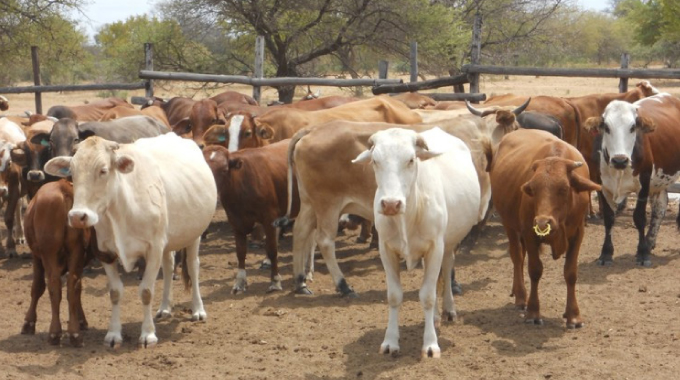
Edgar Vhera
Agriculture Specialist Writer
REELING under the impact of the harsh El Nino-inspired drought and unavoidable distress cattle sales at give-away prices, farmers are considering forming clusters and start value addition and quote viable prices thereafter.
This comes on the backdrop of reports that abattoirs are being overwhelmed with cattle from desperate farmers destocking to raise cash and purchase feed to save productive animals that include breeding ones, heifers, cows and draught power.
Livestock Farmers Union (LFU) chairman Mr Sifiso Sibanda yesterday said plans were at an advanced stage to form clusters that would give cattle farmers the much-needed voice in selling their cattle unlike the current scenario where middlemen are ruling the roost.
“We are looking at better ways of eliminating middlemen from the whole value chain in order to allow farmers to take livestock straight to the market. This can be achieved only if farmers come together under clusters to establish small or medium-scale abattoirs that will take the final product to the market and eliminate middlemen,” the LFU chair said.
Mr Sibanda said the situation of forced cattle sales was expected when a drought is looming and farmers naturally destock and in the process, there is an oversupply on the market, which negatively affects prices. Farmers destock to buy feed to save the remaining productive animals, but that has come at a cost, as prices have fallen to undesirable levels, he observed.
Cattle being sold are healthy with good body condition scores, yet meat processors are taking advantage of farmers by not recognising them as business partners.
Meanwhile, farmers’ stampede to destock and escape losses due to the El Nino drought have caused an oversupply of cattle to abattoirs, resulting in some suspending slaughtering. The resultant glut has led to some abattoirs going beyond the stipulated 72 hours animals are allowed to stay before slaughter. In most cases farmers will be making frantic efforts to transport their animals from remote areas to major towns such as Harare, Masvingo and Bulawayo in search of better prices.
Mbokodo Abattoir manager, Mr Neil Klein said though current cattle slaughters were very high against low prices adding that the situation would change in the next four months.
“You will appreciate that in a few months’ time there will be a shortage of cattle for slaughter and current prices, which are low because of the increased cattle sales, will shoot up.
“We have been advising farmers to work together to get hay bales and buy stock feed in groups to save their animals. They can negotiate credit facilities with stock feed companies for feeds and sell animals after a few months when they are in a better condition. They can get better prices and pay back what they owe.”
CSC-Boustead Beef Zimbabwe consultant Mr Reginald Shoko said they were coping though the slaughter figures had risen to between 100 and 120 per day from less than 100 previously.
“We continue doing toll slaughtering and have maintained our slaughter charges at US$25 per animal with the customer taking all the meat, offals and head. Commercial meat, which used to trade between US$3, 50 and US$4, 20 per kilogramme has dropped to US$1, 80,” Mr Shoko said.
CSC will start participating in the cattle auctions in the coming month to give a variety of options to farmers, he said.



 Bongani Ndlovu
 Online Reporter