

 Chronicle Editor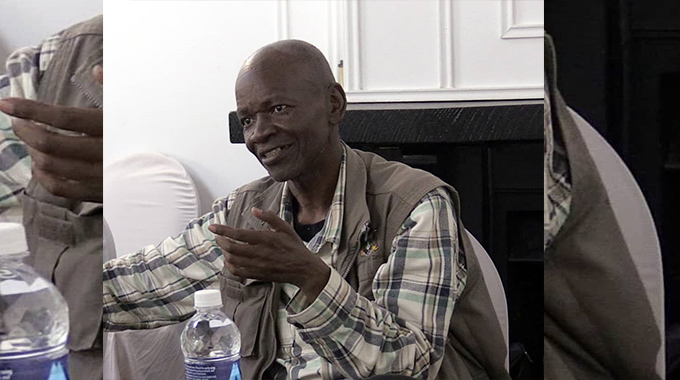
Leonard Ncube, [email protected]
LIVESTOCK farmers have been urged to invest in stockfeed to save their domestic animals from succumbing to the El Nino-induced drought, which has resulted in depleted pastures and drying up of water sources.
Light showers recorded in most parts of the country in the past few weeks brought a sigh of relief to farmers, as some rivers had some inflows.
Speaking recently at a field day organised by the International Fund for Agriculture Development and Oil Producing and Exporting Countries Fund for International Development (Ofid) under the Smallholder Agriculture Cluster Project (SACP) in Jambezi, Agricultural Advisory and Rural Development Services provincial director for Matabeleland North in the Ministry of Lands, Mr Dumisani Nyoni said farmers should safeguard their herds against drought.
“This year, grazing pastures are very limited hence we want to encourage farmers to invest in buying stock feed, so that we don’t lose our cattle. If you look around, there is no water and grass and we wonder how we will complete the year,” he said.
“It is up to us farmers to save our cattle, goats and sheep. Let’s sell those non-productive livestock and use the money to buy stock feed for the whole herd.
“In future, let us grow stock feed, so that we have enough stocks to protect our livestock.”
Mr Nyoni said the Government is going to help through the Presidential Borehole drilling programme, where each village will get a borehole as part of the 35 000 boreholes that are being drilled countrywide.
In some communities, villagers share water sources with animals.
Mr Nyoni said the Government was implementing various strategies to enhance food security through the growing of small grain crops and practicing sound animal husbandry.
Government has come up with a raft of strategies to protect and grow the national herd and has set a target of growing the national herd from the current 5.6 million to 11 million by 2030.
Under the Second Republic, the crop and livestock value chains have been identified as key pillars of the agricultural sector.
According to the 2022 beef and livestock census, the province has 695 771 cattle, with Bubi, Lupane and Nkayi having over 100 000 each and while other districts have less than 100 000.
There are 51 938 sheep in the province, 499 658 goats, 35 455 pigs, 117 889 donkeys, 177 horses, 1 181 168 poultry and 99 805 dogs.
Mr Nyoni urged farmers to continuously seek education related to farming. He said farmers should also buy supplementary feeding to grow fodder crops.


 Online Reporter
 Bongani Ndlovu