Chronicle Editor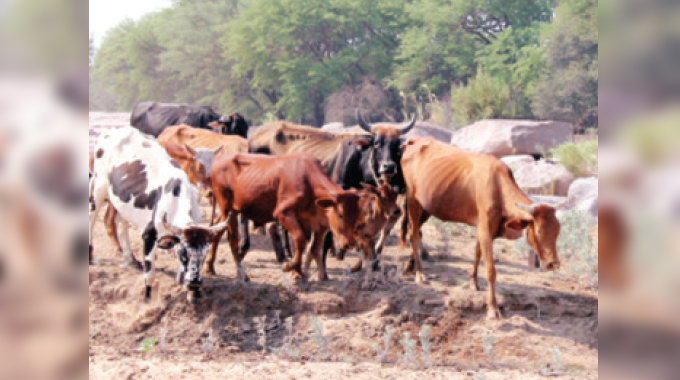
Farming Issues with Mhlupheki Dube
THIS past week social media platforms were abuzz to a near frenzy especially on livestock spaces, following a Government press release that indicated the intention to intervene and control livestock sales to protect smallholder communal livestock farmers from being ripped off by opportunistic unscrupulous traders.
The Government intends to establish village-based sales through what they termed village business units (VBUs) where all buyers will participate and promote competitive bidding which will push the producer prices up and provide fair returns to livestock farmers.
As expected, the statement was met with a barrage of comments in various social media platforms as already alluded to above. The nay-sayers dismissed the Government’s position as nothing but an ambush to effectively collect the 30 percent VAT on livestock sales. They doubted Government’s capacity to implement the directive and that by the time it is finally implemented, it could be already too late for most farmers.
Those in support of the Government’s position lauded mostly the effort to stop the bleeding as livestock farmers writhe in agony with vultures preying on them every day. This pen wishes to also weigh in on this Government effort.
The first thing being to appreciate the ability for Government to notice farmers’ dilemmas and act on them. We may debate as to whether the timing is perfect, the implementation possible, or whether the intentions are pure but what is not in doubt is that the Government heard the cries of the farmers who were being ripped off by buyers and it is now doing something about it.
That alone is very important and it ought to be appreciated. Otherwise, the Government could choose to fold its hands and let the market forces dictate the pace and direction. Secondly the ability by the Government to recognise that 90 percent of the national livestock herd is held by smallholder farmers, and these are the ones being ripped off and that they desperately need to be protected, is important as well.
When we talk of farmers selling their animals for a song, it is never established commercial farmers, but the struggling smallholder farmers and this is the constituency that the Government intervention seeks to protect. However, it is my strong conviction that the intended Government intervention strategy could have benefited a lot from the involvement of farmers themselves.
While the Government’s intentions are noble and appreciated, the conceptualisation of the intervention could benefit from a little bit of scrutiny. As a starting point, it is highly unlikely that a village can have enough livestock census to sustain a sale, hence the reason why traditional auction pens have catchment areas that span across three or so wards if not more.
Secondly, the banning or discouragement of sales among farmers or community members themselves could be working against the letter and spirit of the Government intervention, which is to protect livestock farmers and ensure that they sell at a fair price.
Anyone who follows livestock sales and even any other agriculture produce sells, will know that producers are ripped off by middlemen not when they sell among themselves. In fact, it is a well-known fact that informal sales among farmers pay much better than formal sales to established big businesses.
Livestock farmers will sell a heifer to a neighbour for anything from $400 but with the going market prices the same heifer may not fetch anything beyond $200 in formal establishments. In that regard, it is my well-considered view that the Government could consider letting farmers continue to sell among themselves if they can, but control big abattoir operators and other buyers when they come down to buy.
Finally, it should be realised that selling is the last thing on a farmer’s mind and if there is an option that can result in them not selling but keeping their animals, they will take that first. Therefore, the Government can also look at how it can help save the farmers’ animals and let selling be the proverbial last resort.
Again, this pen applauds the noble intentions of the Government of protecting farmers from forced sales, but counsels for a more inclusive approach that will ensure that farmers themselves participate in the framing and conceptualisation of the intervention as opposed to leaving it purely in the hands of Government bureaucrats and livestock production academics who themselves do not own any livestock despite the high sounding titles they hold.
The result will always be a laboratory intervention that cannot pass even a single-day field test!
Uyabonga umntakaMaKhumalo.
Mhlupheki Dube is a livestock specialist and farmer. He writes in his own capacity. Feedback [email protected] cell 0772851275.


 Online Reporter