Chronicle Editor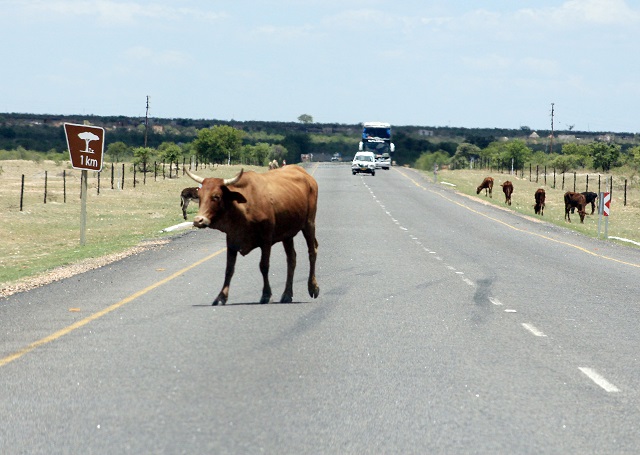
Sukulwenkosi Dube-Matutu, Gwanda Correspondent
GOATS, cattle and donkeys scurrying through the busy streets of the town centre. Motorists carefully navigating their way to avoid running over them. This has become a common sight in Gwanda Town.
Livestock constantly roam around homes and streets of the mining town and have become a menace to residents.
Gwanda resident, Mrs Nomathemba Ncube who stays in the city centre said it had now become common to wake up to the noise of the bells of animals as they moved around their homes.
“Our residential area has now been turned into a grazing area because of stray livestock that roam around. Almost every morning we wake up to the noise of bells of cattle and goats as they pass through our neighbourhood. At times they pass along the road but most of the time they enter our yards and start grazing.
“At first we mainly had a problem of cattle but recently goats are now the problem. You can come across more than 50 goats moving in the area. These animals mess up our yards in a great way. The goats can even pass through during the course of the day while the cattle can even roam around our yards in the middle of the night,” she said.
Another Gwanda resident, Mr Molvin Dube said it had now become difficult to grow vegetables in his yard as the animals would graze on the plants. He said the presence of the animals was also posing a health threat to the community.
Mr Dube said the Gwanda Municipality needed to deal with the problem as it was now out of hand.
“The number of goats which roam our streets is now out of hand to the extent that you can’t tell whether we are now living in a farming area or rural area. As residents we need to grow vegetables which we can eat with our families as well as sell for a source of livelihood but it has become difficult because of the livestock as they eat up our plants. The livestock also graze on our lawns and flowers.
“These animals also overturn rubbish bins both at homes and even in the CBD. They also stop to eat some rubbish from the bins. Sometimes vehicles struggle to move especially at robot-controlled intersections because of these animals. There is really need for the municipality to do something as the situation is getting out of hand. The presence of these animals that just roam the streets isn’t good for the image of the town as it can turn away potential investors,” he said.
Mr Dube said there was need for the municipality to put in place by-laws to guard against stray animals and if they already existed they should be strengthened and enforced. He said the local authority needed to frequently impound stray animals in order to send a message to the farmers.
“There is need for the municipality to impound livestock almost on a daily basis if possible. This way the farmers will realise that the municipality means business. The problem is that we see the same animals roaming around over a long period of time which shows that little is being done. The more the animals are impounded, the more the farmers will be forced to fork out money to have them released and then they will take better care of their animals,” he said.
Mrs Mary Moyo who operates a shop in the city centre said they were forced to constantly pick up rubbish from the streets after animals overturned bins. She said it was difficult to leave the bins lying on the ground as they were just outside the shops. Mrs Moyo said this mess caused by the animals posed a health threat for the shop owners and customers.
Gwanda Mayor, Cllr Njabulo Siziba said the municipality had by-laws to contain stray cattle but they were yet to put in place regulations to address stray goats. He said despite numerous efforts by the municipality some farmers refused to heed the call to contain their animals.
“As a municipality we impound stray cattle and in order for farmers to get their animals back they have to pay a fine.
For 15 cattle and below a farmer is charged $500 per beast and if there are more than 15 beasts which are impounded a farmer is charged $125 per beast. It seems that the amount we are charging for stray livestock is not deterrent as farmers continue to leave their animals unsupervised.
“Initially we had a problem with cattle but goats are also becoming problematic which also calls for regulations in relation to stray goats. There is need to gazette a fine for stray goats. Because of the drought situation which has led to shortage of grazing land farmers leave their animals to search for food within the town which results in this problem,” he said.-@DubeMatutu



 Online Reporter