

 admin
admin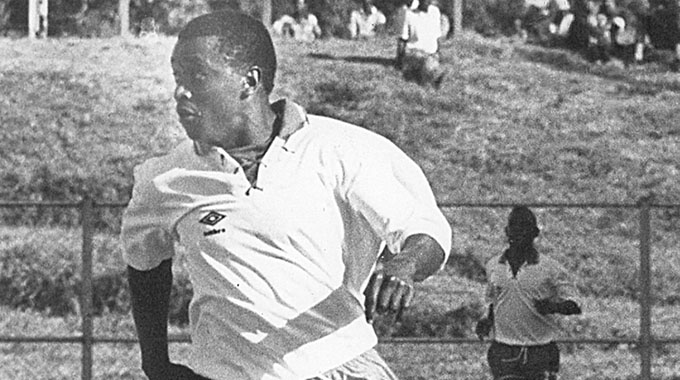
Elliot Ziwira Senior Writer
About 13km to the south-west of Harare, lies a valley that is rich in talent. This glen is never short of renewal batteries and always stands in the prime of time, yet the radar appears to avoid it. Colonial governments named this space Glen Norah, and Independence has long since christened it.
It is a valley of talent, that has produced stars cutting across the entire spectrum of human endeavour. And it continues to do so, yet the griot, our modern recorder of history shies away from this area.
Glen Norah, which is bordered by Glen View, Waterfalls and Highfield, inherited the name “Norah”, from farmer Baxter’s (Bhakasta) wife. This “Bhakasta” owned a farm on whose soil Glen Norah and Glen View now stand.
Because a glen is a valley, the name Glen Norah literally means Norah’s valley or vale, while Glen View depicts a view of the glen, because it is situated on higher ground.
Baxter’s farmhouse still exists where St Peter’s Kubatana now stands, and some of the outbuildings are used by Harare City Council as offices. We used to go kwaBhakasta (at the Superintendent’s) to pay our rates.
In this valley there is a dam which is now part of the Glen Norah Park. The park, which has seen better days, now lies forlorn, and appeals to the heavens for a return to the greenly days. In the 1960s, before the birth of the residential area, the dam used to be bigger than it is now. It was the dam that Baxter used for his farming activities.
What has prompted this piece, gentle reader, is not nostalgia per se, which of course may be partly true, neither is it a case of blowing one’s own trumpet, though trumpeting is not a bad idea after all; but the desire to recognise the heroes in our ’hoods before “outsiders” claim them.
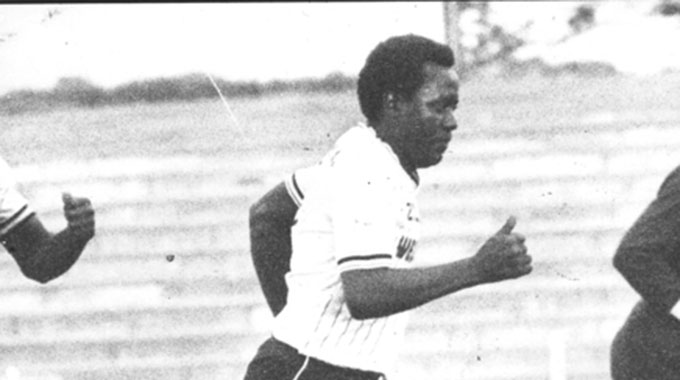
Allow me to take you back a while. There is a song originally done in 1972 by the Australian trio going by the name New World, and later popularised by the British band, Smokie after the release of their version in 1976. The song’s title is “Living Next Door To Alice”. There are so many versions of it now, under different titles, but maintaining the same lyrics.
The lyrics tell of how it feels to live next-door to someone whom one so much feels for, yet lacking the guts to say the magic words, until it is too late to do so.
The protagonist in the song has lived next door to the beautiful Alice for 24 years; in fact, they had grown up together as friends and neighbours. For 24 years he waited for a chance to express his feelings for her, until the beauty leaves without any explanation, leaving the protagonist heartbroken.
As Alice gracefully gets into the big limousine, sadness and regret play havoc inside him. His childhood sweetheart has grown out of his league. She has always been a star in the making, and sadly, he didn’t realise it.
Ironically, Sally, Alice’s friend, is the one who informs him of Alice’s departure, not that she is obliged to, but because she has also waited 24 years for him to notice her. She now has a chance to fill the void left by Alice, as the protagonist has to “get used to not living next door to Alice”. But he is still hurt, and intimates that he “ will never get used to not living next door to Alice . . .”
The protagonist’s hurt, procrastination and feelings of betrayal are not unique. They are a culmination of how we take those close to us or in our ’hood for granted. It takes long for it to register in us that we are or may be living next-door to celebrities or future luminaries.
Our neighbours, no matter what the outside world says about them, remain just the fellows or gals next-door. To us in the neighbourhood, they are just part of us; fellow ghetto boys. Until of course, they decide to leave, or the heavens claim them.
I grew up in Glen Norah A, kuChitubu, kumalines eMetal Box, to be precise, and I must say I have interacted at a personal level with many celebrities and luminaries cutting across many professional fields.
I know there are some that read like the beautiful Alice in Smokie’s “Living Next Door To Alice”. I played with them, saw them rise to prominence, and feel that maybe I should have told them how I felt about them.
You see, like I alluded earlier on, Glen Norah is a home of talent. From sport, music, arts, modelling, journalism, law and business; you name it. Sons and daughters of this vale are all over now, announcing their mettle in chosen areas of the stars, putting our hood in the limelight; doing us so much pride.
Some were thrust into this space through occupations courtesy of their employers, some were born and bred there, and others became part of the hood through acquisition of properties. Some are still around, but others, like my brother Shepherd and I, have moved to other suburbs, cities and towns where blending in is becoming a challenge, as the ghetto refuses to leave us. Some still have joined the trek down south or further across the oceans and seas yonder.
The high-density suburb that nurtured us, is divided into three sections; A, B and C. The first two sections were birthed in the early 1970s, and the last section came into being after Independence.
In Glen Norah A, for example, where I grew up, sections are either known through beerhalls or company-allocated houses. One talks of Chitubu, Spaceman or Zvimba, which are beerhalls or kumalines eMetal Box (the company my father worked for), PTC (Posts and Telecommunications Corporation) houses, Rothmans, CAPS, SISK and so forth. There were also council houses.
Because of the many companies that built houses for their employees in the suburb, there was a sense of community, and a kind of connection, especially when it came to supporting each other in terms of talent. We literally knew each other well.
Soccer: Yesteryear greats
Glen Norah produced quite a number of soccer stars, some of whom have long since hung up their boots, some have departed to the other side of life across the bridge, and some are still actively involved in the beautiful game in their own small ways.
These stars fall into different eons.
There is no way one can write about football in Zimbabwe without mentioning the name George “Mastermind” Shaya. I am not a Dynamos fan, that I must tell you. Though we grew up as Karate disciples, my brother Shepherd and I were soccer fanatics.
We fell for CAPS United the moment we “discovered” football, because we knew most of the players, like Freddy Mkwesha, Shacky “Mr Goals” Tauro, Friday “Breakdown” Phiri, Oliver Chidemo; and later on Tobias “Rock Steady” Sibanda, Francis and George Nechironga, Oscar “Simbimbino” Motsi and Kudzanayi Taruvinga. There were houses and a flat for Caps Private Limited employees, the owners of CAPS United Football Club then, in the glen.
We had friends kuZvimba, where these houses were, and whose parents worked for Caps, and frequented the green Caps block of flats. So, naturally, CAPS United was our home team.
On the other hand, my late father and late brother Andrew were avid Dynamos fans. My father had a personal attachment to some players, like Simon Mudzudzu, July “Jujuju” Sharara, Shadreck and Oliver Kateya, who once played for Metal Box and later on joined the Glamour Boys. My mother supports Dynamos because of the same attachment. I so much wanted to always remind them of the day the Cup Kings – CAPS United – beat Dynamos for seven (7-0).
It was mainly for my father and brother as well as the Metal Box connection at the personal level that I developed a soft spot for the Glamour Boys, although I worshipped Makepekepe (Shaisa Mufaro), and still do.
The other reason being that the Mastermind’s story escaped from the books we read about him in school to carry a personal attachment linked to his son Stan and my friend Sylvester Kasikwale. Sly is uncle to the Mastermind, and I first met the soccer star through him. The legend has a house kuSpaceman. But before then, I simply couldn’t ignore the Razorman, Moses Chunga, another great from our ‘hood.
Born on October 30, 1946, George Shaya played for Dynamos and the Rhodesian national team during the 1960s and 1970s. Named the Rhodesian Soccer Star of the Year a record five times, three of which consecutively, from 1969 to 1977, it is not off the mark to say Shaya has no equal in Zimbabwean football. He also made it into the South African league, turning out for Moroka Swallows in 1975.
Now, the Mastermind has not only long hung up his boots, but has also lost part of the apparatus with which he plotted the downfall of many a rival on the turf — his left foot, through amputation of the lower limb of his leg.
May the football gods and history’s deities remember the talismanic Mastermind! He is a hero, not only to the Glen Norah community, but to the nation of Zimbabwe.
Oliver Kateya, Shadreck Kateya, Simon Mudzudzu and July “Jujuju” Sharara, Oliver Chidemo, Freddy Mkwesha, Jawet Nechironga, David Mandigora and David George fall into the generation of yesteryear greats whom we had no chance to witness play, but have known since childhood. They were from our hood and we interacted with them as our parents.
The Metal Box link is simply difficult to overlook here. For those not in the know, Metal Box featured in the Rhodesia National Football League (1962-1979), the precursor to the Zimbabwe Premier Soccer League (known as the Super League then), and won the championship in 1973 (the year in which the team was promoted into the First Division), with Highlanders as runners-up.
Mudzudzu, Sharara and Kateya cut their teeth at Metal Box. Sharara, named after the month in which he was born, July, discovered his dribbling wizardry at Feoch Mine, in Mutorashanga in 1969.
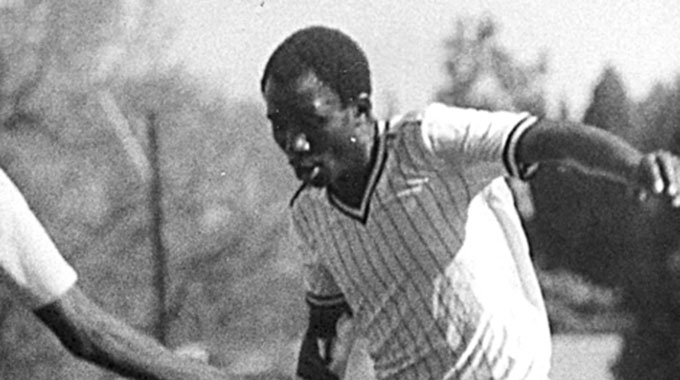
Lured by Harare, then Salisbury’s neon lights, Sharara found himself in the capital, where a friend, Mudzudzu encouraged him to tempt the football gods at Metal Box in 1970, under Davey, thus, starting an epic dribbling story that eventually saw him replacing Shaya at Dynamos.
Sharara, Mudzudzu and Kateya featured in the title-grabbing Metal Box team of 1973. Other members of the team were Sunday Marimo (Chidzambwa), John Humba, Shadreck Kateya, Mike Chidzero and Chita Antonio.
Chibuku Shumba, later on known as Black Aces, won the league title in 1975. Sharara won four consecutive league titles with Dynamos between 1980 and 1983. He then left to join Black Mambas in 1984.
After hanging his boots, Sharara had coaching stints with Support Unit, Sporting Lions, Orapa Wanderers, Black Mambas, Mazowe Mine, Manzini Wanderers of Eswatini (Swaziland) and Mutare United. He also assisted at Dynamos.
Mudzudzu would later leave the ghetto for the affluent valley of Glen Lorne, Alice style, although he continued working for Metal Box until 2014.
To be continued . . .



 Online Reporter