Online Reporter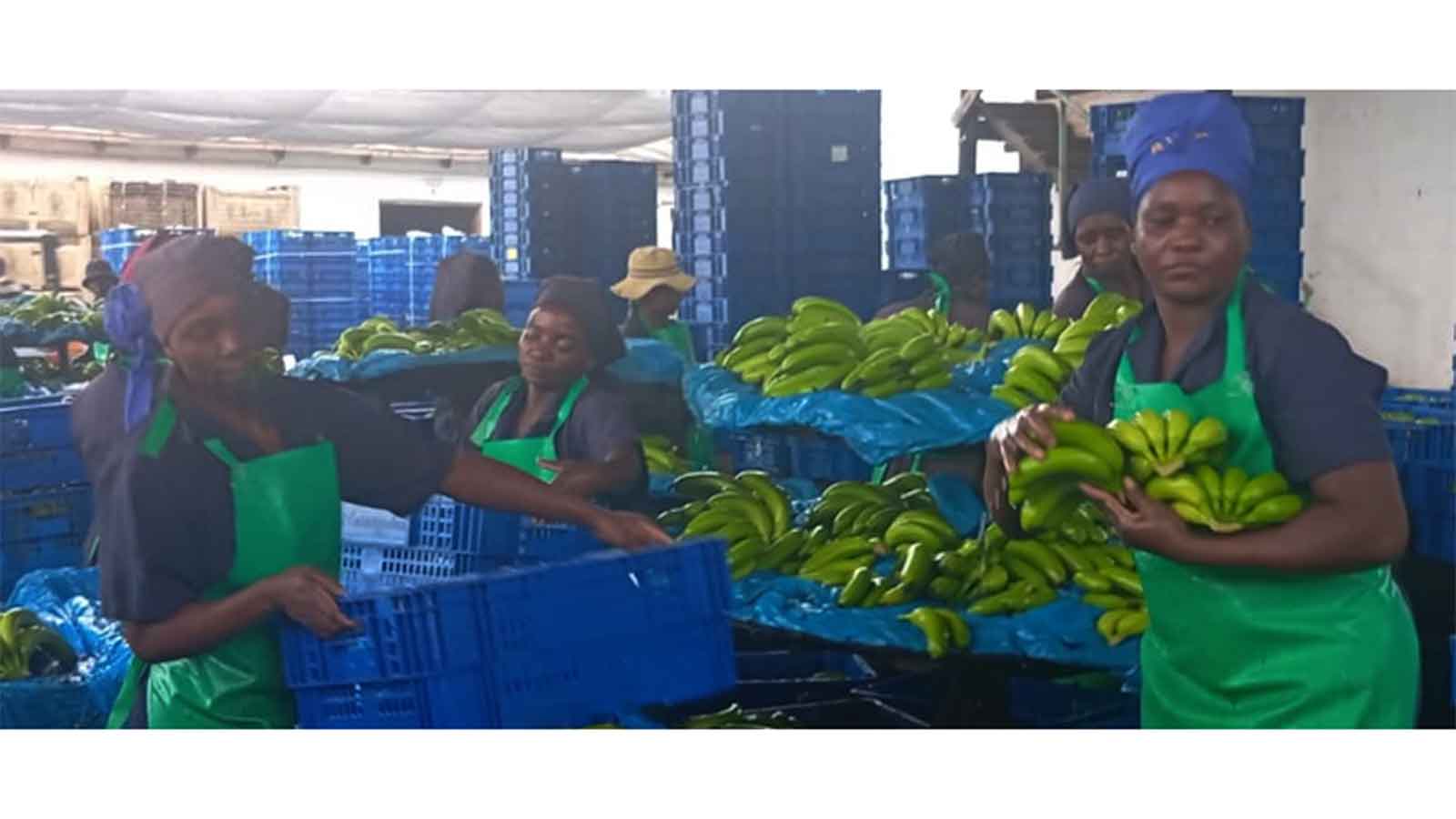
Ray Bande-Mutare Bureau
BANANAS produced in the Burma Valley area of the Eastern Highlands are the most sought after in the South African market, serving as a key component in Zimbabwe’s goal of establishing a US$2 billion horticultural industry by 2030.
The Second Republic has set this ambitious target as part of a comprehensive recovery plan for the sector.
In an interview during a tour of Matanuska (Private) Limited’s operations in Burma Valley last Friday, Permanent Secretary for Lands, Agriculture, Water, Fisheries and Rural Development, Professor Obert Jiri, said the targeted expansion of such entities aligns with the Government’s horticulture recovery policy.
“We are here in Burma Valley at Matanuska (Private) Limited to assess the state of production of bananas, being one of our value chains,” he said.
“I must say our climate is so good that Zimbabwe produces the best quality and the best taste. These bananas from Manicaland are really the best in the world.
“So, we are here to see the challenges that they could be facing and areas of improvement that we can share. We are here to explore the opportunities that still remain to ensure that as they grow their main estate and also the outgrowers, how they can unlock value for the outgrowers and themselves.”
Prof Jiri said the Government is looking to grow the horticulture industry to US$2 billion by 2030, with the banana value chain being a crucial element.
“We have already secured huge markets for citrus under the China Trade Protocol. The same applies to blueberries. We are also working on avocados with China. With bananas, we do not have to look far. South Africa is a huge market for us, and we already have trade relations with South Africa.
“So, really we should be able to grow in terms of economies of scale, hectarage, and also in terms of yield per hectare,” he said.
In a separate interview, Matanuska general manager Mr Crispin Manyuchi underscored the importance of joint Ventures in their lines of production.
“We have 321 hectares of bananas, and of those, 265 are mature plantations where we are producing, while the balance consists of immature plants.
“From that point of view, we are targeting 50 tonnes per hectare; that is the average we are getting at the moment.
Mr Manyuchi confirmed the South African market’s appetite for bananas produced at Matanuska.
“In terms of exports, we are sending almost 60 percent of our bananas to South Africa, while the other market includes local retailers.”