admin
admingathering momentum over the past few months.
The campaign seeks to encourage Zimbabwean consumers to buy goods produced by Zimbabwean companies as opposed to purchasing foreign-made goods in situations where both are available on the market.
The campaign was initiated to save Zimbabwean companies that are either closing down or taking a severe battering from cheap imports.
While the “high priests” of market liberalism have been quick to criticise the campaign as an assault on Adam Smith’s “invisible hand of the market”, which is supposed to dictate the demand, supply and possibly the pricing of goods.
Many countries including those from whom we have been importing have protectionist policies in support of the development of their local industries.
Japan, China, India and even our neighbours South Africa who through their Proudly South African campaign have aggressively promoted the sale of South African-made goods, all have policies that protect their industries from inflows of cheap and sometimes low quality goods from abroad.
While Zimbabwe’s Indigenisation and Economic Empowerment programme lead by Minister Kasukuwerere seems to focus on one aspect of the Act calling for the reservation of at least 51 percent of equity for indigenous Zimbabweans in companies worth $500 000 or more, there is another key element crucial for the market survival of Zimbabwean companies.
Another key and often ignored requirement of the Act is that all Government departments, statutory bodies and local authorities shall procure at least 50 percent of their goods and services in terms of the Procurement Act (Chapter 22:15) from businesses in which a controlling interest is held by indigenous Zimbabweans.
Hence, the Buy Zimbabwe concept is already supported by the indigenisation and Economic Empowerment Act.
However, for the campaign to really take off the indigenisation and empowerment programme need to be broadened especially with regards to the key manufacturing sector.
With indications that Zimbabwe is currently importing up to 65 percent of locally consumed goods there should be a serious effort to cut this figure possibly by half saving a significant proportion of money that could be used to finance the development of other areas of our economy.
So there is need to tie in the tenets of the indigenisation and empowerment programme into existing economic development plans, marketing and funding mechanisms such that the benefits can trickle down to majority indigenous business people.
These businesses will then manufacture goods that will limit the country’s reliance on foreign imports.
The Zimbabwe Economic and Trade Revival Facility, for which a disbursement agreement has been signed by the Government and the Afrexim Bank, should be allocated in such a way that indigenous manufacturing companies benefit the most from the fund, though without undercutting the market requirements for qualifying for such funding.
This deliberate effort should be extended to other funds like the recently agreed lines of credit with the Government of Botswana or any other money for which the Government would have played a prominent role bringing it into our economy.
We cannot have the Government negotiate loans or borrow funds on behalf of the people who when the funds are available, we leave everything to the market.
Those already in advantageous positions then access the bulk of the money in the name of market liberalisation yet they could not negotiate those funds on their own without Government’s lead.
There must be a conscious effort from the Ministry of Finance, trickling down to the disbursing banks, to ensure that the distribution of the funds for boosting local industry is not limited to the leading members of the Confederation of Zimbabwe Industries or the Zimbabwe National Chamber of Commerce alone.
The funds should be distributed as widely as possible cutting across indigenous business groups like the Affirmative Action Group, the Indigenous Business Women’s Organisation, the Zimbabwe Youth Council’s Business Initiatives, Women in Mining, Zimbabwe Miners Federation and the Small Scale Miners Association of Zimbabwe.
There are several other small to medium enterprises that have been keeping the manufacturing fires burning during a period when the economy has been under siege from the West especially through illegal economic sanctions.
Logically the flow will be to indigenise the economy, empower the local industries, they manufacture required quality goods such that the majority of local people can Buy Zimbabwean made products in that sequence.
Once thousands of Zimbabwe’s manufacturing companies are resurrected and recapitalised the onus will be on them to produce quality goods that will be acceptable to the local and international market
The Buy Zimbabwe Campaign will then set in motion an aggressive branding campaign that would promote the image of Zimbabwe’s goods and services leading to their purchase and consumption in Zimbabwe, Africa and beyond. In fact once indigenous Zimbabwean manufacturing companies are empowered the success of the Buy Zimbabwe campaign will be inevitable.
Therefore, the indigenisation and economic empowerment programme provides a fertile background against which the Buy Zimbabwe campaign can effectively take off and succeed
l The writer is CEO of ZvavaBudya Empowerment (Pvt) Ltd t/a ZV Empowerment He can be contacted on [email protected] or on 077 7 096 334.


Online Reporter
- Chronicle , SundayNews
- September 26, 2026
- 6 views
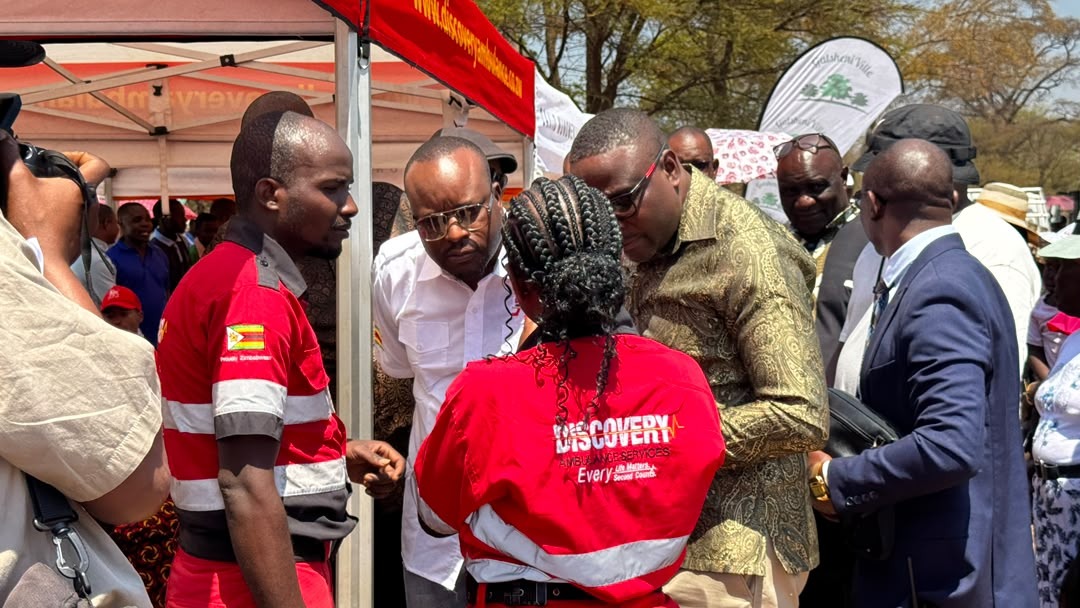
Over 1 000 get free medical care at Lupane extravaganza
Online Reporter MORE than 1 000 people received free medical consultations and medication at St Paul’s Mission in Lupane, Matabeleland North, during the Gatsheniville Sporting Extravaganza yesterday. The medical outreach,…