Online Reporter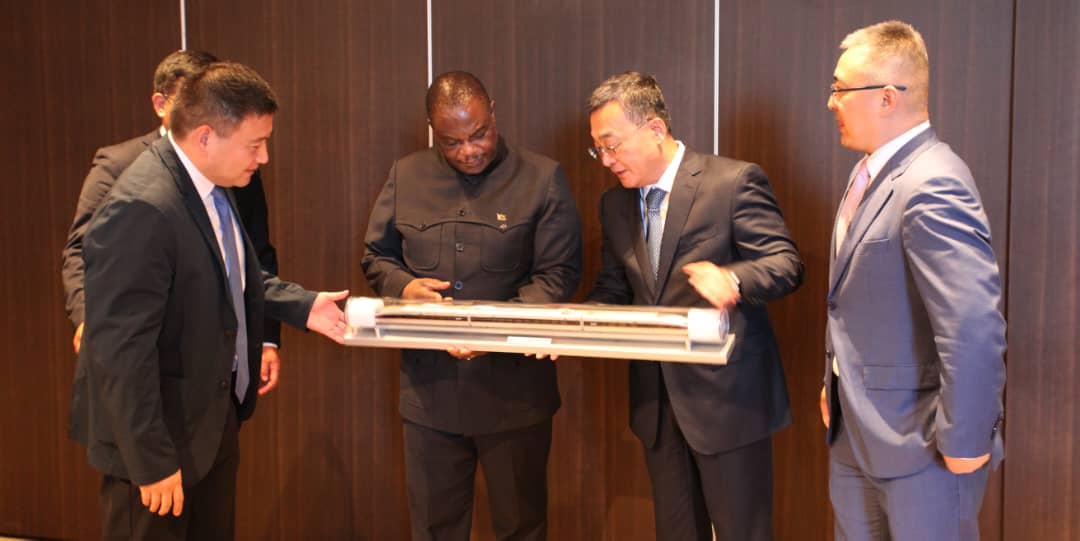
Mukudzei Chingwere in Beijing, China
ZIMBABWE Government’s policy refinement that has seen the banning of unprocessed minerals exports to compel mining companies to beneficiate their resources locally, is no scarecrow for investors, a leading Chinese investor has said.
This was said by Sinomine Resource Group, vice-president, Mr Frank Wang, yesterday after meeting Vice-President Dr Constantino Chiwenga who is on an investment mission here.
Far from retreating in the face of Zimbabwe’s evolving mineral beneficiation policies, Sinomine — the parent company of Bikita Minerals — has already invested more than US$300 million in expanding and modernising its Zimbabwe operations and has secured a further US$500 million for a lithium sulphate plant that will take processing at Bikita further down the value chain.
The new project is expected to eventually produce 125 000 tonnes of lithium sulphate annually, a key intermediate product in the manufacture of battery-grade lithium chemicals.
Mr Frank’s remarks provide a significant vote of confidence in Zimbabwe’s latest policy interventions aimed at ensuring that the country derives greater value from its vast mineral resources, instead of remaining principally an exporter of raw and semi-processed commodities.
They also rebut fears that stringent beneficiation requirements could discourage foreign capital, with Sinomine instead committing further investment to processing its lithium locally.
The meeting with Sinomine was one of seven engagements Vice-President Chiwenga held with major Chinese companies yesterday, as his investment mission gathered momentum around
Government’s drive to attract capital that strengthens Zimbabwe’s manufacturing and industrial base.
Sinomine’s investment trajectory at Bikita provides a practical example of the transformation that Government is seeking across the mining sector.
“As I mentioned in the meeting, our goal is to try to create a win-win-win situation — benefit for the company, benefit for the Government, but also benefit for the community,” said Mr Frank.
“We try to value-add as much as possible, localise in the country. So now, as everybody knows, Bikita Minerals now has a processing plant.
“We try to utilise all the resources. Now we are talking about the lithium, but also in the future we will have the tantalum as well and also right now we are building the refinery in that area,” said Mr Frank.
After acquiring Bikita Minerals in 2022, the Chinese resources group embarked on an extensive expansion programme. More than US$300 million has since been invested in exploration and beneficiation, including the development of spodumene and petalite processing capacity.
The investment has transformed operations at one of Zimbabwe’s oldest mines. The expanded facilities have capacity to produce around 300 000 tonnes of chemical-grade spodumene concentrate and 480 000 tonnes of petalite annually.
Sinomine has secured about US$500 million for the construction of a lithium sulphate plant at Bikita, with the first phase expected to have annual capacity of 60 000 tonnes.
A second phase is expected to add another 65 000 tonnes, taking total projected annual capacity to 125 000 tonnes by 2028.
Mr Frank said when the first phase of their expansion project is complete they expect it to create more than 800 jobs, with 400 expected to be direct.
“We are still at a rough number. I think directly we will be hiring about 400 employees at least,” said Mr Frank
Rather than treating mineral exports simply as a source of foreign currency, Government wants mining investment to stimulate processing industries, create skilled jobs, encourage technology transfer and generate opportunities for local suppliers.
Among the companies that met VP Chiwenga was POWERCHINA, whose Vice-President for East and Southern Africa, Wang Yuzhi, said the company was prepared to invest in a range of power initiatives, including solar energy.
Mr Wang said VP Chiwenga had called on responsible companies to invest in Zimbabwe, adding that POWERCHINA believed the country had the right ingredients for investment.
POWERCHINA is already familiar with Zimbabwe, having participated in major energy infrastructure projects, including Hwange Thermal Power Station Units 7 and 8, as well as works at Nyabira and Ngezi.
“We are prepared to invest in Zimbabwe, create jobs for local people and operate in an environment that is beneficial to both investors and the host country,” said Mr Wang.
Agriculture also featured prominently, with Dayu Irrigation Group Deputy General Manager for the International Business Division, Mr Fu Shau, saying his company was already supplying agricultural and irrigation equipment in Zimbabwe and was looking at deepening its presence.
Mr Fu said the company’s long-term plan was to manufacture irrigation equipment in Zimbabwe, aligning its operations with the Government’s value-addition and industrialisation drive.
Dayu has longstanding links with Zimbabwe. In 2018, it signed a US$80 million agreement to supply centre-pivot and drip-irrigation systems and has developed irrigation solutions suited to crops such as maize and tobacco.
C-Bezoar Pharmaceutical also expressed willingness to explore investment opportunities in Zimbabwe, and is earmarking expansion in Agriculture. The Beijing-based biotechnology company specialises in traditional Chinese medicine-derived biomedicine, pharmaceutical research and development and natural medicinal resources.
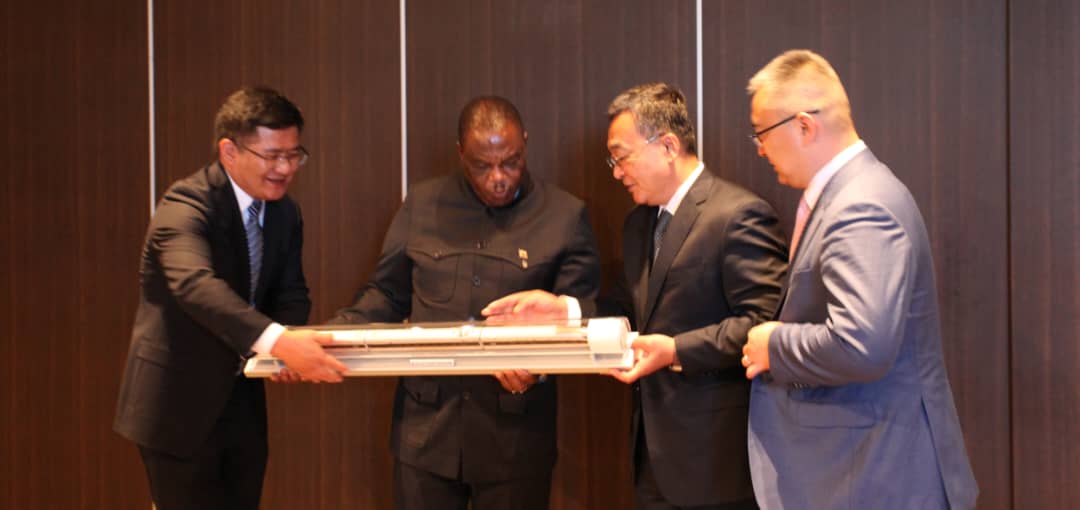
China Rail International Group (CRIG), which has previously interacted with Zimbabwean authorities over possible cooperation in reviving the country’s railway system, was also among the companies that engaged Vice President Chiwenga.
CRIG is the international arm of China Railway Group Limited and has extensive expertise in railways, railway electrification and other major infrastructure.
It operates in 39 countries and has been involved in major projects including the China-Laos Railway, Jakarta-Bandung High-Speed Railway and Addis Ababa-Djibouti Railway.
The company’s representative Mr Eason Zhang said they are optimistic of taking off cooperation with Zimbabwe.
“We will meet with government ministries after this meeting to discuss details and push this project and make it succeed,” said Mr Eason.
“Yes, it will happen very soon. We will work together with the government and the leadership of Office of the President and Cabinet.
“We will get the fund ready, then we start processing, make it succeed. For us, we can construct the railway very fast, very efficient,” said Mr Eason.
China State Construction Engineering Corporation (CSCEC) expressed willingness to undertake major construction projects in Zimbabwe.
Speaking to journalists after meeting VP Chiwenga, CSCEC General Manager Chen Lie said the company was willing to explore opportunities and undertake construction activities in Zimbabwe.
The expression of interest potentially opens avenues for cooperation across housing, public infrastructure, highways, bridges and other major construction projects.
CSCEC is one of China’s biggest construction enterprises, with expertise spanning building works, municipal infrastructure and highways.
Its portfolio covers public works, airports, hotels, educational and healthcare facilities, housing and industrial developments, while its infrastructure operations extend to railways, mega-bridges, highways and urban rail systems.
Henan Agricultural Investment Group Company also called on the Vice-President.